The Bloomsbury Handbook of Literacy
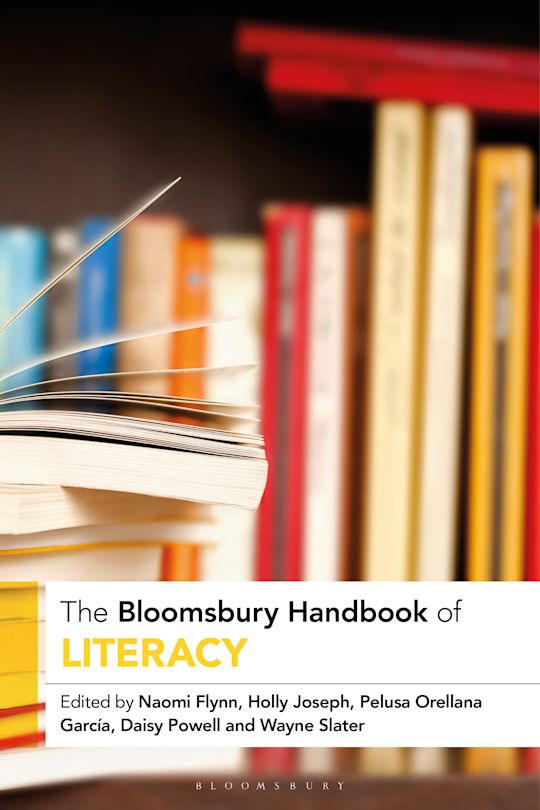

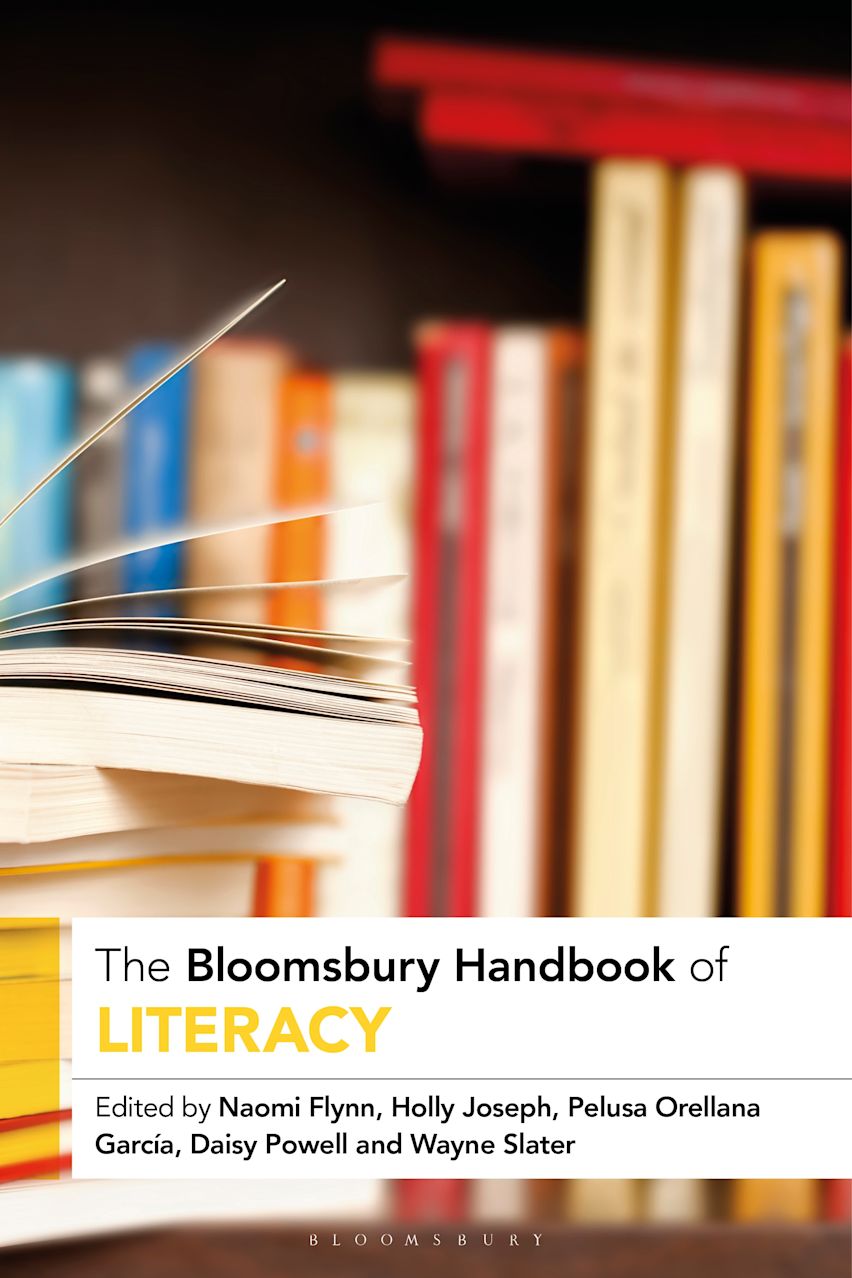
The Bloomsbury Handbook of Literacy
Buying pre-order items
Ebooks and Audiobook
You will receive an email with a download link for the ebook or audiobook on the publication date.
Payment
You will not be charged for pre-ordered books until they are available to be shipped. Pre-ordered ebooks will not be charged for until they are available for download.
Amending or cancelling your order
For orders that have not been shipped you can usually make changes to pre-orders up to 72 hours before the publishing date.
Payment for this pre-order will be taken when the item becomes available
- Delivery and returns info
-
Flat rate of $10.00 for shipping anywhere in Australia
Description
This collection of international, research-informed case studies gives a unique range of perspectives on the state of literacy in the twenty first century, as both a discipline and a function of everyday life. Expanding the focus of current debate beyond Western, English speaking contexts, it challenges received wisdoms and lays out the huge variations in what literacy is and what it is for.
Taking a thematic approach, the chapters examine literacy in its broadest sense. In section one they focus on early literacy development and the family in different global contexts. Section two tackles assumptions about the teaching of literacy from across continents, and foregrounds the place of multilingualism in classrooms. This is followed by chapters focussed on literacy and social adversity that shed light on the challenges faced by those denied access to literacy education and learning resources. In the fourth section, authors unravel the complexities of assessing literacy and the challenges of fitness for purpose for diverse learners. Finally, the book explores digital literacy and AI in school settings, and questions their use as tools for scaffolding teaching and learning.
This handbook captures the richness and diversity of different approaches to literacy, and widens the horizons that determine how we examine it and the factors that relate to it.
Table of Contents
Section 1: Early literacy development and the family
1. What predicts early literacy? A consideration across Chinese, Korean Hangul and English, Hyohyun Shin, Jennifer Schumaker and Catherine McBride (Purdue University, USA)
2. Families and children's literacy development: A learning ecosystems perspective, Katrina Dulay (City, University of London, UK)
3. Family literacy programs and young children's early literacy development, Jim Anderson (University of British Columbia, Canada), Harini Rajagopal (University of British Columbia, Canada), Assadullah Sadiq (California State University – Channel Islands, USA), and Laura Teichert (Western Michigan University, USA)
4. Preparing children for literacy education in rural African contexts, Pamela Wadende (Kisii University, Kenya), Barnabas Simatende (University of Zambia, Lusaka, Zambia) and Laura Shapiro (Aston University, UK)
5. Gene-environment interplay in the development of early literacy skills, Nathan Lau (University of Waterloo, Canada and University of Macau), Rasheda Haughbrook and Callie W. Little (Florida State University, USA)
Section 2: Perspectives on Literacy Teaching
6. Literacy policy and teaching practices in Ugandan primary school classrooms: Challenges and opportunities, Medadi E. Ssentanda (Stellenbosch University, South Africa) and Samuel Andema (Aga Khan University, East Africa)
7. When phonics counts as literacy: An Australian perspective on the shift away from balanced approaches to literacy teaching, Annette Woods (Queensland University of Technology, Australia) Barbara Comber (University of South Australia)
8. Teaching of literacy in two Latin-American countries: A comparative analysis, Celia Rosemberg, University of Buenos Aires, Argentina), María Ileana Ibañez and Eliana Bélén Gonzalez Lynn (CONICET, Argentina), and Katherine Strasser, (Pontificia Universidad Catolica de Chile)
9. Sawl iaith mwy o ddewis (Many languages more choices): Literacy teaching in Wales, Catharine Bleasdale, Nia Cole-Jones, Carys Jennings, Megan Jones, Rachel Sidoli and Leigh Worrall (The Open University in Wales, UK)
10. Preparing US teacher candidates in the science of reading: Rethinking, responding, and revising, Erin K. Washburn, Paola Pilonieta and Alicia K. Stewart (University of North Carolina at Charlotte, USA)
Section 3: Assessing Literacy
11. Diagnostic literacy assessments: The driving force for instruction, Tracy Johnson (University of Indianapolis, USA)
12. Developmentally appropriate literacy assessments to inform instruction: A crosslinguistic perspective, María Elsa Porta (Universidad Nacional de Cuyo, Argentina)andGloria Ramirez (Thompson Rivers University, Canada)
13. Academic vocabulary: Theoretical foundations, the Icelandic educational context, and implications for assessment, Sigríður Ólafsdóttir (University of Iceland)
14. Literacy teaching and learning in Finland, Kaisa Leino and Marja-Kristiina Lerkkanen (University of Jyvaskyla, Finland)
Section 4: Literacy and Injustice
15. "All Around the World, Same Song": Colonial legacies, race, school exclusion, and literacy, Keisha L. Green (University of Massachusetts Amherst, USA)
16. Oral language and literacy in prisoners, Frøydis Morken, Wenche Andersen Helland, Lise Øen Jones (University of Bergen, Norway)
17. Literacy in refugee education: A global review, Sana Tibi (Florida state University, USA) and Celia Reddick (Harvard University, USA)
18. Integrating literacy and well-being: Advancing the language education of refugee children in Canada, Redab Aljanaideh (University of Toronto, Canada) and Xi Chen (University of Toronto, Canada)
19. Challenging but achievable: Harnessing the potential of educational media as a learning tool for children who live in poverty in the U.S., Susan Neumann (New York University, USA)
Section 5: Digital Literacy
20. AI: Literacy – Preparing learners for the future, Florence Gabriel, Srecko Joksimovic, Sam Fowler, Rebecca Marrone and John Kennedy (University of South Australia), and Mutlu Cukurova (University College London, UK)
21. Generative Artificial Intelligence and student literacy: A paradigm shift, Damian Maher (University of Technology, Sydney, Australia)
22. Acceptable use? AI&ED for language and literacy development – Scoping the benefits and risks, Joseph Mintz (University College London, UK) and Drew Polly (University of North Carolina at Charlotte, USA)
23. When digital literacy must go beyond the screen: Further dimensions for analysing the AI impact in education, Linda Castañeda (Universidad de Murcia, Spain), Amaia Arroyo-Sagasta (Mondragon Unibertsitatea, Spain) and Ana Yara Postigo-Fuentes (Heinrich Heine Universität, Germany)
24. The potential of digital technologies for transforming the teaching of reading fluency and comprehension, Grace Oakley (University of Western Australia)
25. Fostering writing with digital literacy tools and dialogic learning designs: A view from Aotearoa, New Zealand, Rebecca Jesson and Selena Meiklejohn-Whiu (University of Auckland, New Zealand)
Product details

| Published | 04 Feb 2027 |
|---|---|
| Format | Hardback |
| Edition | 1st |
| Pages | 470 |
| ISBN | 9781350516380 |
| Imprint | Bloomsbury Academic |
| Dimensions | 244 x 169 mm |
| Series | Bloomsbury Handbooks |
| Publisher | Bloomsbury Publishing |
Related Titles