Language and Vulnerable Witnesses in Sex Crime Cases
A Forensic and Legal Linguistic Perspective
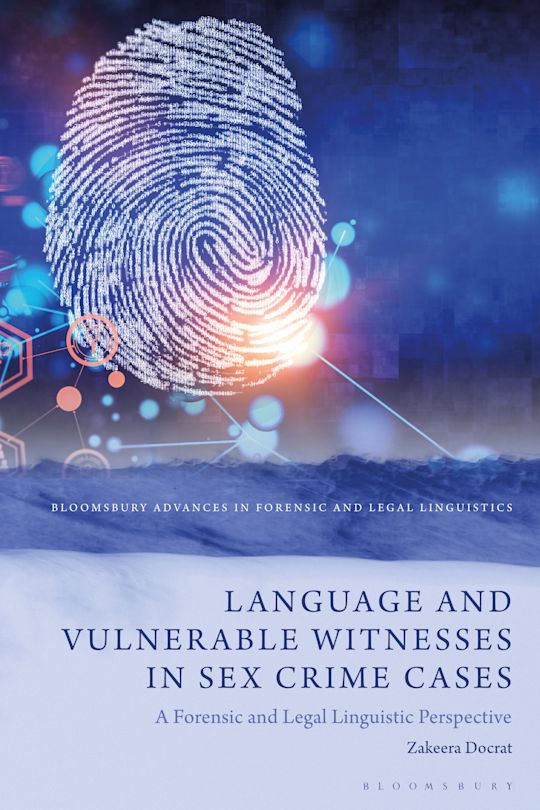

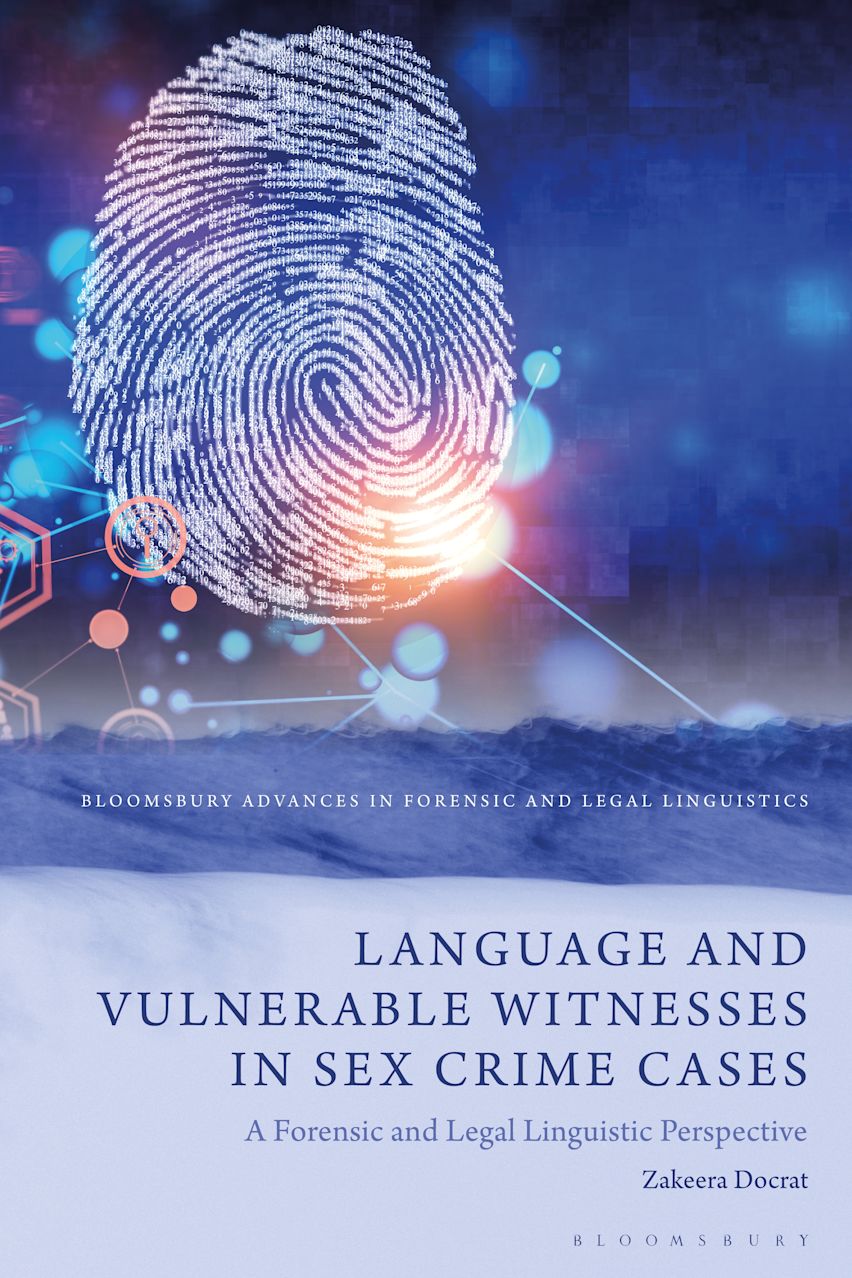
Language and Vulnerable Witnesses in Sex Crime Cases
A Forensic and Legal Linguistic Perspective
Buying pre-order items
Ebooks and Audiobook
You will receive an email with a download link for the ebook or audiobook on the publication date.
Payment
You will not be charged for pre-ordered books until they are available to be shipped. Pre-ordered ebooks will not be charged for until they are available for download.
Amending or cancelling your order
For orders that have not been shipped you can usually make changes to pre-orders up to 72 hours before the publishing date.
Payment for this pre-order will be taken when the item becomes available
Description
Bringing together interdisciplinary perspectives on the intersection of language, law, digital communication and gender-based violence (GBV), this volume proposes new approaches and methodologies in relation to sex crimes, vulnerable witnesses and emojis. It combines theoretical insight and practical relevance, with contributions from both legal practitioners and scholars, to expand the conversation beyond the often-Eurocentric lens of legal linguistics.
By bridging the gap between theory and practice, it advances the important role of language in enhancing access to justice for victims of crimes, specifically sex crimes. It also highlights the role forensic and legal linguists have to play in ensuring legal systems and processes are improved and made more accessible. With diverse chapters focusing on workplace policies, legal proceedings, sexual harassment, and online abuse, it provides important contributions to ongoing discussions about linguistic injustice, institutional silencing, and access to justice, particularly for women and vulnerable groups.
With case studies from Canada, South Africa, Spain, UK, and the USA, this book sheds light on contemporary global issues such as the language prejudices faced by vulnerable witnesses in courtroom discourse, online stalkers and groomers, and the use of emojis and non-verbal communication in sexual harassment. The forensic and legal linguistic approach is essential to understanding how power, prejudice, and justice are enacted through language in courtrooms, policies, and digital communication.
Accessibility Information
Additional accessibility information
- EPUB 3.0
- Conforms with the requirements of EPUB Accessibility Spec v1.1
- WCAG level AA
- WCAG v2.2 compliant
- accessibility@bloomsbury.com
Hazards
The publication contains no hazards
Support for non-visual reading
- No accessibility features offered by the reading system, device or reading software are disabled or otherwise unusable with the product
- Has alternative text descriptions for images
Visual adjustments
Appearance of the text and page layout can be modified according to the capabilities of the reading system (font family and size, spaces, as well as color of background and text)
Navigation
- Page list to go to pages from the print source version
- Elements such as headings, tables, etc for structured navigation
- All or substantially all textual matter is arranged in a single logical reading order
- Content is enhanced with ARIA roles to optimize organization and facilitate navigation
- Purposes of all links are made clear
Rich content
Language tagging provided
Table of Contents
1. Breaking the Silence on Sex Crimes: To What end?, Bronwyn Pithy (Advocate and Director, Women's Legal Centre, South Africa)
2. Lost in Interpretation: Policy and Legislative Frameworks Silent in Terms of Language, Tasneemah Nordien (Stellenbosch University, South Africa) and Fiona Van Wyk (Courtroom Intermediary, Paarl Magistrates Court, South Africa)
3. Analysing the Language of Policy and Procedure: Linguistic Gaps in South African Workplace Sexual Harassment Policies, Jeanne Bodenstein (Lawyer at Thusa Consulting, South Africa) and Sanja Bornman (Lawyer at Thusa Consulting, South Africa)
4. Emojis as Evidence: A Forensic and Legal Linguist's Interpretation of the Use of Emojis in the Mbenenge Sexual Harassment Judicial Conduct Tribunal, Zakeera Docrat (University of the Western Cape, South Africa)
5. When Saying 'No' is Not Enough: Normalisations of Sexual Violence Against Women, Neus Alberich-Buera (Aston Institute for Forensic Linguistics, UK)
6. A Comparative Analysis of Linguistic Features in Threatening and Romantic Stalker Communications: Unveiling the Stances and Ideologies in Stalker Typologies, Amy Brown (Aston Institute for Forensic Linguistics, UK)
7. The Discourse of Groomer Challenges to Child Resistance in Online Grooming Interactions, Nuria Lorenzo-Dus (UPV, Spain and Swansea University, UK) and Craig Evans (Independent Researcher, UK)
8. Discourse of Conditional Discharge in Judicial Decisions of Sexual Assault in Quebec, Marianne Laplante, Alexandra Dupuy, Veronique Durocher and Spencer C. Nault (University of Quebec, Canada)
9. A Comparative Case Study of Forensic Linguistics and Linguistic Prejudice in South Africa and the United States of America with Reference to Selected Case Law, Russell H Kaschula (University of the Western Cape, South Africa), Matthew J. Gordon (University of Missouri, USA) and Rod Uphoff (University of Missouri, USA)
10. Analysis of Escalation Moves in Falsified Emergency Service Calls, Jennifer Plumb and Mark Visona (Hofstra University, USA)
Product details

| Published | 27 May 2027 |
|---|---|
| Format | Ebook (Epub & Mobi) |
| Edition | 1st |
| Pages | 240 |
| ISBN | 9781350620612 |
| Imprint | Bloomsbury Academic |
| Illustrations | 7 bw illus |
| Series | Bloomsbury Advances in Forensic and Legal Linguistics |
| Publisher | Bloomsbury Publishing |
Related Titles