The Law and Policy of Floating Offshore Wind
Global Insights
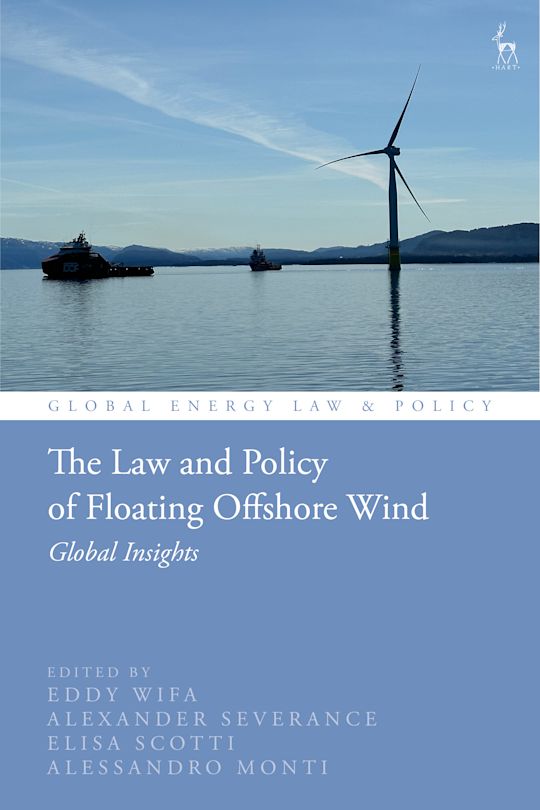

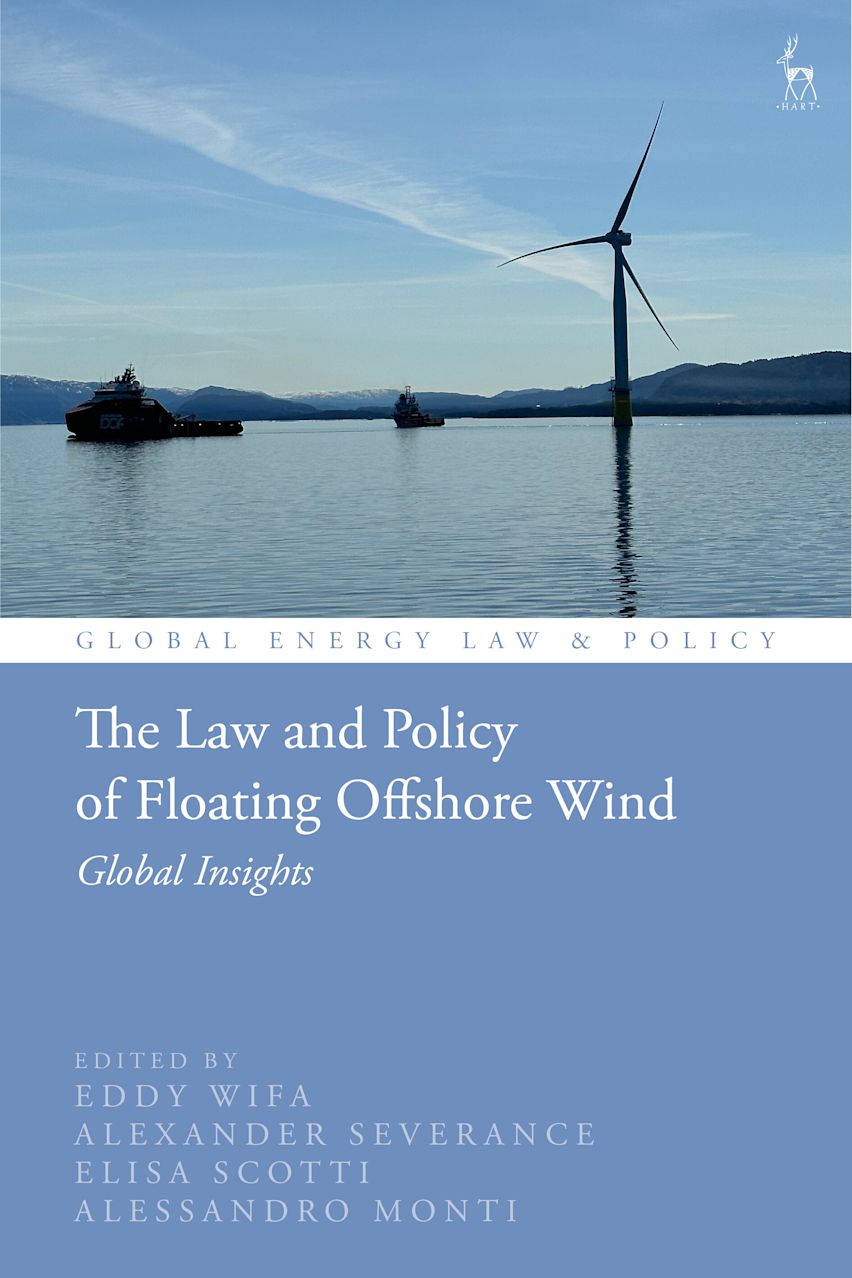
The Law and Policy of Floating Offshore Wind
Global Insights
Buying pre-order items
Ebooks and Audiobook
You will receive an email with a download link for the ebook or audiobook on the publication date.
Payment
You will not be charged for pre-ordered books until they are available to be shipped. Pre-ordered ebooks will not be charged for until they are available for download.
Amending or cancelling your order
For orders that have not been shipped you can usually make changes to pre-orders up to 72 hours before the publishing date.
Payment for this pre-order will be taken when the item becomes available
Description
This book provides a multi-jurisdictional analysis of the role of law in accelerating the development of floating offshore wind energy.
With ongoing technological advancements in the context of the energy transition, floating offshore wind represents a significant advancement in the global transition towards sustainable energy. Debates around the inherent ecological tensions raised by fixed-bottom offshore wind turbines, as well as the value of deeper offshore wind exploration, are considered alongside unanswered questions on the complexity of the marine environment and its governance in relation to the deployment of floating offshore wind energy. Other questions focus on marine spatial planning, licensing and permitting procedures, and the safety of installing and maintaining complex offshore energy infrastructure.
Although these issues partially coincide with those related to traditional bottom-fixed installation, the book provides an opportunity to test the extent to which traditional legal and regulatory strategies may or may not be suited to the fast-growing deployment of floating offshore wind energy.
Written by experts across multiple jurisdictions where floating projects are being developed, the book unlocks new thinking on regulatory modelling and design at a time when floating wind is expected to resolve the complexity of the Energy Quadrilemma.
Accessibility Information
Additional accessibility information
- EPUB 3.0
- Conforms with the requirements of EPUB Accessibility Spec v1.1
- WCAG level AA
- WCAG v2.2 compliant
- accessibility@bloomsbury.com
Hazards
The publication contains no hazards
Support for non-visual reading
- No accessibility features offered by the reading system, device or reading software are disabled or otherwise unusable with the product
- Has alternative text descriptions for images
Visual adjustments
Appearance of the text and page layout can be modified according to the capabilities of the reading system (font family and size, spaces, as well as color of background and text)
Navigation
- Page list to go to pages from the print source version
- Elements such as headings, tables, etc for structured navigation
- All or substantially all textual matter is arranged in a single logical reading order
- Content is enhanced with ARIA roles to optimize organization and facilitate navigation
- Purposes of all links are made clear
Rich content
Language tagging provided
Table of Contents
Part 1: The Regulation of Floating Offshore Wind: Cross-cutting Themes
2. Floating Offshore Wind in International Law, Youna LBL Lyons (Advisory Committee on Protection of the Sea, UK) and Zhen Sun (National University of Singapore)
3. Floating Offshore Wind in EU Law, Matteo Fermeglia (University of Amsterdam, the Netherlands) and Ceciel Nieuwenhout (University of Groningen, the Netherlands)
4. Floating Offshore Wind in Maritime Law, Alexander Severance (DLA Piper, Denmark)
Part 2: The Regulation of Floating Offshore Wind in Selected European Jurisdictions
5. France, Cécile Cessac (Brun Cessac, France), Anaïs Morin Guerry (Science Po, France) and Elodie Annamayer (Université de Pau et des Pays de L'Adour, France)
6. Ireland, Louise Michelle Fitzgerald (Dublin City University, Ireland)
7. Italy, Alessandro Monti (Independent Scholar, formerly University of Copenhagen, Denmark) and Elisa Scotti (University of Macerata, Italy)
8. Norway, Siren Ellensen (DLA Piper, Norway)
9. Spain, Maria Luisa Gomez Jimenez (University of Malaga, Spain)
10. Sweden, Melina Malafry (Uppsala University, Sweden)
11. United Kingdom, John Paterson (University of Aberdeen, UK)
Part 3: The Regulation of Floating Offshore Wind in Selected Extra-European Jurisdictions
12. Brazil, Romulo SR Sampaio (Mattos Filho, Brazil) and Nilton Mattos (Mattos Filho, Brazil)
13. Colombia, Margarita Nieves-Zárate (University of Groningen, the Netherlands) and Arturo Pulido Pérez (Universidad del Rosario, Colombia)
14. India, Uday Shankar (Institute of Technology Kharagpur, India) and Arindam Basu (Indian Institute of Technology Kharagpur, India)
15. Japan, Maciej M Sokolowski (Keio University, Japan) and Shinichi Kusanagi (University of Hyogo, Japan)
16. Taiwan, Anton Ming-zhi Gao (National Tsing Hua University, Taiwan)
17. United States, Grady S Hurley (Joens Walker LLP, USA) and Richard D Bertram (Joens Walker LLP, USA)
18. China, Riu Zheng (Shanghai Maritime University, China)
19. Korea, Junghwan Choi (Dalian Maritime University, China)
20. Conclusion: The Future of Floating Offshore Wind, Eddy Wifa (University of Aberdeen, UK), Elisa Scotti (University of Macerata, Italy), and Alexander Severance (DLA Piper, Denmark)
Product details
| Published | 27 May 2027 |
|---|---|
| Format | Ebook (Epub & Mobi) |
| Edition | 1st |
| Pages | 400 |
| ISBN | 9781509988747 |
| Imprint | Hart Publishing |
| Series | Global Energy Law and Policy |
| Publisher | Bloomsbury Publishing |
Related Titles