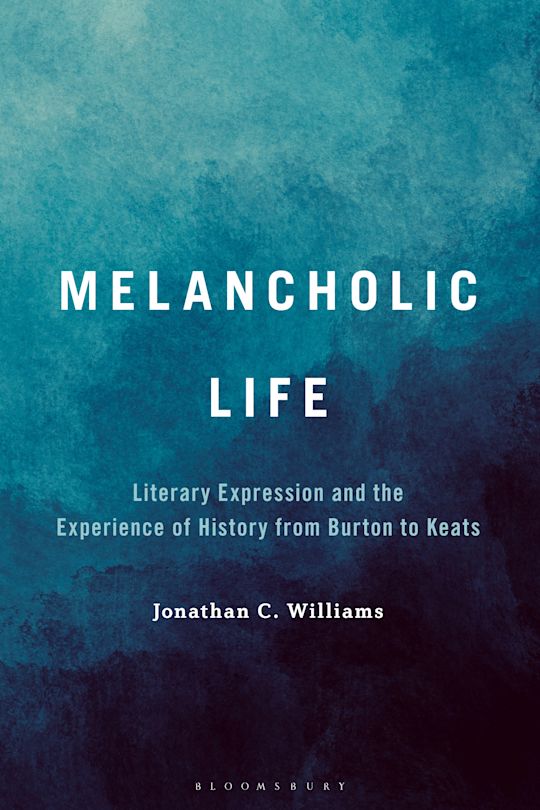
Melancholic Life
Literary Expression and the Experience of History from Burton to Keats

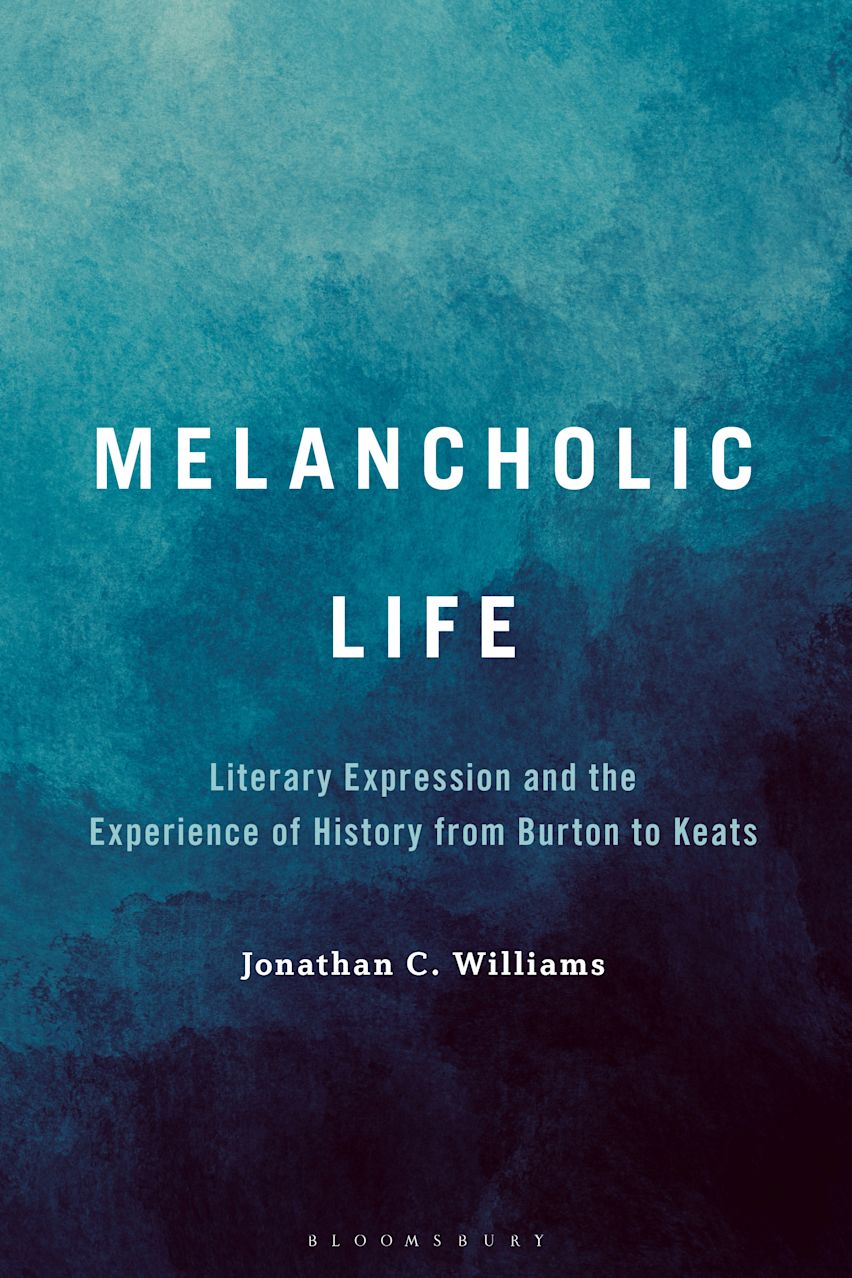
Melancholic Life
Literary Expression and the Experience of History from Burton to Keats
Buying pre-order items
Ebooks and Audiobook
You will receive an email with a download link for the ebook or audiobook on the publication date.
Payment
You will not be charged for pre-ordered books until they are available to be shipped. Pre-ordered ebooks will not be charged for until they are available for download.
Amending or cancelling your order
For orders that have not been shipped you can usually make changes to pre-orders up to 72 hours before the publishing date.
Payment for this pre-order will be taken when the item becomes available
This product is usually dispatched within 2-4 weeks following the publication date
- Delivery and returns info
-
Flat rate of $10.00 for shipping anywhere in Australia
Description
A study of how 18th-century British literary writers deployed melancholic feeling to draw a complex web of relations between the embodied self and its historical present.
Melancholic Life argues that what binds 18th-century melancholics such as the speaker of James Thomson, Sarah Fielding's David Simple, or William Cowper is a belief that critical thought is worth voicing whether or not it contributes to social change. That belief converges with 18th-century ideas of sentiment and loneliness, but it also syncs up in surprising ways with theoretical models of political subjectivity that emerge in the 20th and 21st centuries.
Jonathan C. Williams thus proposes a new way of thinking about the critical importance of literary melancholy in the 18th century: as the language of melancholic social criticism, a solitary protest against exploitative features of social life, including global commerce and print capitalism. That form of melancholic life helps to trace a genealogy from Robert Burton's Democritus to Defoe's Crusoe to the Romantic period; it also yokes the early capitalist historical moment of Mackenzie's The Man of Feeling to the post-1968 modernity that characterizes the work of Theodor W. Adorno.
As Melancholic Life shows, melancholic social criticism persists even when there is little hope. That spirit of persistence becomes a condition of literary expression in the 18th century. Attention to melancholic expression reveals resonances not only to medical, religious, poetic, and philosophical language, but also between 18th-century thinkers and your own historical moment.
Table of Contents
1. Melancholic Feeling from Aristotle to Sentimentalism
2. Crusoe's Fever
3. Reverie's Futures
4. Melancholic Books: Johnson and Leapor
5. Cowper Anatomized
6. Saturnine Keats
Acknowledgments
Bibliography
Index
Product details

| Published | 24 Jun 2027 |
|---|---|
| Format | Paperback |
| Edition | 1st |
| Pages | 320 |
| ISBN | 9798765127322 |
| Imprint | Bloomsbury Academic |
| Dimensions | 229 x 152 mm |
| Publisher | Bloomsbury Publishing |

Reviews

ONLINE RESOURCES
Bloomsbury Collections
This book is available on Bloomsbury Collections where your library has access.
Related Titles