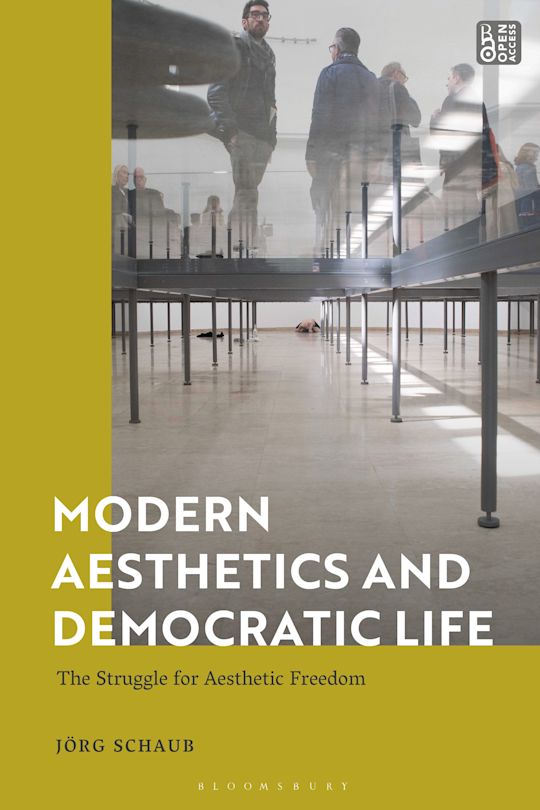
Modern Aesthetics and Democratic Life
The Struggle for Aesthetic Freedom
- Open Access

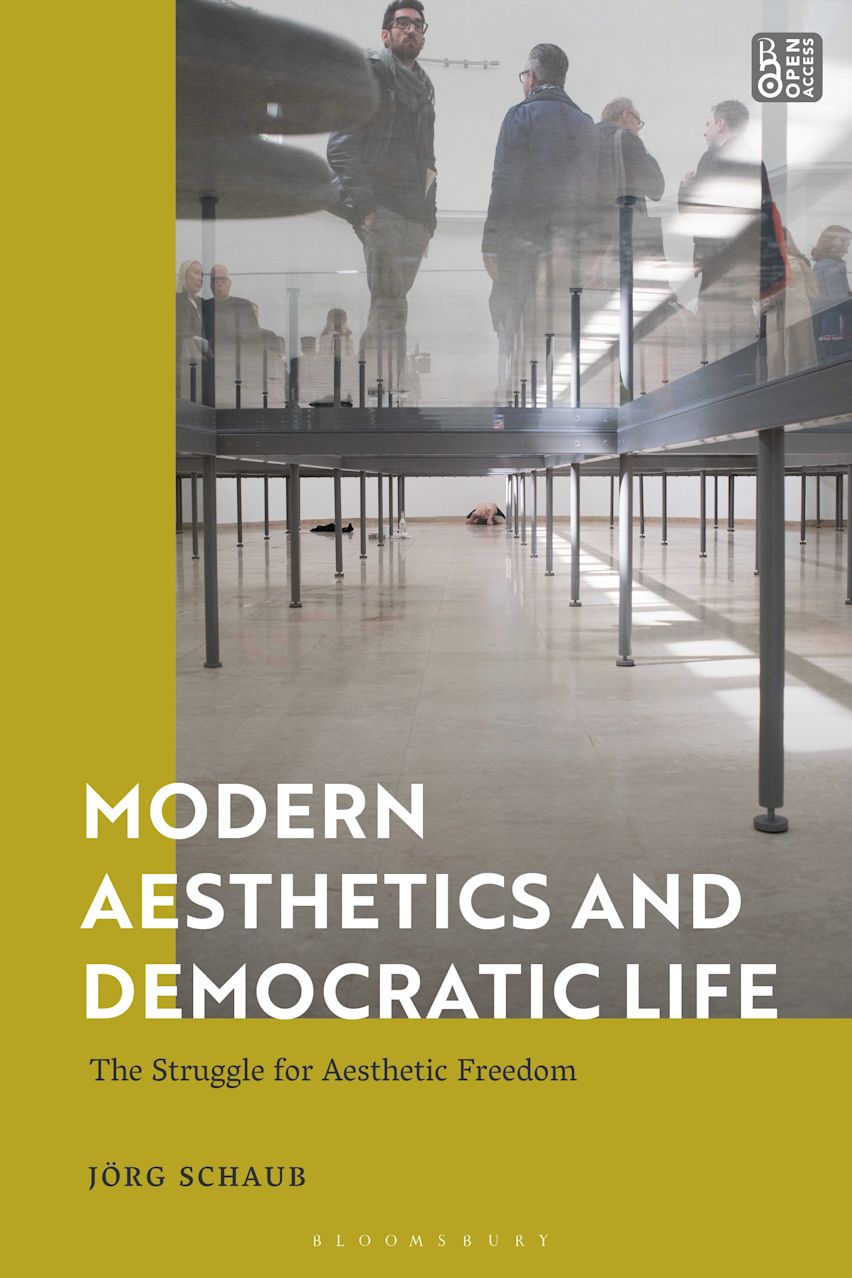
Modern Aesthetics and Democratic Life
The Struggle for Aesthetic Freedom
- Open Access
This product is usually dispatched within 2-4 weeks
- Delivery and returns info
-
Flat rate of $10.00 for shipping anywhere in Australia
Description
In this innovative open-access study, Jörg Schaub demonstrates that the aesthetic is essential to democratic societies' aspiration to realize a life of equal freedom for all.
Revisiting seminal eighteenth-century aesthetic treatises, Schaub advances a new interpretation of modern aesthetics and, in doing so, lays the groundwork for his original account of Hegel's post-ideal conception of aesthetics. He argues that what lies at the core of these accounts-and gives them their cultural significance-is the value they accord to free perceptual, emotional, and imaginative exploration of the world, and he shows how this orientation transforms our understanding of the values of freedom and equality.
Building on this interpretation of modern aesthetics, Schaub develops a novel conception of aesthetic recognition that expands familiar recognition relationships by bringing into view the consideration we owe one another as perceiving, feeling, and imaginative beings. Through a range of case studies, he shows that many conflicts in democratic life are also struggles for aesthetic recognition. This perspective yields a critical theory of aesthetics capable of diagnosing and criticizing forms of aesthetic misrecognition.
Schaub brings aesthetics into dialogue with social and political philosophy and critical theory. His study constitutes a significant intervention in the long-standing debate about aesthetics and politics, reshaping how we think about freedom in democratic life.
The ebook editions of this book are available open access under a CC BY-NC-ND 4.0 licence on bloomsburycollections.com. Open access was funded by the University of Essex.
Table of Contents
2.Hegel's Post-Ideal Aesthetics
3.Recovering the Displaced Aesthetic Dimension of Democratic Ethical Life
4.Aesthetic Recognition
5.From Aesthetic Recognition to Struggles against Aesthetic Misrecognition
6. A Critical Theory of Aesthetics: A Research Programme
Bibliography
Index
Product details

| Published | 09 Jul 2026 |
|---|---|
| Format | Hardback |
| Edition | 1st |
| Pages | 288 |
| ISBN | 9781350586727 |
| Imprint | Bloomsbury Academic |
| Dimensions | 234 x 156 mm |
| Publisher | Bloomsbury Publishing |

Reviews

OPEN ACCESS
Bloomsbury Open Access
Read and download this book free of charge from Bloomsbury Collections.
Related Titles