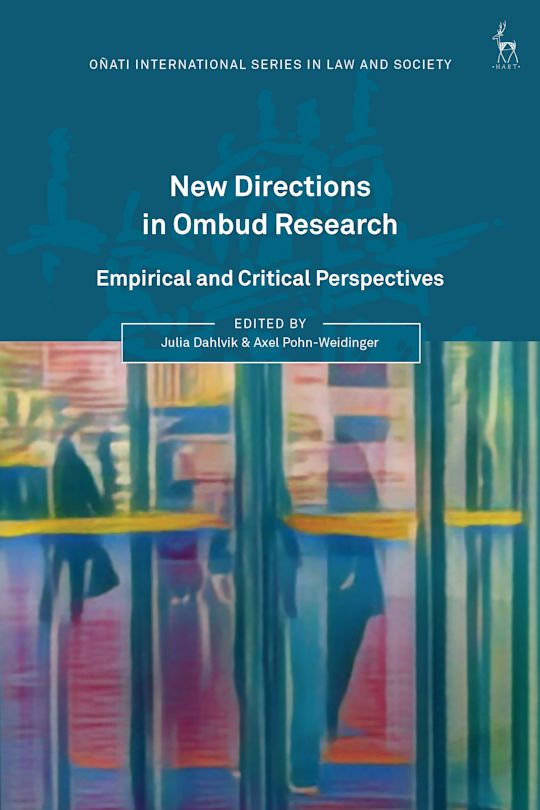
New Directions in Ombud Research
Empirical and Critical Perspectives

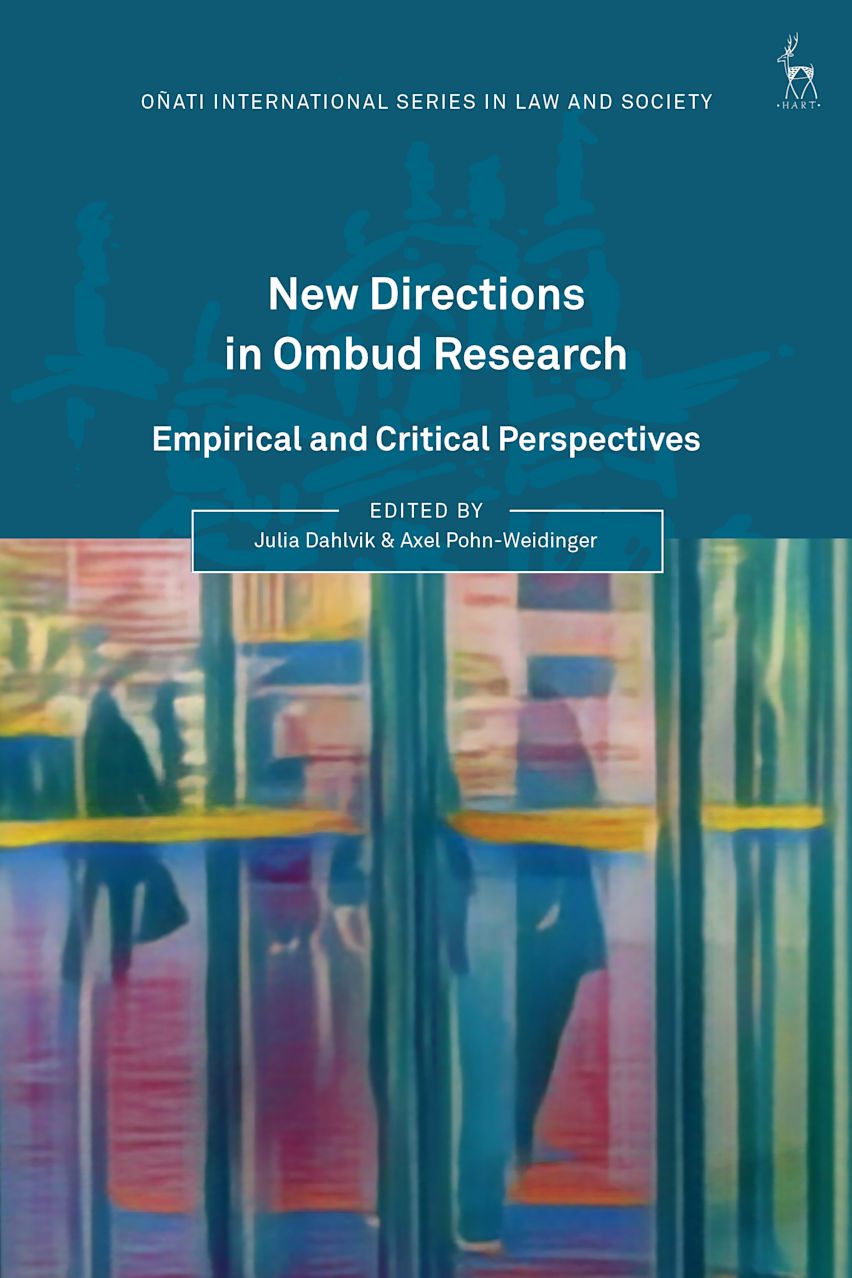
New Directions in Ombud Research
Empirical and Critical Perspectives
Buying pre-order items
Ebooks and Audiobook
You will receive an email with a download link for the ebook or audiobook on the publication date.
Payment
You will not be charged for pre-ordered books until they are available to be shipped. Pre-ordered ebooks will not be charged for until they are available for download.
Amending or cancelling your order
For orders that have not been shipped you can usually make changes to pre-orders up to 72 hours before the publishing date.
Payment for this pre-order will be taken when the item becomes available
- Delivery and returns info
-
Flat rate of $10.00 for shipping anywhere in Australia
Description
This book brings together theoretical and empirical research, as well as interdisciplinary and comparative studies with the aim to direct the contemporary debates within the field of ombud scholarship.
Most countries have public ombud institutions that are supposed to function as mechanisms of dispute resolution outside courts for citizens seeking redress for complaints against public bodies. While research on these oversight bodies has long focused on legal aspects, since the last decade scholars have increasingly become interested in historical, political and social aspects. This book makes a contribution in this multi-disciplinary field by filling two key gaps in the literature: the first part showcases recent empirical research, the second part covers critical analytical approaches.
Taken together, this volume promotes a social science oriented understanding of ombud institutions as embedded in specific social contexts, which are formed by societal forces while also contributing to the shaping of modern societies. Critical examination of how and under which conditions ombuds operate enables us to identify blind spots in both the literature and practice. On the basis of case studies from different world regions, including Austria, Australia, Colombia, France, Germany, Ireland, Netherlands, Spain, Turkey, the UK and the USA, investigated from various disciplinary perspectives, the contributions develop the field of ombud research further. Its contents and accessible style make the book relevant for anyone interested in ombud and oversight institutions: academics, researchers, students, and practitioners alike.
Table of Contents
Part I
1. Pathways to Justice through the Ombuds and Tribunal in England: Special Educational Needs and Disabilities, Naomi Creutzfeldt (Kent Law School, UK)
2. The Ombud and the Control of Bureaucratic Decision-Making: The Case of the Local Government and Social Care Ombudsman and Local Authority Education Decision-Makers in England, Chris Gill (University of Glasgow, UK)
3. The Office of the Ombud and Prisoner Complaints: Ireland, a Case Study, Sophie van der Valk (University College Dublin, Ireland)
4. Formal Independence, Material Dependence: The Financial Regime of the French Human Rights Ombudsman, Julien Mouchette (University of Reims, France)
5. Ombud in Protecting the Right to Social Security: The Case of Türkiye, Hicran Atatanir (Social Security Institution of Türkiye)
6. Ombuds Claiming and Social Inequalities. An Exploration of Legal Transformation through the Example of the Colombian Personería, Markus Ciesielski (Hildesheim University, Germany)
7. The Organisation-Agent Narrative: Street-Level Bureaucracy & Campus Sexual Misconduct, Brian Pappas (University of North Dakota, USA)
8. Independence and Accountability of Ombuds Institutions in Europe, Luka Glušac (University of Belgrade, Serbia)
9. The Digital Transformation of Public Services: A Global Comparison of Challenges From the Ombuds' Perspective, Julia Dahlvik (University of Applied Sciences FH Campus Wien, Austria)
Part II
10. Waves, Cultures or Fields? Legal Entrepreneurs and the Emergence of the Public Ombud, Axel Pohn-Weidinger (Université de Strasbourg, France)
11. Ombudsman and Hybridity: Global Model and Shape-Shifting Institution, Tero Erkkilä and Juho Mölsä (University of Helsinki, Finland)
12. Modern Ombud Practice and The Challenge of Mediation: Towards People-Centered Justice, Nick O'Brien (The Mental Health Tribunal, UK)
13. What Can Be Learned From the Mistakes of Ombudsmen?, Matthew Groves (Deakin University, Australia), Anita Stuhmke (University of Technology, Sydney)
14. UK Ombudsmen: Their Role in Improving Administration and Public Services, Robert Thomas (University of Manchester, UK)
Product details
| Published | 04 Feb 2027 |
|---|---|
| Format | Hardback |
| Edition | 1st |
| Pages | 400 |
| ISBN | 9781509992775 |
| Imprint | Hart Publishing |
| Dimensions | 234 x 156 mm |
| Series | Oñati International Series in Law and Society |
| Publisher | Bloomsbury Publishing |
Related Titles