Shakespeare’s Ecology of Natural Resources
Transitions and Transformations
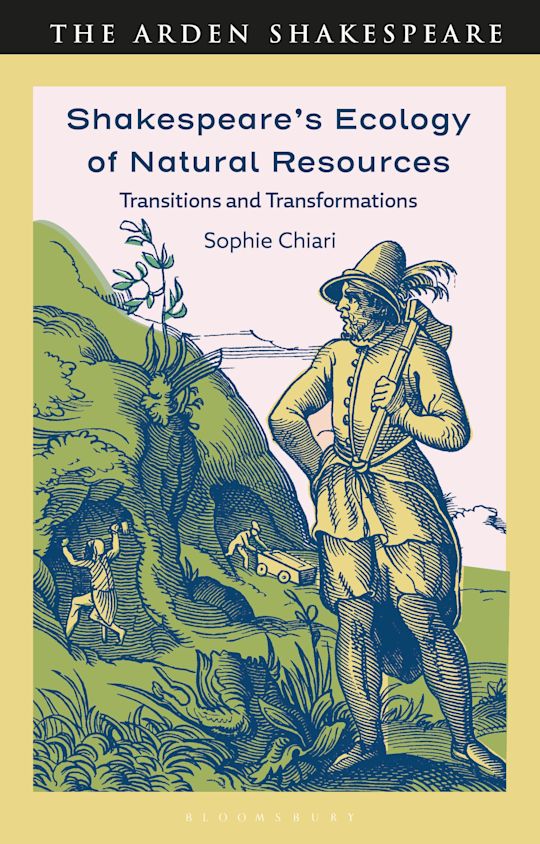

Shakespeare’s Ecology of Natural Resources
Transitions and Transformations
Buying pre-order items
Ebooks and Audiobook
You will receive an email with a download link for the ebook or audiobook on the publication date.
Payment
You will not be charged for pre-ordered books until they are available to be shipped. Pre-ordered ebooks will not be charged for until they are available for download.
Amending or cancelling your order
For orders that have not been shipped you can usually make changes to pre-orders up to 72 hours before the publishing date.
Payment for this pre-order will be taken when the item becomes available
This product is usually dispatched within 2-4 weeks following the publication date
- Delivery and returns info
-
Flat rate of $10.00 for shipping anywhere in Australia
Description
Sophie Chiari analyzes how Shakespeare's plays and poems present the transformation of the early modern natural world through environmental shifts and new ecological issues.
Using a range of examples from the Sonnets, Love's Labour's Lost, Hamlet, Timon of Athens and The Tempest, Chiari's ecopoeticstudy of dramatic language explores Shakespeare's response tothe rise of extractive exploitation in Elizabethan and JacobeanEngland. Chiari expands our understanding of the environment inShakespeare beyond the so-called 'green' comedies by charting thetransition from a pre-capitalist world towards a commodity-basedsociety characterized by the enclosure of the commons and the riseof imperialism. This study uses examples of materials which arecurrently underrepresented in Shakespearean ecocriticism includingwater systems, sandscapes and soil alongside the production ofglass and salt in Shakespeare, signalling a commitment to expanding the 'material turn' in Shakespeare studies.
Far from being limited to a presentist reading, this book argues that cultural hegemony and the exploitation of soil, ore and water were increasingly linked in the early modern era, an age of conquest and massive human depredation. By articulating ecohistoricism with ecopoetics and material studies, Shakespeare's Ecology of NaturalResources shows how an eco-minded approach, focused on the interweaving of trade, territory and extractivism, reveals new layers of meaning in Shakespearean poetics and drama.
Table of Contents
Introduction: Shakespearean Spaces of Production in the Anthropocene
Chapter 1: The Fabric of Life in the Sonnets
Good husbandry
Black pastoralism
Nature's agency
Overgreening the Sonnets
Chapter 2: Crossing the Nature/Culture Divide in Love's Labour's Lost
A locus of empowerment
The commodification of Navarre's green world
Imperialism in the King's estate
A cultural nature
Chapter 3: Water Industry and Riverine Collapse
An instrumentalist approach to rivers
Fresh water control and diversion
Ditches and drainage issues
Fluid dynamics in Shakespeare
Chapter 4: From Early Modern Sandscapes to the Making of Glass
Early modern sandscapes
Transience and mutability
The materiality of sand
From materiality to 'bare life'
Chapter 5: Under-ground Shakespeare: Transgressing the Limits and Foraging the Earth
The figure of the collier
Coal dependency: after wood, mineral fuel
Extraction economy: wresting resources from nature
Conflict landscapes: a wounded earth
At the heart of darkness
Chapter 6: Plotting, Digging, Burying, or Soil Issues in Hamlet
Land possession
Decay and degeneration
Subterranean passages
Searching for inwardness
Chapter 7: Business in the Frost in The Tempest
The island's double climate
Land use
Imperialism and extraction
Extracting… and burying
Chapter 8: White Ecology: The Salt of Early Modern Life
Salt-making
Seasoning and preserving
An imperial commodity
Preservation and destruction: from natural to commodified white gold
Conclusion: Transforming Nature: Life in a Crisis Mode
Bibliography
Index
Product details

| Published | 24 Jun 2027 |
|---|---|
| Format | Paperback |
| Edition | 1st |
| Pages | 248 |
| ISBN | 9781350559103 |
| Imprint | The Arden Shakespeare |
| Dimensions | 234 x 156 mm |
| Publisher | Bloomsbury Publishing |


ONLINE RESOURCES
Bloomsbury Collections
This book is available on Bloomsbury Collections where your library has access.
Related Titles