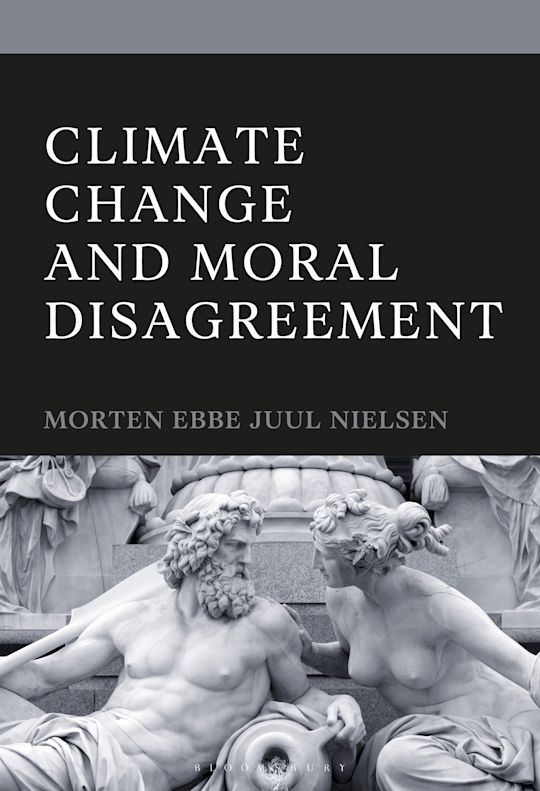

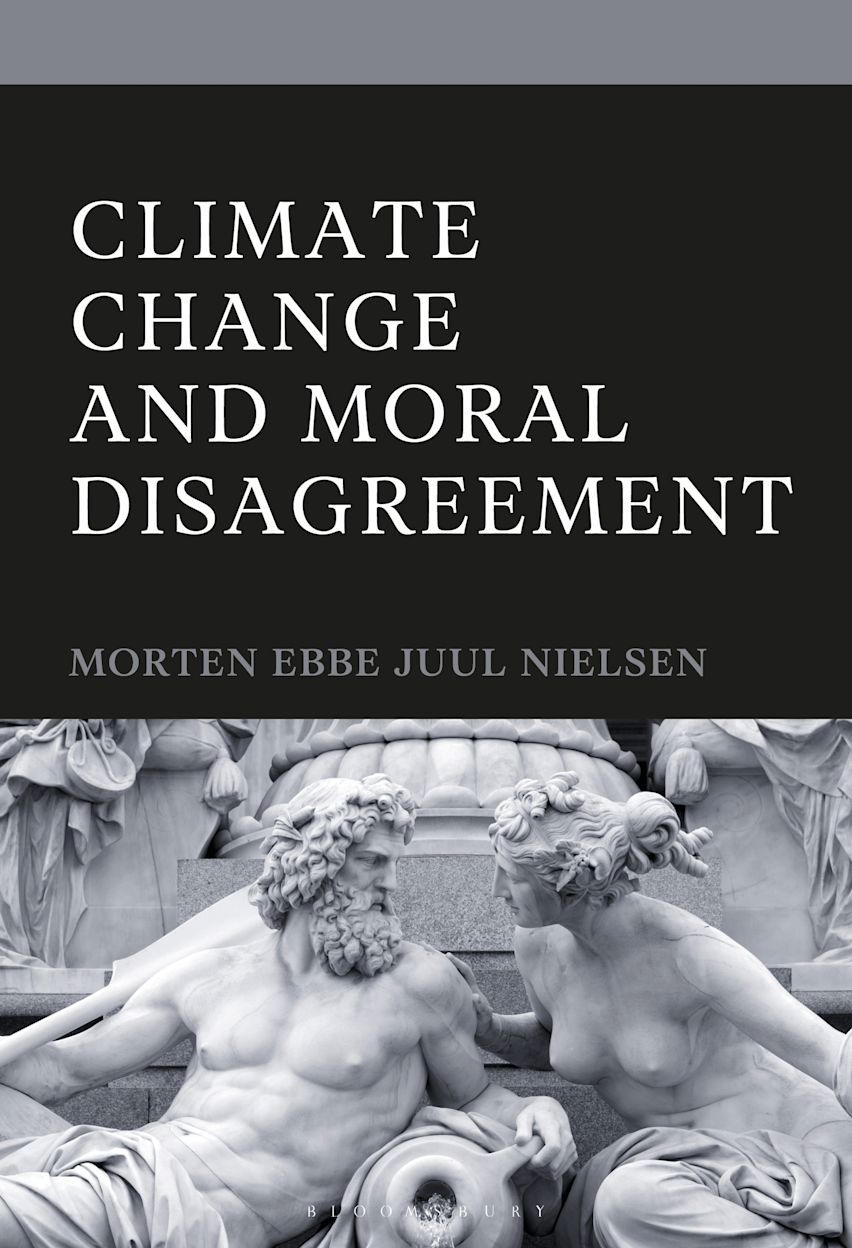
Climate Change and Moral Disagreement
Description
Moral Disagreement and Climate Change addresses the following problem: Assume, first, that our excessive production of Greenhouse Gases contributes significantly to what may be very serious detrimental effects on our climate and hence our welfare. Solving this issue will inevitably be costly. Assume, furthermore, that we disagree reasonably about how to distribute costs, and how to conceive of the moral problem of climate change to begin with. How can we make progress in the light of this reasonable disagreement? The author argues that we can learn from two related but distinct schools of thought in contemporary philosophy: the idea of conciliationism (when a peer that is equal to you in terms of knowledge about some domain disagrees, you have reason to find compromises) and the idea of public reason (only policies or rules that are, at some level of idealization, acceptable to all can be justified.) Via these two ideas, the author analyzes various important aspects of climate change and suggests that we can find ways to address the issue that are indeed justifiable to all. Disagreement does not mean paralysis.
Accessibility Information
Additional accessibility information
- EPUB 3.0
- Conforms with the requirements of EPUB Accessibility Spec v1.1
- WCAG level AA
- WCAG v2.2 compliant
- accessibility@bloomsbury.com
Hazards
The publication contains no hazards
Support for non-visual reading
- No accessibility features offered by the reading system, device or reading software are disabled or otherwise unusable with the product
- Has alternative text descriptions for images
Visual adjustments
Appearance of the text and page layout can be modified according to the capabilities of the reading system (font family and size, spaces, as well as color of background and text)
Navigation
- Page list to go to pages from the print source version
- Elements such as headings, tables, etc for structured navigation
- All or substantially all textual matter is arranged in a single logical reading order
- Content is enhanced with ARIA roles to optimize organization and facilitate navigation
- Purposes of all links are made clear
Rich content
Language tagging provided
Table of Contents
Part I: Disagreement and Individual Morality
Chapter 1: Introduction
Chapter 2: Moral Disagreement and Conciliationism Chapter 3: Drivers of Disagreement
Chapter 4: Climate Change, Compromise, and Consensus Chapter 5: Conceptualizing Climate Change
Chapter 6: Distributive Disagreements about Climate Action Chapter 7: Further Moral Issues
Part 2: Disagreement, Acting Together and Public Reason Chapter 8: Public Reason
Chapter 9: Public Reason, Disagreements, and the Role of Science in Climate Change
Chapter 10: Public Reason and Climate Change as a Global Problem
Part 3: Practical Implications Chapter 11: What to Think, how to Act
Chapter 12: Individual Deliberation and Responsibilities Chapter 13: Advice for Decision Makers
Epilogue
Product details

| Published | 01 Oct 2026 |
|---|---|
| Format | Ebook (Epub & Mobi) |
| Edition | 1st |
| Pages | 306 |
| ISBN | 9781978766075 |
| Imprint | Bloomsbury Academic |
| Illustrations | 1 b/w |
| Series | Key Issues in Climate Change and Sustainability: Ethics, Politics and Policy |
| Publisher | Bloomsbury Publishing |

Reviews
Related Titles