Contextualizing the Four Pillars of African Music
The Socio-Political and Cultural Practices of Musical Traditions
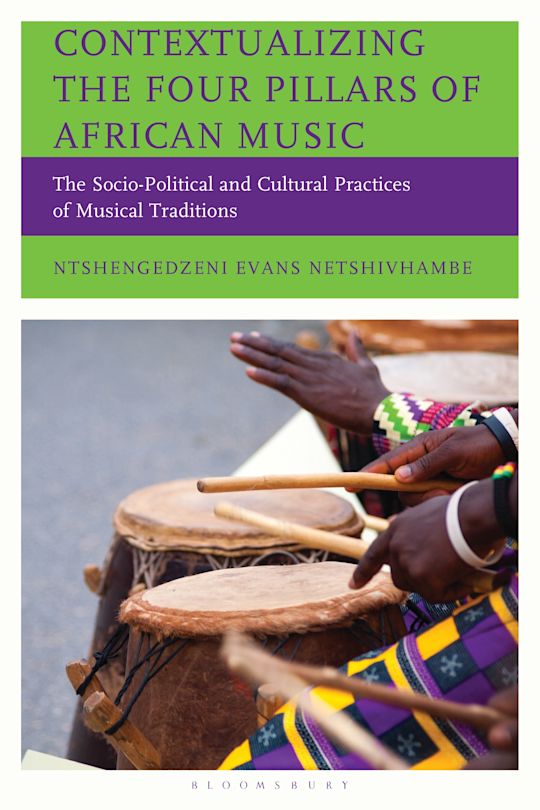

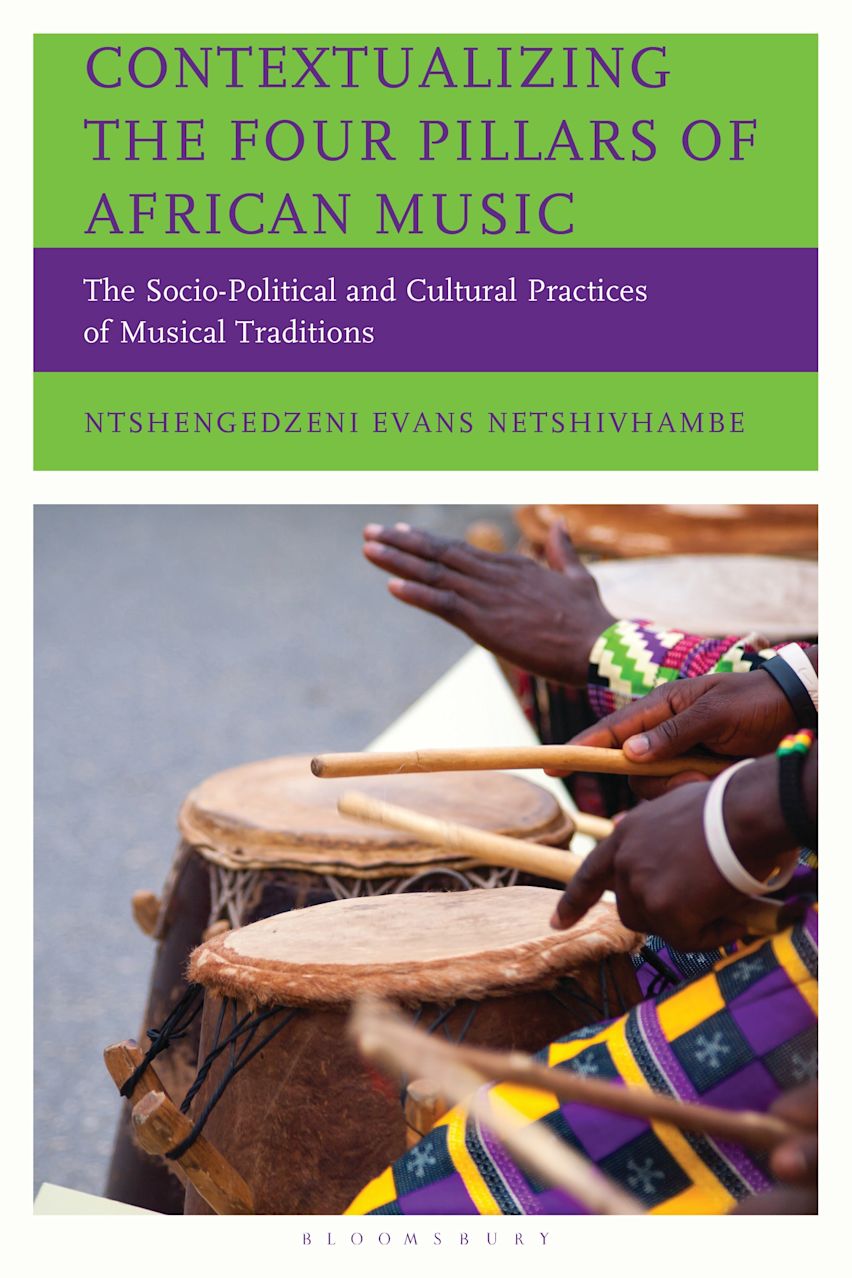
Contextualizing the Four Pillars of African Music
The Socio-Political and Cultural Practices of Musical Traditions
Description
Exploring African music's global influence from traditional rituals to the rise of commercial music, the author examines how African music has both shaped and been shaped by global trends since the mid-20th century.
Through his expertise in African Music and Art Composition, Ntshengedzeni Evans Netshivhambe offers a comprehensive framework for understanding African music beyond the often-simplistic categorization of “traditional” and “modern.” By examining four pillars: traditional music and dance, indigenous instrument craftsmanship, popular and commercial music, and African art music, (developed in the 1980s), this book traces the development of African music by situating each pillar within socio-political and cultural contexts that have attributed to its evolution.
Drawing upon scholarly literature, archival materials, firsthand accounts, and case studies from various regions across the continent, this book not only offers a localized perspective that highlights African voices but also ensures a diverse representation of the African musical traditions and common practices shared between them. The book foregrounds African musical practices in their holistic richness, demonstrating how music serves as a vital connecting thread between African communities, their cultural identities, and the wider global village.
Accessibility Information
Additional accessibility information
- EPUB 3.0
- Conforms with the requirements of EPUB Accessibility Spec v1.1
- WCAG level AA
- WCAG v2.2 compliant
- accessibility@bloomsbury.com
Hazards
The publication contains no hazards
Support for non-visual reading
- No accessibility features offered by the reading system, device or reading software are disabled or otherwise unusable with the product
- Has alternative text descriptions for images
Visual adjustments
Appearance of the text and page layout can be modified according to the capabilities of the reading system (font family and size, spaces, as well as color of background and text)
Navigation
- Page list to go to pages from the print source version
- Elements such as headings, tables, etc for structured navigation
- All or substantially all textual matter is arranged in a single logical reading order
- Content is enhanced with ARIA roles to optimize organization and facilitate navigation
- Purposes of all links are made clear
Rich content
Language tagging provided
Table of Contents
Introduction
Part I.
1. The Role of Music in African Societies
2. Early Documentation and External Narratives of African Music
3. African Music and the Problem of Definition: Practice, Identity, and Heritage
Part II.
4. Indigenous African Instrument Specialists: A Pillar of Musical Knowledge and Tradition
5. Instruments Made by Human Hands
6. Evolution and Challenges in indigenous instrument Making and Performing
Part III.
7. Popular Music Pillar
8. Music as Resistance and Political Agency in African Popular Music
9.
Part IV.
10. From Music Literacy to Creative Musicology: Notation, African Art Music, and the Preservation of Musical Heritage
11. The Formation of African Art Music and the Emergence of Scholar-Composers
12.
Conclusion
References
Index
Product details

| Published | 10 Jun 2027 |
|---|---|
| Format | Ebook (Epub & Mobi) |
| Edition | 1st |
| Pages | 288 |
| ISBN | 9798216392859 |
| Imprint | Bloomsbury Academic |
| Illustrations | 20 b/w photos |
| Series | African Literature and the Arts: Across the Continent and Throughout the Diaspora |
| Publisher | Bloomsbury Publishing |
Related Titles