Critical Approaches to Global Police Power
Theory, History, Activism
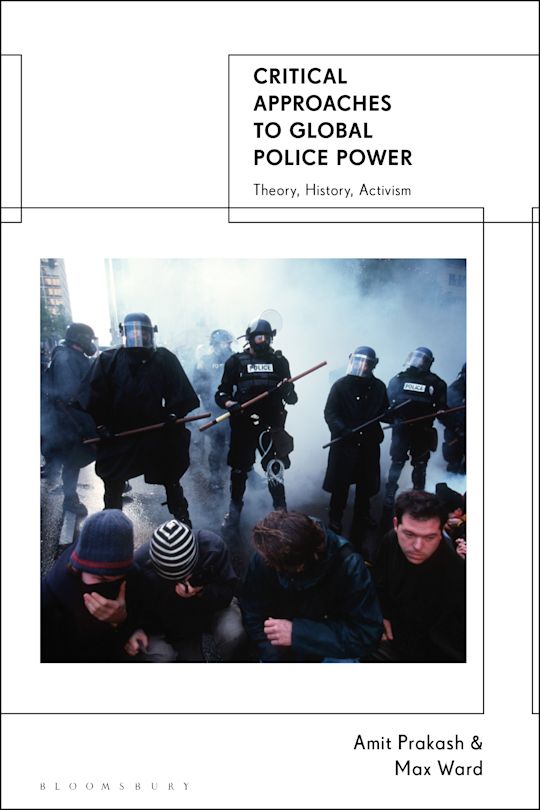

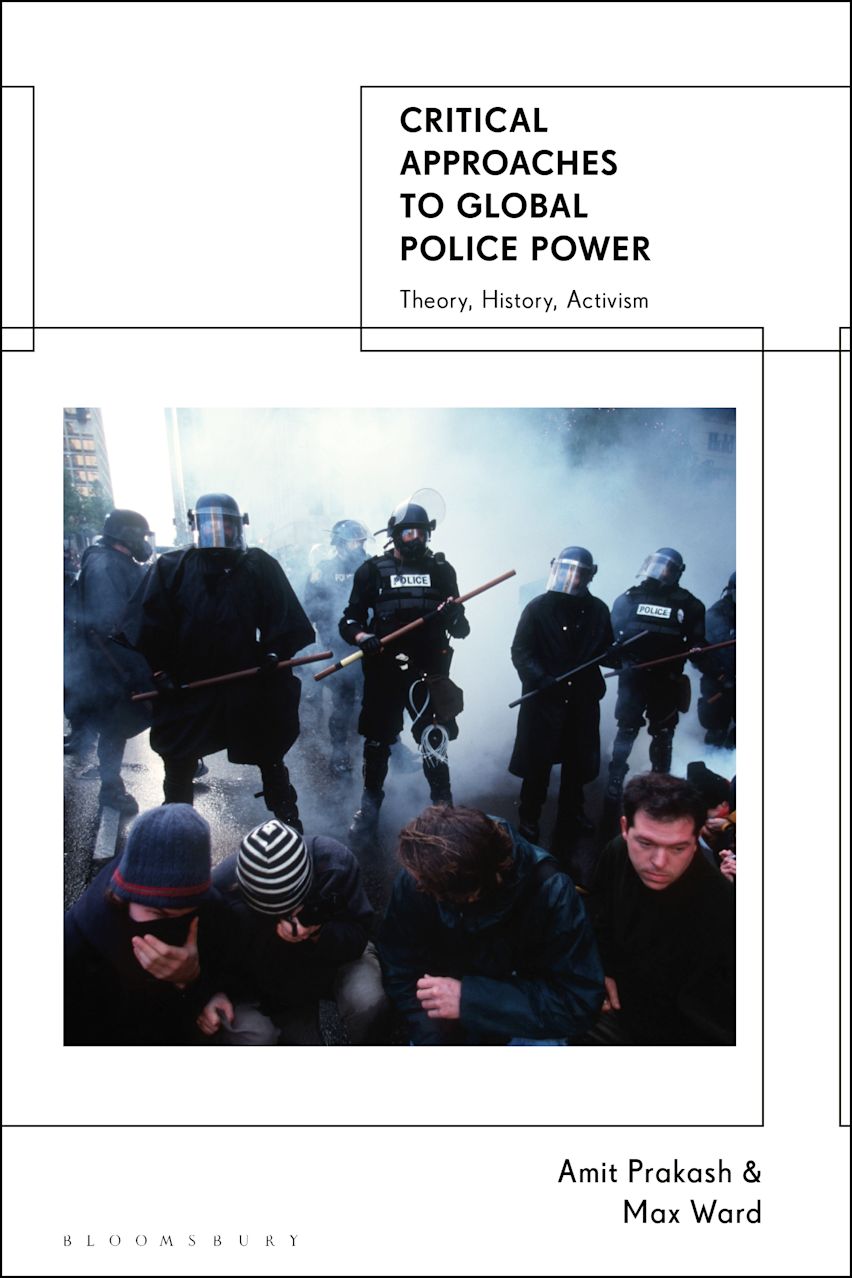
Critical Approaches to Global Police Power
Theory, History, Activism
Description
What is the global nature of police power? What are its features and how can they be studied? This landmark multidisciplinary volume looks beyond policing as experienced at the local level, and instead explores the “police idea,” practices, and institutions that have been historically developed through the interaction of capitalist growth, nation-state formation, and imperial encounters.
Drawing on a set of uniquely global case studies including that of the UK, China, Colombia, France, Indonesia, Japan, and the US, this volume shows how police power has been formed by, and has likewise formed, capitalism, nationalism, and imperialism by acting as midwife, guardian, or guarantor
of the norms and forms of life produced by these vast global processes.
Accessibility Information
Additional accessibility information
- PDF/UA-2, 1.4
- accessibility@bloomsbury.com
Hazards
The publication contains no hazards
Support for non-visual reading
Has alternative text descriptions for images
Navigation
- Page list to go to pages from the print source version
- Elements such as headings, tables, etc for structured navigation
- All or substantially all textual matter is arranged in a single logical reading order
Table of Contents
Towards a Critical Analysis of Global Police Power
by Amit Prakash and Max Ward
Part I: Questioning “Origins” and Global Circulations of the Police Idea
Chapter 1:
Policía beyond the Police
by Laura Gutiérrez and Mark Neocleous
Chapter 2:
Japan and the Global Circulation of the Police Idea
by Max Ward
Part II: Coloniality, Globality, and the Police
Chapter 3:
The “Colonial-Global” and the Birth of the New Police in England and the United States
by Julian Go
Chapter 4:
The French Connection: The “Oil Stain” Theory of Counterinsurgency and the Making of Global Police Power
by Amit Prakash
Part III: Global Perspectives, Local Police
Chapter 5:
Revisiting the Perfect Policeman, Questioning Global Perspectives: Policing and Modernity in 1930s Colonial Indonesia
by Marieke Bloembergen
Chapter 6:
Policing Against Capitalism: A Maoist Genealogy of Revolutionary Policing
by Jeffrey T. Martin
Part IV: The Challenge of Understanding and Confronting Global Police Power
Chapter 7:
Policing Us into Extinction
by Guillermina Seri
Chapter 8:
A Critique of Global Police Power: A Conversation
Alex Vitale and Stuart Schrader
Bibliography
List of Contributors
Product details

| Published | 01 Oct 2026 |
|---|---|
| Format | Ebook (PDF) |
| Edition | 1st |
| Pages | 272 |
| ISBN | 9781350574885 |
| Imprint | Bloomsbury Academic |
| Publisher | Bloomsbury Publishing |

Reviews

ONLINE RESOURCES
Bloomsbury Collections
This book is available on Bloomsbury Collections where your library has access.
Related Titles