
- Home
- NON-FICTION
- Essays & Journalism
- Everyday Revolutions
You must sign in to add this item to your wishlist. Please sign in or create an account
Description
As a political journalist, Fatima Khan spent years travelling across the country, from Delhi to Karnataka and Assam to Tamil Nadu, covering hate crimes and state-led persecution, the victims of which were primarily Muslim men. What was left out of her notes were the conversations she had with the women who were related to these victims. She saw how Muslim women were becoming politicized and challenging the state and, in the process, turning their gaze inwards to question the power dynamics within their community. They were doing so strategically, without throwing Muslim men under the bus - a bus whose driver is all too willing to run them over.
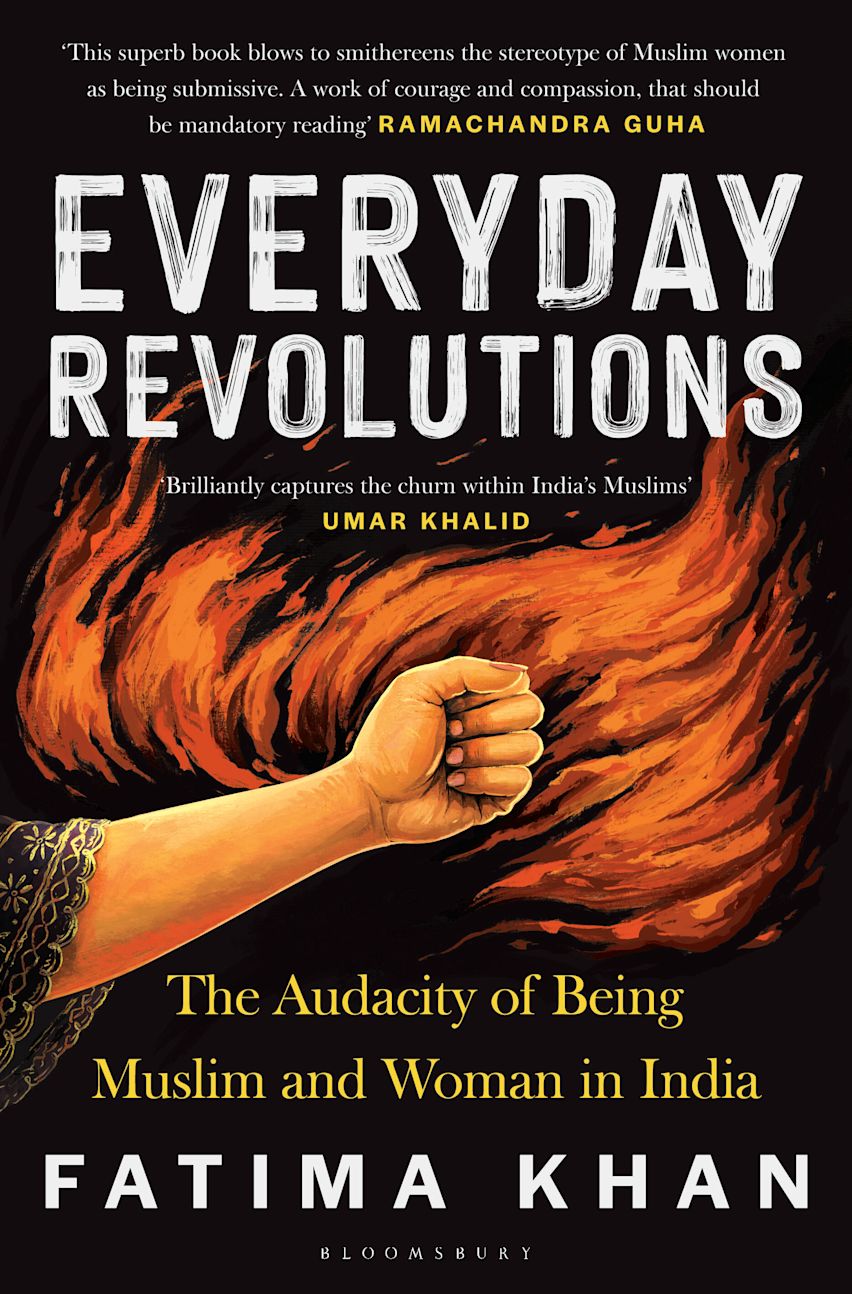
In Everyday Revolutions, Khan blends her personal experiences with ground reportage to reveal how rising anti-Muslim hate, state-sanctioned violence and entrenched patriarchy are shaping the lives of Muslim women in India. The state's persecution, whether manifested as a brother's lynching, a husband's incarceration or a hijab ban in classrooms, is compelling women to forge their own political subjecthood. This has produced an unexpected sense of agency that defies the stereotypical passivity expected of Muslim women, both by the state and by their own community. These women contest elections, build communities, create space within institutions and show up for the next protest while holding jobs, paying bills, raising children and caring for families.
Situating individual experiences against broader patterns of discrimination, Khan's Everyday Revolutions traces a growing political awakening among Muslim women that is unfolding across the country, in unforeseen ways, and often against all odds.
Product details
| Published | 17 Nov 2026 |
|---|---|
| Format | Hardback |
| Edition | 1st |
| Pages | 352 |
| ISBN | 9789356402430 |
| Imprint | Bloomsbury India |
| Dimensions | 234 x 153 mm |
| Publisher | Bloomsbury Publishing |
About the contributors
Reviews
-
This superb book blows to smithereens the stereotype of Muslim women as being submissive and without agency. Through her immersive reportage in states across India, Fatima Khan crafts sensitive portraits of female students, homemakers, lawyers, teachers and writers, fighting back against communal bigotry and patriarchal oppression. Everyday Revolutions is a work of courage and compassion, that should be mandatory reading for those interested in a deeper understanding of the failed promises of the Republic, and possible pathways to redeem them.
RAMACHANDRA GUHA
-
Fatima Khan brilliantly captures the churn within India's Muslims with an incisive understanding of the political and emotional transformations of our times. As Muslim women take centre stage and chart new pathways of resistance, her clear-eyed account traces the feminist vernaculars of their own making. Her attentive reading of these struggles reminds us that Muslim women need no saving; instead, it is they who will save India's democracy from the clutches of fascism.
UMAR KHALID
-
Fatima Khan weaves flesh-and-blood stories at the street level into the bigger context and setting to paint a comprehensive and nuanced portrait of the struggles and aspirations of Muslim women in India. This is simply one of the most impressive and significant pieces of reporting I have ever read.
JOE SACCO
-
Fatima Khan brings to life the courage and resilience of Muslim women who refuse to be confined by stereotypes. Their struggles against discrimination and patriarchy are intertwined with a fight for dignity, voice and equal citizenship. Through stories of resistance, solidarity and everyday assertion, Everyday Revolutions shows women claiming space, exercising agency, and the right to shape their own lives. They fight for themselves and their families, remain in spaces that tell them they do not belong, and build networks of support to keep going. A must-read for those seeking to understand the everyday struggles of ordinary people, especially Muslims.It's a well written and moving account of the lives of Muslim women in the midst of major changes taking place in Indian society.
ZOYA HASAN, Professor Emerita, Centre for Political Studies, Jawaharlal Nehru University