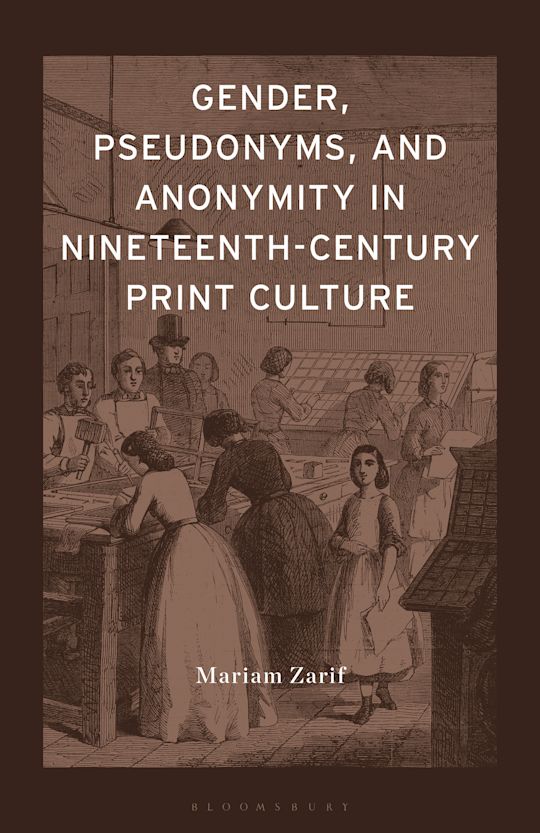

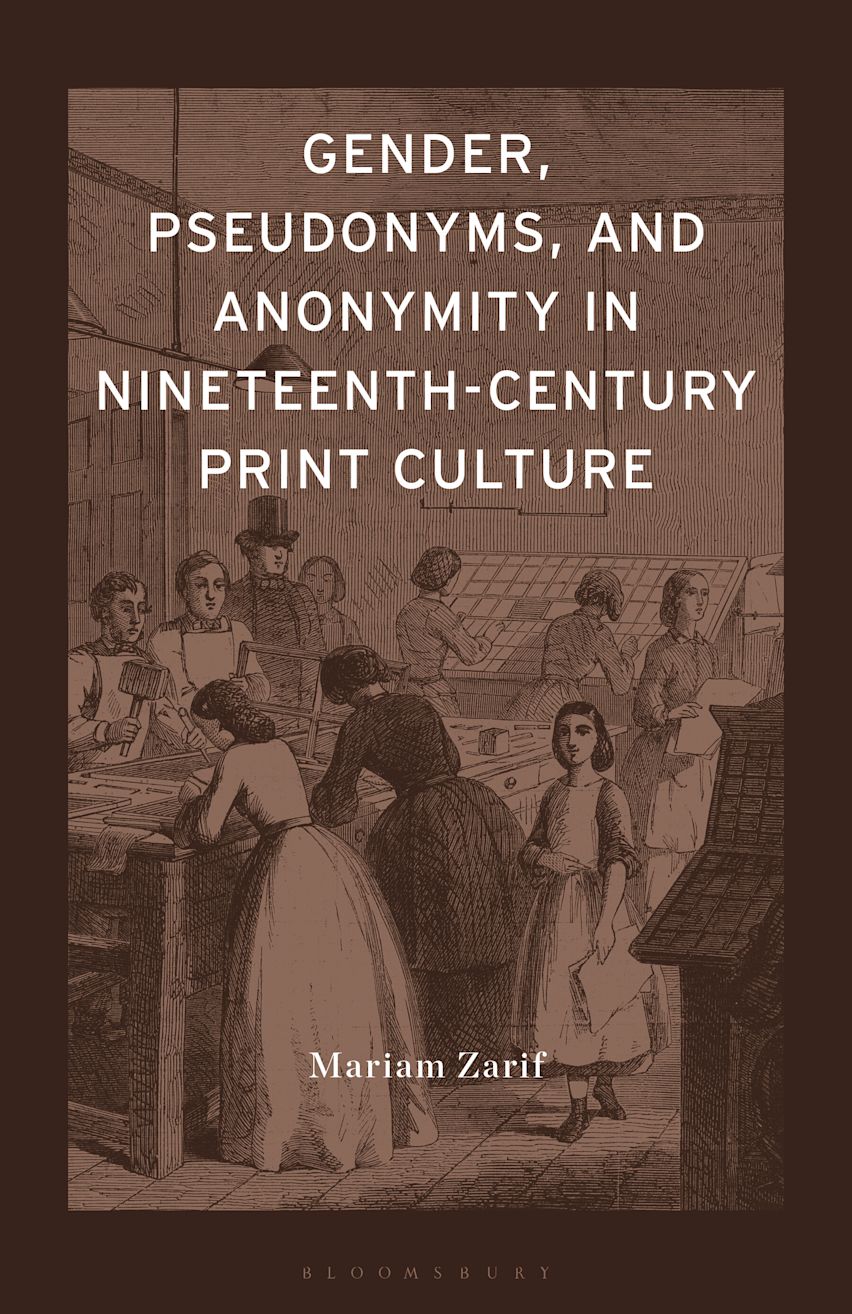
Gender, Pseudonyms, and Anonymity in Nineteenth-Century Print Culture
Description
Mariam Zarif uncovers a hidden chapter in the history of the women's press: the role of male editors who, writing under female pseudonyms, shaped the voices of mass-market women's magazines at the turn of the twentieth century.
Focusing on penny weeklies and popular periodicals, Zarif reveals how publications that appeared to amplify women's voices were often strategically curated by men. These editorial masquerades complicate the understanding of gendered authorship and reveal the subtle mechanisms through which femininity was constructed, marketed, and contested in print. Drawing on extensive archival research and previously overlooked editorial correspondence, advertisements, and reader contributions, this book explores how editors such as Arnold Bennett and Fitzroy Gardner adopted pseudonymous “female” identities to engage with a growing female readership. Zafir reframes women's magazines not simply as ideological tools or platforms for progress, but as dynamic, contradictory spaces where domestic ideals coexisted with reformist ambitions, and where gender was both performed and policed.
Accessibility Information
Additional accessibility information
- EPUB 3.0
- Conforms with the requirements of EPUB Accessibility Spec v1.1
- WCAG level AA
- WCAG v2.2 compliant
- accessibility@bloomsbury.com
Hazards
The publication contains no hazards
Support for non-visual reading
- No accessibility features offered by the reading system, device or reading software are disabled or otherwise unusable with the product
- Has alternative text descriptions for images
Visual adjustments
Appearance of the text and page layout can be modified according to the capabilities of the reading system (font family and size, spaces, as well as color of background and text)
Navigation
- Page list to go to pages from the print source version
- Elements such as headings, tables, etc for structured navigation
- All or substantially all textual matter is arranged in a single logical reading order
- Content is enhanced with ARIA roles to optimize organization and facilitate navigation
- Purposes of all links are made clear
Rich content
Language tagging provided
Table of Contents
Introduction
1. The Making of a Feminized Editorial Voice
2. The Making of the Woman Reader: Address, Audience, and the Women's Press in the 1890s
3. Who Speaks When Woman Speaks?
4. Arnold Bennett and the Commercialization of Feminine Authority
5. Between Domesticity and Modernity: The Limits of Editorial Masquerade
Conclusion: Voice, Visibility, and the Afterlives of Editorial Disguise
Bibliography
Product details

| Published | 21 Jan 2027 |
|---|---|
| Format | Ebook (Epub & Mobi) |
| Edition | 1st |
| Pages | 232 |
| ISBN | 9798216395249 |
| Imprint | Bloomsbury Academic |
| Illustrations | 6 b/w illustrations |
| Publisher | Bloomsbury Publishing |
Reviews
Related Titles