Human Rights at the Interface of Law, Technology and Society
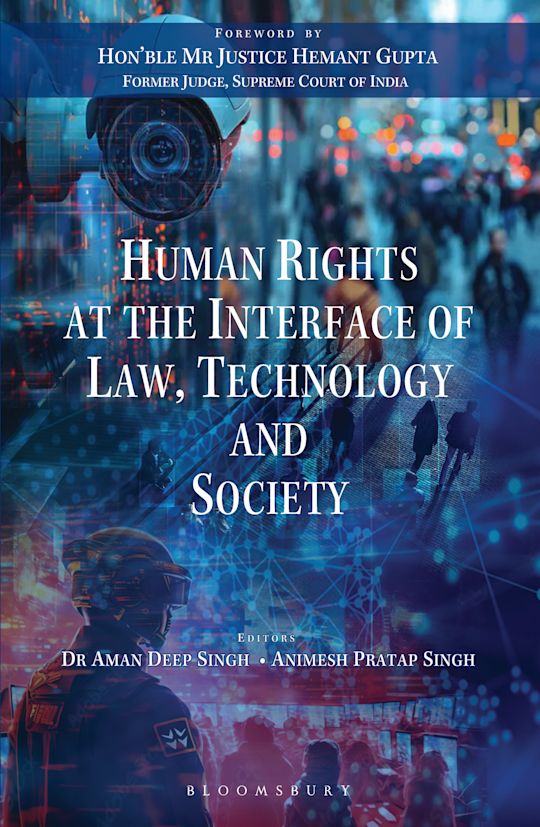

Human Rights at the Interface of Law, Technology and Society
Description
This edited volume examines how technological change is reshaping the meaning, exercise and protection of human rights. Bringing together perspectives from law and related disciplines, it considers how digital technologies are redistributing power among individuals, governments, institutions, platforms and automated systems, and asks how law can ensure that technological innovation remains compatible with dignity, equality, privacy, autonomy and democratic participation.
Grounded predominantly in the Indian legal and social context while drawing on comparative and international developments, the volume addresses emerging questions concerning artificial intelligence, algorithmic governance, surveillance, data protection, platform labour, children's rights, gender and bodily autonomy, digital identity, biometrics, health technologies, online speech and access to technology.
Structured in nine parts, the book moves from philosophical and foundational questions of digital rights to AI and algorithmic justice, children and labour, gender and reproductive technologies, technological accountability, freedom of expression, biometrics and surveillance, data privacy and digital inclusion. The chapters combine doctrinal, philosophical, comparative and interdisciplinary approaches to examine both the opportunities created by technological development and the risks it poses to human rights.
The volume offers a wide-ranging account of the evolving relationship between law, technology and society and will be of interest to students, researchers, legal academics, practitioners, policymakers and others working on human rights and technology.
Table of Contents
Foreword, Hon'ble Mr Justice Hemant Gupta, Former Judge, Supreme Court of India
Preface, Animesh Pratap Singh (Dr. Ram Manohar Lohiya National Law University, Lucknow)
Part I: Philosophical and Foundational Contours of Digital Rights
1. Digital Dignity: Philosophical Perspectives on Personhood and Privacy in the Age of Surveillance Capitalism
Prof. (Dr.) Ranjay Pratap Singh (Department of Philosophy, DAV PG College, Kanpur) and Dr. Shashikant Tripathi (Atal Bihari Vajpayee School of Legal Studies, CSJM University, Kanpur)
2. The Fatal Conceit of the Algorithm: Hayekian Legal Philosophy in the Era of Big Tech and Surveillance
Animesh Pratap Singh (Dr. Ram Manohar Lohiya National Law University, Lucknow)
Part II: AI and Algorithmic Justice
3. Automated Inequality: The Human Rights Implications of Algorithmic Welfare and Social Scoring Systems
Dr. Aman Deep Singh (Dr. Ram Manohar Lohiya National Law University, Lucknow) and Samerendra Chauhan (Atal Bihari Vajpayee School of Legal Studies, CSJM University, Kanpur)
4. Racial Bias in AI Systems in Criminal Justice: A Comparative Analysis of American and Indian Perspectives
Soumik Chakraborty and Simrean Bajwa (BITS Law School, Mumbai)
5. AI-Driven Health Insurance: Balancing Legal Challenges and Human Rights
Md. Ikra (Bangladesh University of Professionals) and Fahim Abrar Abid (Bangladesh Society of International Law)
6. Augmenting Humanity: The New Frontier of Disability Rights
Lishika Sahni (Trilegal) and Kritin Bahuguna (Anagram Legal)
Part III: Children, Labour and Technology
7. Digital Playgrounds, Real Risks: A Comparative Analysis of Children's Data Privacy Laws and the Need for Comprehensive Legal Reform in India
Dr. Vini Singh (School of Law, Dhirubhai Ambani University)
8. Children in the E-Waste Landscape: Indian Legal Perspectives
Dr. Nivedita Chaudhary (Faculty of Law, University of Delhi)
9. Human Rights Violations in the Technology Sector: Sweatshops, Child Labour, and Modern Slavery
Ranjana Sathiavageeswaran and Dr. Lalita Niteen Bhosle (KLE College of Law, Navi Mumbai)
10. Labour Rights in the Platform Economy: Social Security, Algorithmic Control and Worker Dignity
Dr. Prasenjit Kundu and Animesh Pratap Singh (Dr. Ram Manohar Lohiya National Law University, Lucknow)
Part IV: Gender, Bodily Autonomy and Technology
11. Not My Body, Not My Choice: Deepfake Technology, Artificial Intelligence and the Distortion of Female Bodily Autonomy in Digital Spaces
Karthik Shiva B. (Tamil Nadu Dr. Ambedkar Law University, Chennai) and Prof. (Dr.) Sanjay Kumar Yadav (National Law Institute University, Bhopal)
12. Data Colonialism and Gendered Surveillance: Privacy Implications of Period-Tracking Apps for Women in Urban India
Shikha Vasishta (Department of Law, Maharaja Agrasen Institute of Management Studies, Delhi)
13. Assisted Reproductive Technologies: Ethical Concerns and Human Rights
Prof. (Dr.) Ajai Singh and Shilpi Kanchan (Department of Law, University of Allahabad)
14. The Digital Divide and Women's Rights: Progress, Setbacks, and Legal Disparities in Workforce Participation
Tejaswini Misra and Navya Mall (Faculty of Law, University of Delhi)
Part V: Accountability and Governance of Technology
15. Crossroads between Digital Identity and Human Rights: Balancing Access, Privacy and Security
Dr. Aditi Nidhi and Neha Tripathi (School of Law, Mahindra University, Hyderabad)
16. Prospects of Blockchain in the Realisation of Human Rights
Dr. Sirsha Pattanayak and Dr. Shivam Upadhyay (T A Pai Management Institute, Bengaluru, Manipal Academy of Higher Education)
17. Unchecked Giants: Tech Giants and Human Rights Relating to Freedom of Expression and Privacy
Anand Kumar Singh (Dr. Ram Manohar Lohiya National Law University, Lucknow), Aditya Kumar (Department of Law, BHU, Varanasi) and Shivali Srivastava (Infosys, Bengaluru)
18. Open-Source Technologies and Data Privacy within the Realm of National Security: Comparative Perspectives from India and the UAE
Kushal Srivastava (Woxsen University, Hyderabad) and Dhaval Deshkar (Rashtriya Raksha University, Lavad)
19. A Human Rights Perspective on FinTech Regulation: Balancing Innovation with Inclusion, Privacy, and Dignity
Shreya Singh (Moneyview, Bengaluru)
Part VI: Freedom of Expression, Democracy and Online Public Spheres
20. From Packingham to Moody's: Redefining Free Speech in the Era of Social Media
Mandar Prakhar (Vidhi Centre for Legal Policy, New Delhi) and Anjali Pande (National Law University Odisha)
21. Digital Manipulation in Elections: Concerns Over Use of Technology and Violation of Political Rights
Gaurav Singh Sachan (Dr. Rajendra Prasad National Law University, Prayagraj), Priyanshu Sachan (Dr. Ram Manohar Lohiya National Law University, Lucknow) and Piyush Kumarendra (Department of Law, C.M.P. Degree College, Prayagraj)
Part VII: Biometrics, Facial Recognition and Identity Surveillance
22. Privacy Under the Lens of Biometrics
Dr. Parineeta Goswami (School of Law, UPES, Dehradun)
23. Biometrics and Privacy: Challenges of Regulation in the Digital Age
Dr. Smita Srivastava (Faculty of Law, University of Allahabad)
24. Faces in the Digital Age: Unmasking the Debate between Facial Recognition Technology & Right to Privacy: A Comparative Analysis of EU, US & India
Shubham Kashyap Kalita (School of Law, Manipal University, Jaipur)
Part VIII: Data Privacy, Surveillance and Security
25. Beyond the Firewall: Unveiling the Human Rights Implications of Data Encryption Policies
Reeva Khunud K Pathan (CHRIST (Deemed to be University), Bengaluru)
26. Tracking or Intruding? Legal Implications of Geospatial Technologies on Healthcare Privacy and Human Rights
Gyanendra Singh and Kaushiki Trivedi (Atal Bihari Vajpayee School of Legal Studies, CSJM University, Kanpur)
27. An Assessment of Judicial Recognition of Right to be Forgotten in Indian Digital Space
Shreya Singh (Department of Law, BHU, Varanasi) and Muskan Kalra (Faculty of Law, Manipal University, Jaipur)
Part IX: Technology, Social Inclusion and Digital Access
28. The Internet as a Utility or a Fundamental Right? A Comparative Analysis of Global Frameworks and the Impact on Economic and Social Rights
Prof. (Dr.) Manoj Kumar (School of Legal and Socio-Political Studies, Dr. B.R. Ambedkar University Delhi), Dr. Shashank Kumar Dey (School of Law, Alliance University, Bengaluru) and Mayuri Singh (Atal Bihari Vajpayee School of Legal Studies, CSJM University, Kanpur)
29. Role of Behaviour Change in Digital Transformation: An In-Depth Look at the Case of the POSHAN Tracker App
Gitanjali (Nazariya QFRG)
30. Intersection of Socio-Economic Status and Digital Access: Implications for Educational Equity in India
Bhagyashree Agarwal (UPES, Dehradun)
Product details
| Published | 25 Aug 2026 |
|---|---|
| Format | Hardback |
| Edition | 1st |
| Pages | 476 |
| ISBN | 9789361316654 |
| Imprint | Bloomsbury Prime |
| Dimensions | 234 x 153 mm |
| Publisher | Bloomsbury Publishing India Pvt. Ltd |
Related Titles