The Impact of Domestic Actors on Iraq's Foreign Policy Formulation, 1950s to 1980s


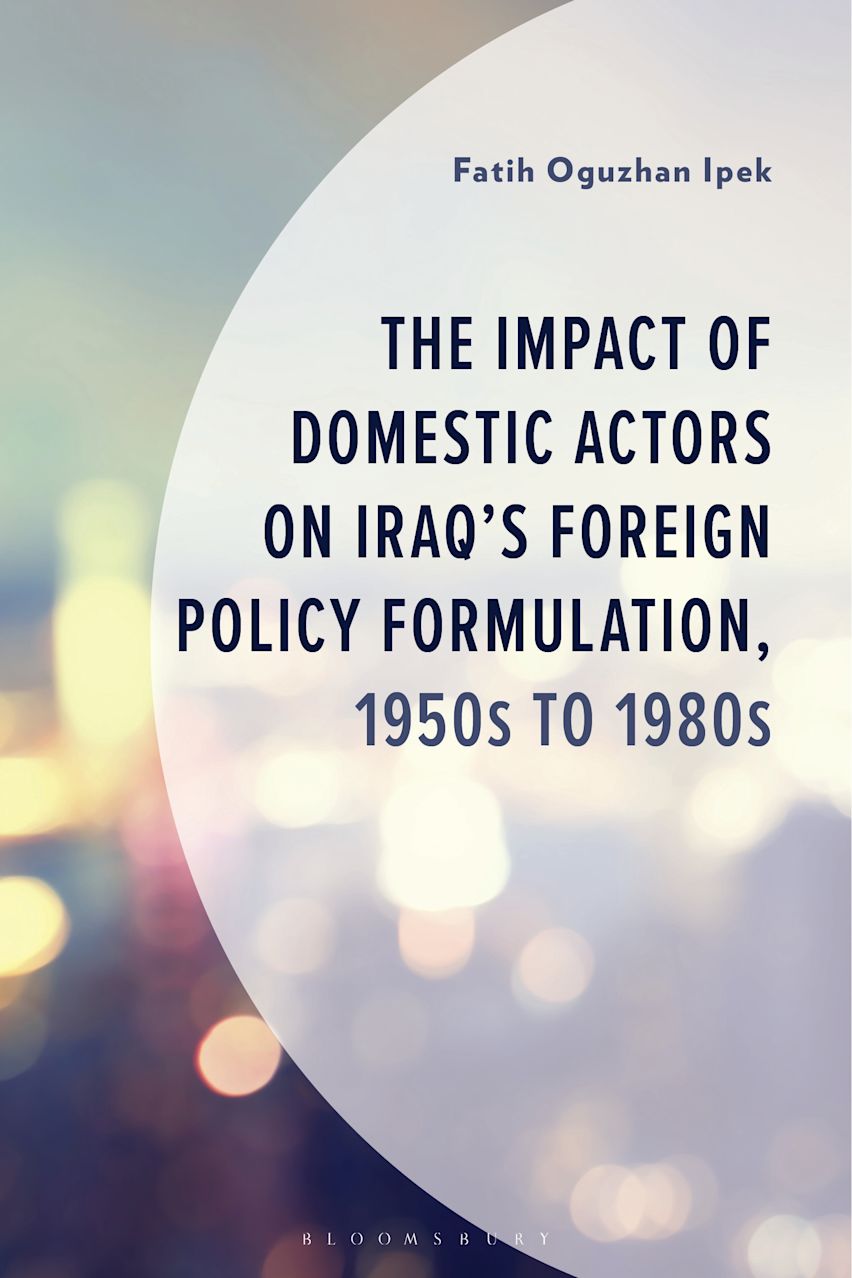
The Impact of Domestic Actors on Iraq's Foreign Policy Formulation, 1950s to 1980s
Description
This book presents a theoretical framework for understanding Iraqi foreign policy from the 1950s through the late Cold War, examining how successive regimes navigated complex international and domestic pressures.
Fatih Oguzhan Ipek analyzes the interplay between systemic factors-including influences from great and regional powers-and unit-level variables such as the Iraqi foreign policy executive (FPE) and societal elites. By exploring four critical dimensions-the threat environment, the FPE's structural autonomy, foreign policy coalitions, and domestic power balances-the book reveals how Iraqi leaders strategically used foreign policy to address both external threats and internal challenges. Case studies demonstrate how the concern for regime survival in the Hashemite monarchy motivated it to accede to the Baghdad Pact, how the Iraq-Egypt rivalry influenced Qasim's decision to invade Kuwait, how Nasserism and Arab nationalism compelled President Arif to join the 1967 Arab-Israeli War despite limited autonomy, and how Iraqi leaders responded to rising powers based on their structural position and the domestic political landscape. This analysis moves beyond conventional explanations of Iraqi foreign policy, offering a nuanced understanding of how authoritarian regimes balance external pressures and domestic constraints when formulating strategic decisions.
Accessibility Information
Additional accessibility information
- EPUB 3.0
- Conforms with the requirements of EPUB Accessibility Spec v1.1
- WCAG level AA
- WCAG v2.2 compliant
- accessibility@bloomsbury.com
Hazards
The publication contains no hazards
Support for non-visual reading
- No accessibility features offered by the reading system, device or reading software are disabled or otherwise unusable with the product
- Has alternative text descriptions for images
Visual adjustments
Appearance of the text and page layout can be modified according to the capabilities of the reading system (font family and size, spaces, as well as color of background and text)
Navigation
- Page list to go to pages from the print source version
- Elements such as headings, tables, etc for structured navigation
- All or substantially all textual matter is arranged in a single logical reading order
- Content is enhanced with ARIA roles to optimize organization and facilitate navigation
- Purposes of all links are made clear
Rich content
Language tagging provided
Table of Contents
Introduction
Chapter 1. Theoretical and Conceptual Perspective
Chapter 2 . Foreign Policy Behavior of the Iraqi Monarchical Regime (1952-1958) Toward the Baghdad Pact
Chapter 3. Iraq's Foreign Policy Formulation (1958-1963) Over the Kuwait Affair
Chapter 4. Iraq's Foreign Policy Toward the 1967 Arab-Israeli War during Arif Brothers' Rule
Chapter 5. Saddam Hussein's Moment at Iraqi Foreign Policy
Chapter 6. Iraqi Foreign Policy Making: Actors, Patterns, Structures
Chapter 7. Future Prospect: Iraqi Foreign Policy Today
Conclusion Iraqi Foreign Policy: Yesterday, Today, Tomorrow
Product details

| Published | 14 May 2026 |
|---|---|
| Format | Ebook (Epub & Mobi) |
| Edition | 1st |
| Pages | 172 |
| ISBN | 9781978760240 |
| Imprint | Bloomsbury Academic |
| Illustrations | 19 tables |
| Publisher | Bloomsbury Publishing |


ONLINE RESOURCES
Bloomsbury Collections
This book is available on Bloomsbury Collections where your library has access.
Related Titles