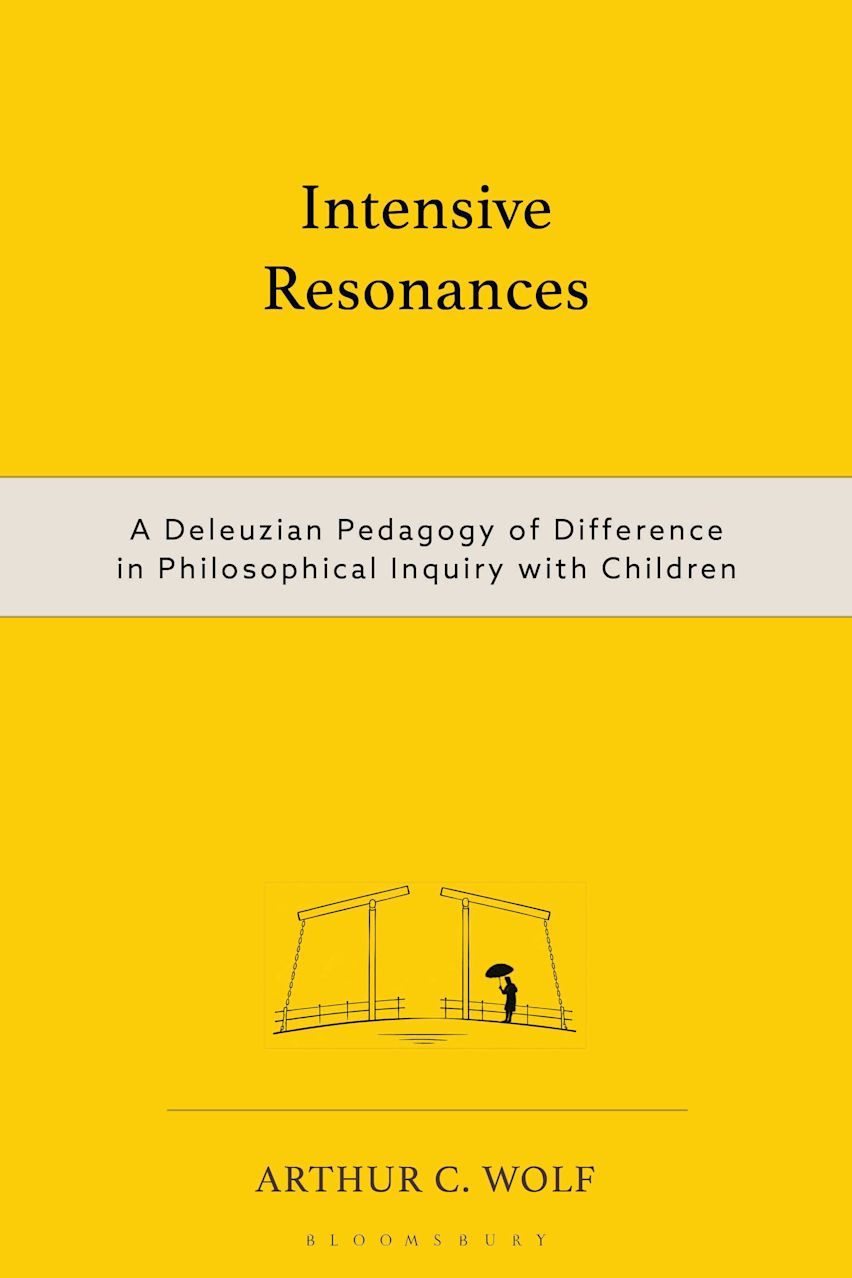
Intensive Resonances
A Deleuzian Pedagogy of Difference in Philosophical Inquiry with Children
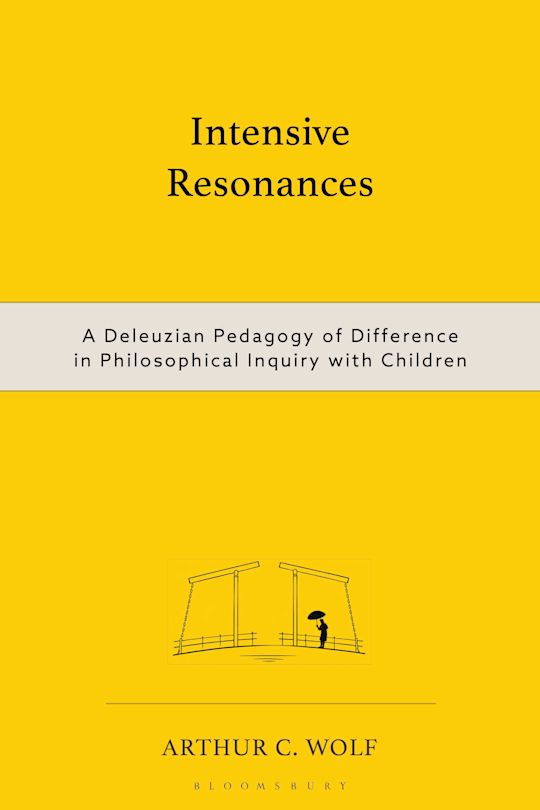

Intensive Resonances
A Deleuzian Pedagogy of Difference in Philosophical Inquiry with Children
Description
Expands Matthew Lipman's Community of Philosophical Inquiry through a Deleuzian pedagogy of difference.
What changes when philosophical inquiry begins not with reason alone, but with the affects, bodies, encounters, and problems that compel us to think?
In Intensive Resonances, Arthur C. Wolf brings Gilles Deleuze's philosophy into conversation with Matthew Lipman's Philosophy for Children. Challenging conceptions of thinking that privilege rational deliberation, Wolf develops a more inclusive pedagogy attentive to affect, embodiment, imagination, and more-than-human relations.
Drawing on Deleuze's philosophy of immanence and assemblages, the book reimagines the Community of Philosophical Inquiry as an experimental ecology of thinking. Its practical culmination, the Thinking Radar, helps educators map the relations among five dimensions of inquiry-feeling (phenomenology), understanding (hermeneutics), analyzing (analytic), dialogue (dialectics), and imagination (speculation)-and compose conditions in which new possibilities of thought can emerge.
Bridging continental philosophy, Philosophy for Children, and educational practice, Intensive Resonances offers a compelling account of what becomes possible when thinking is approached as an embodied, relational, and creative event.
Accessibility Information
Additional accessibility information
- PDF/UA-2, 1.4
- accessibility@bloomsbury.com
Hazards
The publication contains no hazards
Support for non-visual reading
Has alternative text descriptions for images
Navigation
- Page list to go to pages from the print source version
- Elements such as headings, tables, etc for structured navigation
- All or substantially all textual matter is arranged in a single logical reading order
Table of Contents
List of Figures
List of Relays
Part I: The Pedagogical Problem and a New Heuristic
Introduction: Setting the Horizon
1. A Practical Heuristic to Track Resonances across Inquiries
2. Lipman's Approach: Roots and Problems
3. Gilles Deleuze and the Power of Life
Part II: Deleuze's Conceptual Toolbox
4. Difference and the Production of Sense
5. Embracing Immanence and the Process of Becoming
6. Affect
7. The Erogeneity of Bodies
8. Learning
9. Ideas: When Questions Think Us
10. Intensive Time and the Tick of the Clock
11. Thinking with the Earth
Part III: Pedagogy of Difference
12. Events of Learning and Micropolitics
13. The Image of Thought
14. An Affective Conception of Thinking
References
Appendix A
Appendix B
Index
Product details

| Published | 12 Nov 2026 |
|---|---|
| Format | Ebook (PDF) |
| Edition | 1st |
| Pages | 288 |
| ISBN | 9798216268673 |
| Imprint | Bloomsbury Academic |
| Illustrations | 8 bw illus |
| Series | Philosophy of Childhood |
| Publisher | Bloomsbury Publishing |

Reviews

ONLINE RESOURCES
Bloomsbury Collections
This book is available on Bloomsbury Collections where your library has access.
Related Titles