Non-State Effective Territorial Entities
Rethinking Capacity and Responsibility in International Law
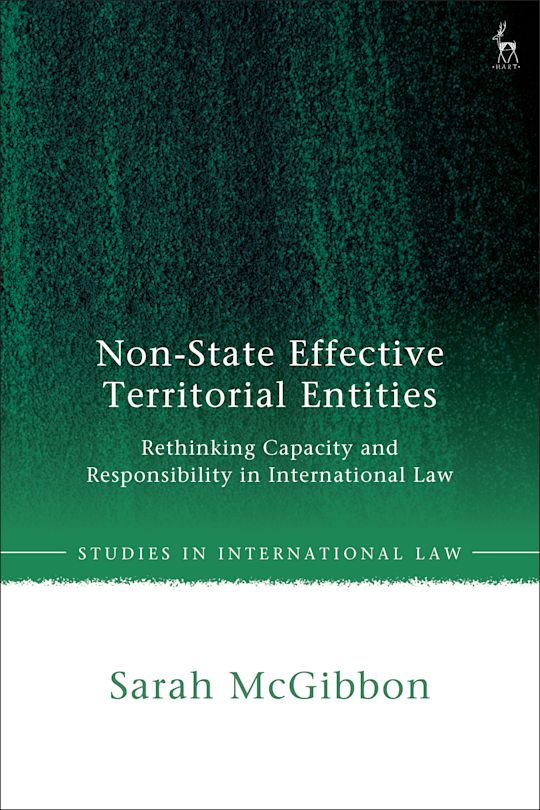

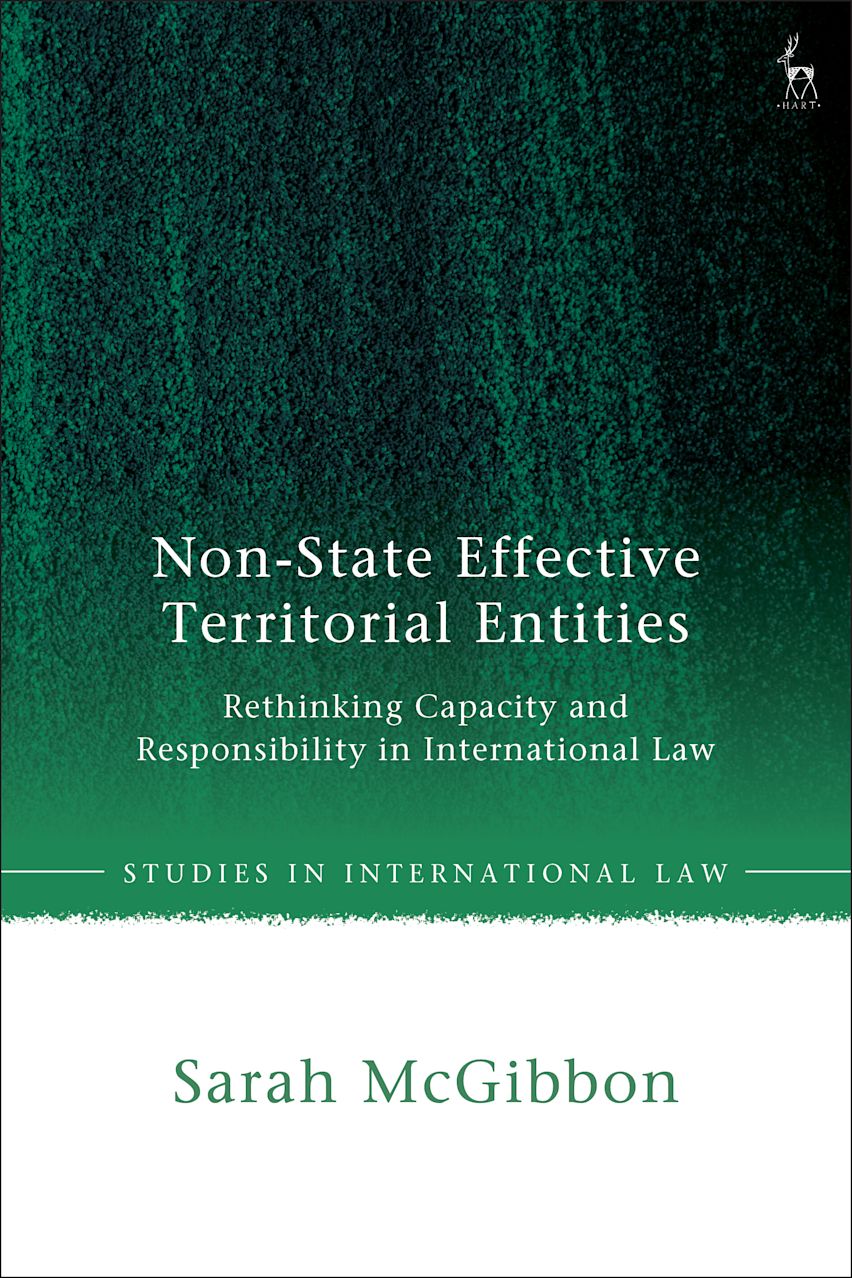
Non-State Effective Territorial Entities
Rethinking Capacity and Responsibility in International Law
Description
This book offers a foundational rethinking of how international law engages with non-state effective territorial entities - territories that, while legally part of a state, are de facto governed by non-state actors or other states.
These entities - ranging from ISIL-controlled areas in Syria to Taiwan - occupy an increasingly prominent place in global politics, yet their capacity (and thus, responsibility) remain inadequately theorised in general public international law doctrine. Rather than assessing these territories through the binary lens of statehood, the book begins by assuming their non-state status and asks: what legal capacity and responsibility do such entities hold under international law?
Shunning the confines of theory, the book studies practical problems in four examples from across the spectrum of the state-like: ISIL in Syria, Crimea, Somaliland, and Taiwan. The book also moves beyond isolated analyses of conflict or self-determination to offer a more holistic and pragmatic account of what these entities reveal about the limits and possibilities of the current international legal framework, and explores the broader implications for concepts like sovereignty, territorial integrity, and recognition. It argues for a more functional understanding of legal capacity and responsibility that acknowledges the realities of territorial control without forgoing the notion of statehood.
Combining doctrinal clarity with pragmatic ambition, this book challenges the state-centric foundations of international law and offers a roadmap for engaging with one of its most pressing contemporary challenges: the legal accommodation of non-state territorial authority in a world still structured around states.
Accessibility Information
Additional accessibility information
- PDF/UA-2, 1.4
- accessibility@bloomsbury.com
Hazards
The publication contains no hazards
Support for non-visual reading
Has alternative text descriptions for images
Navigation
- Page list to go to pages from the print source version
- Elements such as headings, tables, etc for structured navigation
- All or substantially all textual matter is arranged in a single logical reading order
Table of Contents
2. Approach and Theoretical Framework
3. Capacity through Self-Determination and Effectiveness: Re-Evaluating Somaliland's Attempted Secession
4. Use of Force by Non-State Effective Territorial Entities: Probing the Possibility of a Right of Self-Defence for Taiwan
5. Use of Force Against Non-State Effective Territorial Entities: A Study of the Use of the 'Unwilling or Unable Doctrine' against ISIL in Syria
6. The Spatial and Conceptual Boundaries of Bilateral Treaty Application in Non-State Effective Territorial Entities
7. Conclusion: Towards Pluralism in a State-Centric System
Product details
| Published | 18 Mar 2027 |
|---|---|
| Format | Ebook (PDF) |
| Edition | 1st |
| Pages | 288 |
| ISBN | 9781509994496 |
| Imprint | Hart Publishing |
| Series | Studies in International Law |
| Publisher | Bloomsbury Publishing |
Related Titles