The Red Christ
The Dangerous Memory of Christianity in Modern U.S. Literatures of Social Protest


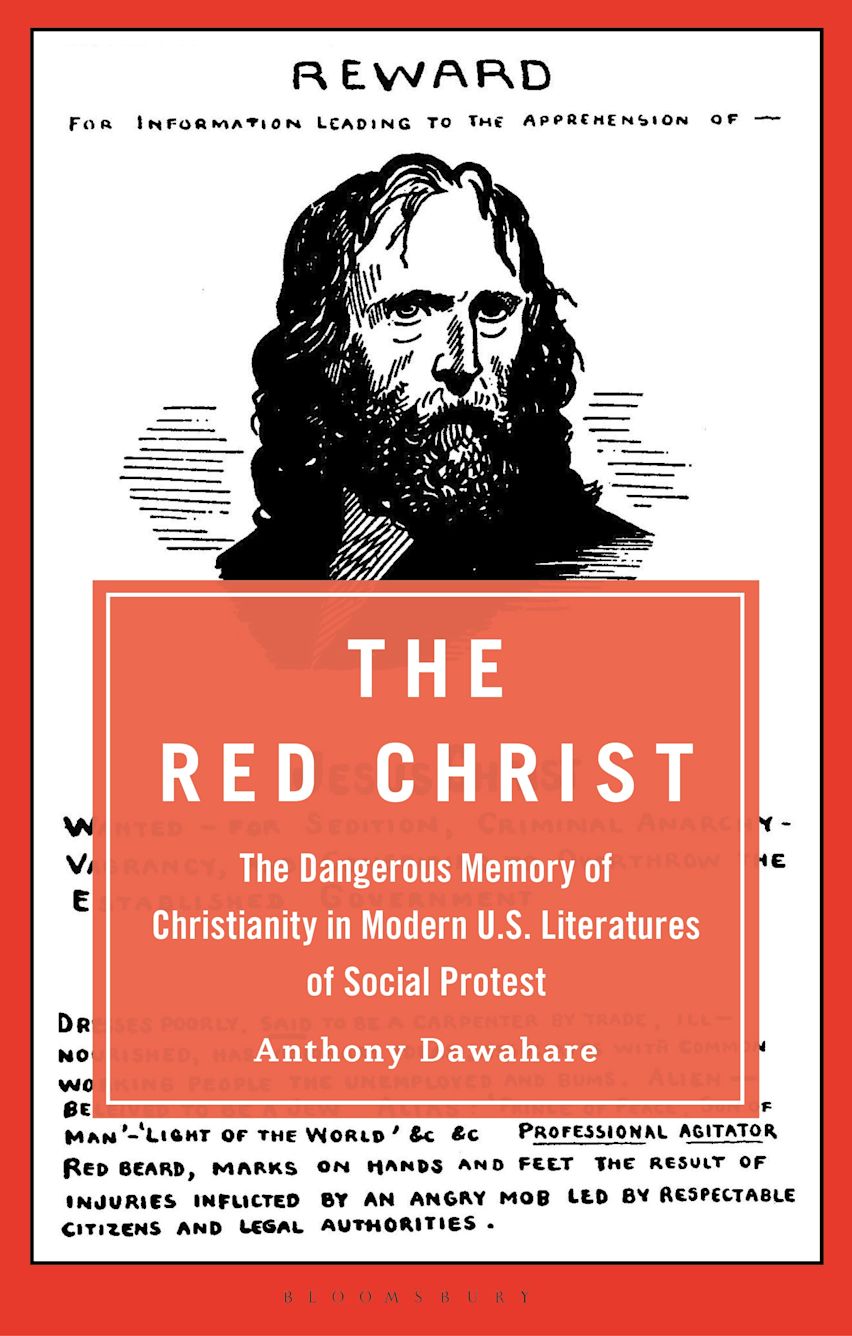
The Red Christ
The Dangerous Memory of Christianity in Modern U.S. Literatures of Social Protest
Description
Offers a (re)consideration of the impact of radical conceptions of Christ on modern U.S. literature, its critique of inegalitarian social relations, and its visions for a just society.
The Red Christ argues that some of the most popular social protest literature published in the U.S. between 1890 and 1940 was inseparable from "Social Christianity," a historically important movement deeply concerned with issues of social justice. As this study shows, various images and iterations of the "red" Christ, including Christ as the exploited worker, the lynched, and the persecuted radical, were used to critique unjust power structures. Christ's self-sacrifice and compassion inspired hope for an earthly “kingdom” that recognized and respected the infinite worth of all human beings. Like the writers it studies, The Red Christ recovers the “dangerous memory” of Christ that mainstream Christianity largely continues to ignore.
Anthony Dawahare reads a broad range of writers – including Albion Tourgée, Charles Monroe Sheldon, Upton Sinclair, W. E. B. Du Bois, Richard Wright, and Dorothy Day – to demonstrate that this radical tradition of Christianity is woven into the fabric of U.S. literature. While Social Christianity waned with the onset of World War I, post-war writers continued to appropriate its message, vision, and tropes to critique racism, sexism, war, fascism, and class inequality. Writings from the Harlem Renaissance, the Proletarian Literary Movement, and the Catholic Worker Movement bear witness to the continuing influence of the Red Christ on modern American writers. This study thus deepens our understanding of modern U.S. protest literature by revealing its submerged religious roots in a politically subversive Christianity.
Accessibility Information
Additional accessibility information
- EPUB 3.0
- Conforms with the requirements of EPUB Accessibility Spec v1.1
- WCAG level AA
- WCAG v2.2 compliant
- accessibility@bloomsbury.com
Hazards
The publication contains no hazards
Support for non-visual reading
- No accessibility features offered by the reading system, device or reading software are disabled or otherwise unusable with the product
- Has alternative text descriptions for images
Visual adjustments
Appearance of the text and page layout can be modified according to the capabilities of the reading system (font family and size, spaces, as well as color of background and text)
Navigation
- Page list to go to pages from the print source version
- Elements such as headings, tables, etc for structured navigation
- All or substantially all textual matter is arranged in a single logical reading order
- Content is enhanced with ARIA roles to optimize organization and facilitate navigation
- Purposes of all links are made clear
Rich content
Language tagging provided
Table of Contents
Acknowledgments
Introduction
1. The Birth of the Red Christ in the United States
2. Literary Incarnations of the Red Christ in the Christian Socialist Novel, 1890-1913
3. Bouck White, Upton Sinclair, and Literary Left Transfigurations of the Red Christ
4. Crucifixions of the Black Christ on a Crimson Cross
5. Red Christ Resurrected: Dorothy Day and the Catholic Worker Movement in the 1930s
Epilogue: Liberating a Dangerous Memory
Bibliography
Index
Product details

| Published | 06 Aug 2026 |
|---|---|
| Format | Ebook (Epub & Mobi) |
| Edition | 1st |
| Pages | 224 |
| ISBN | 9798216444138 |
| Imprint | Bloomsbury Academic |
| Illustrations | 8 b/w images |
| Publisher | Bloomsbury Publishing |

Reviews
Related Titles