Representing Minorities in Times of Conflict
A Corpus-Based Analysis of Letters to the Editor
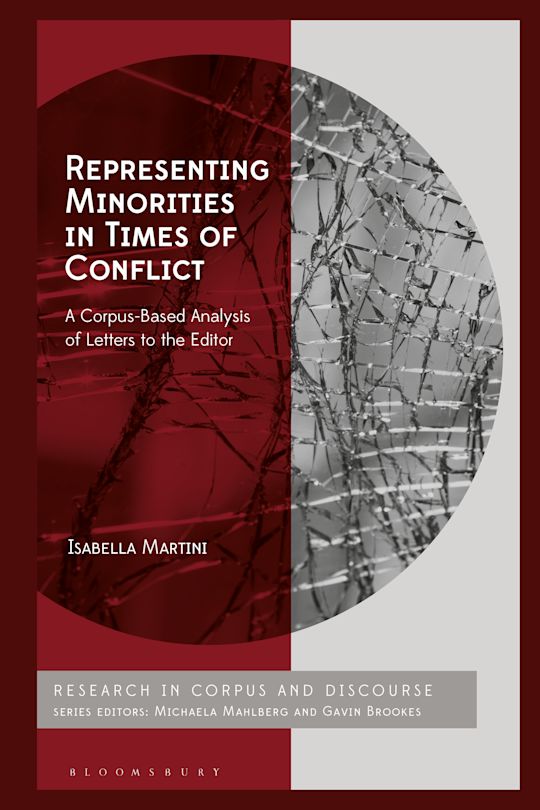

Representing Minorities in Times of Conflict
A Corpus-Based Analysis of Letters to the Editor
Description
This comparative study of the linguistic representation of minorities across different historical and socio-political contexts addresses a unique and under-researched area in linguistics, focusing on letters to the editor (LTEs) as a genre of news discourse. The book provides insights into how public opinion and ideological stances are reflected in LTEs, offering a valuable perspective for interdisciplinary applications in history, media studies and linguistics.
Focussing on two distinct conflicts across a century, the Armenian genocide and the Russian-Ukrainian war, and on their representation in the British press, the book shows how corpus methods and discourse analysis can assist socio-historical research towards a deeper understanding of the events as seen through the eyes of the public. The author begins by explaining the genre of LTEs and how they have changed over the course of a century with dramatic technological innovations and a shift in news production and consumption. She considers differences and similarities in the ideological depiction of minorities, using long-standing broadsheet newspapers such as The Times, The Telegraph and The Guardian, to cover all main political orientations and to ensure a comparison among newspapers that were published both at the beginning of the 20th century and those published one century later. The corpus includes over 600 published LTEs for both case studies (Armenian and Ukrainian) selected from print and online newspaper archives.
While history is usually told through the eyes of the winners, or of the majorities, Representing Minorities in Times of Conflict offers fresh insights into how minorities are linguistically represented during conflicts.
Accessibility Information
Additional accessibility information
- EPUB 3.0
- Conforms with the requirements of EPUB Accessibility Spec v1.1
- WCAG level AA
- WCAG v2.2 compliant
- accessibility@bloomsbury.com
Hazards
The publication contains no hazards
Support for non-visual reading
- No accessibility features offered by the reading system, device or reading software are disabled or otherwise unusable with the product
- Has alternative text descriptions for images
Visual adjustments
Appearance of the text and page layout can be modified according to the capabilities of the reading system (font family and size, spaces, as well as color of background and text)
Navigation
- Page list to go to pages from the print source version
- Elements such as headings, tables, etc for structured navigation
- All or substantially all textual matter is arranged in a single logical reading order
- Content is enhanced with ARIA roles to optimize organization and facilitate navigation
- Purposes of all links are made clear
Rich content
Language tagging provided
Table of Contents
1 The Armenian Genocide and the Russian-Ukrainian War: Historical Contextualisation
2 Methodology
3 Discussion of Corpus Results for the Armenian Question
4 Discussion of Corpus Results for the Russian-Ukrainian war
5 Past and Present. Why studying (historical) LTEs in the 21st century?
Bibliography
Product details

| Published | 01 Apr 2027 |
|---|---|
| Format | Ebook (Epub & Mobi) |
| Edition | 1st |
| Pages | 256 |
| ISBN | 9781350580602 |
| Imprint | Bloomsbury Academic |
| Illustrations | 0 |
| Series | Corpus and Discourse |
| Publisher | Bloomsbury Publishing |
Related Titles