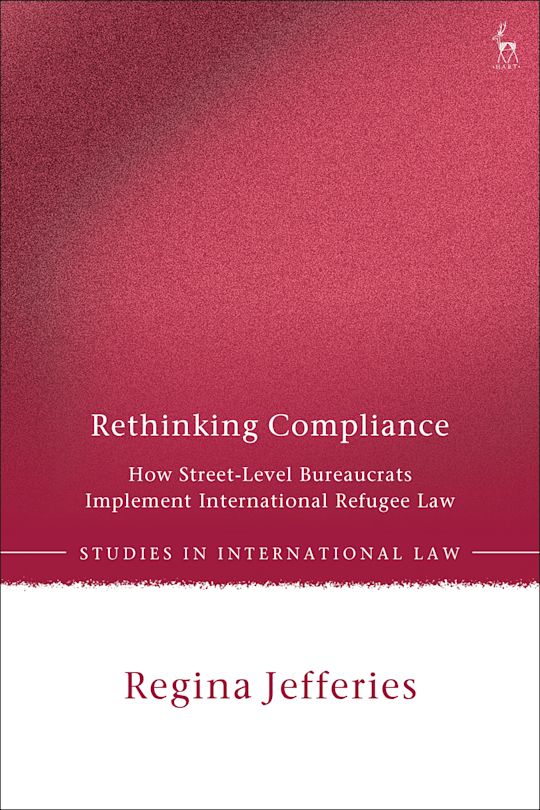
Rethinking Compliance
How Street-Level Bureaucrats Implement International Refugee Law

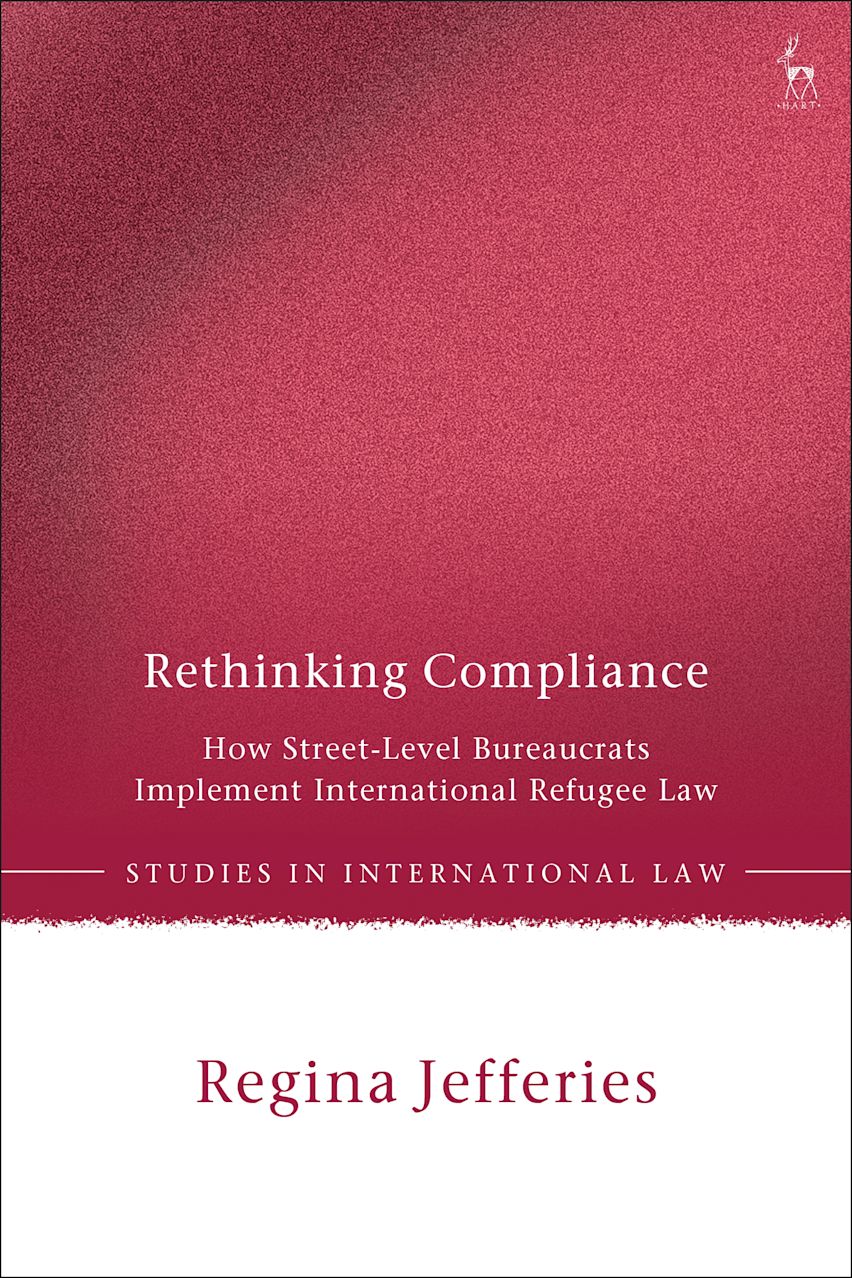
Rethinking Compliance
How Street-Level Bureaucrats Implement International Refugee Law
Description
This book explores why liberal democratic states like Australia and the United States continue to engage in practices that contest and risk violating the principle of non-refoulement, despite the oversight of courts, legislatures and other decision-making bodies.
This book challenges the idea that there exists a gap between law and practice by making visible how the everyday interactions of street-level bureaucrats and their organisational contexts both influence and are influenced by legal doctrine. Understanding street-level bureaucrats and the organisations within which they work as distribution points for applying rules developed by high-level political and international bodies ignores the potentially significant role that these actors play in interpreting, contesting and ultimately shaping transnational law. Conceptualising differences in implementation as a 'gap' also minimises the ways in which the practices and interpretations of people shape law and norms, and obscures the ways that law's structure enables, perpetuates and often magnifies those behaviours.
Both Australia and the United States have developed and implemented asylum-seeker deterrence policies throughout conservative and progressive administrations. Both states have also built significant bureaucratic structures to implement transnational refugee law systems, which they have located primarily within the national security apparatus of government. The national security context is key to understanding the motivations and constraints that street-level bureaucrats face, including how their decision-making is structured, rules regarding hiring and job-performance, agency culture, as well as laws and policies prescribing when and how asylum seekers may access international protection.
In detailed, comparative case studies of Australia and the United States, the book uses social network analysis to orient readers to the different organisational actors and spaces of interaction involved in implementing the norm of non-refoulement within each asylum system, which provide ongoing and shifting opportunities for street-level bureaucrats to understand, interpret, and engage in different forms of contestation.
Accessibility Information
Additional accessibility information
- PDF/UA-2, 1.4
- accessibility@bloomsbury.com
Hazards
The publication contains no hazards
Support for non-visual reading
Has alternative text descriptions for images
Navigation
- Page list to go to pages from the print source version
- Elements such as headings, tables, etc for structured navigation
- All or substantially all textual matter is arranged in a single logical reading order
Table of Contents
2. Street-Level Bureaucrats in a Transnational Legal Process
3. Norms and Outliers: The United States and Australia
4. 'Metering' in the United States
5. 'Entry Screening' in Australia
6. Re-thinking Compliance: Omnidirectional Transnational Legal Process
7. Conclusion
Product details
| Published | 26 Nov 2026 |
|---|---|
| Format | Ebook (PDF) |
| Edition | 1st |
| Pages | 264 |
| ISBN | 9781509994588 |
| Imprint | Hart Publishing |
| Series | Studies in International Law |
| Publisher | Bloomsbury Publishing |


ONLINE RESOURCES
Bloomsbury Collections
This book is available on Bloomsbury Collections where your library has access.
Related Titles