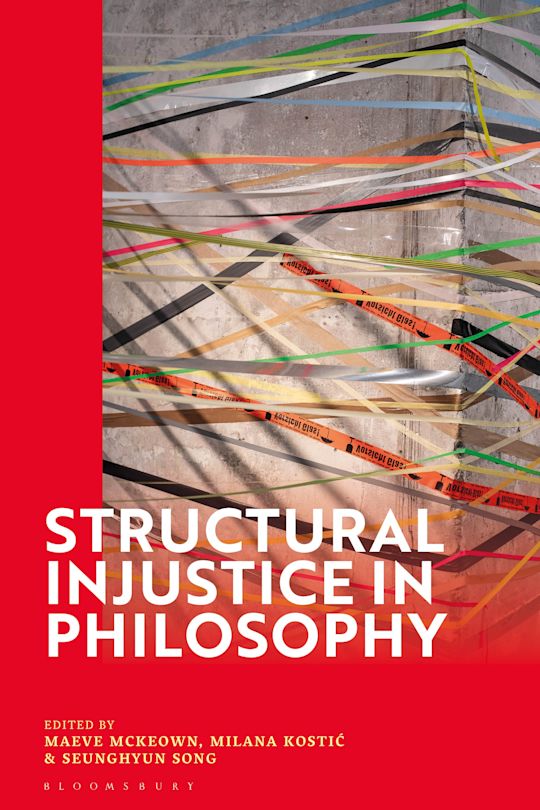
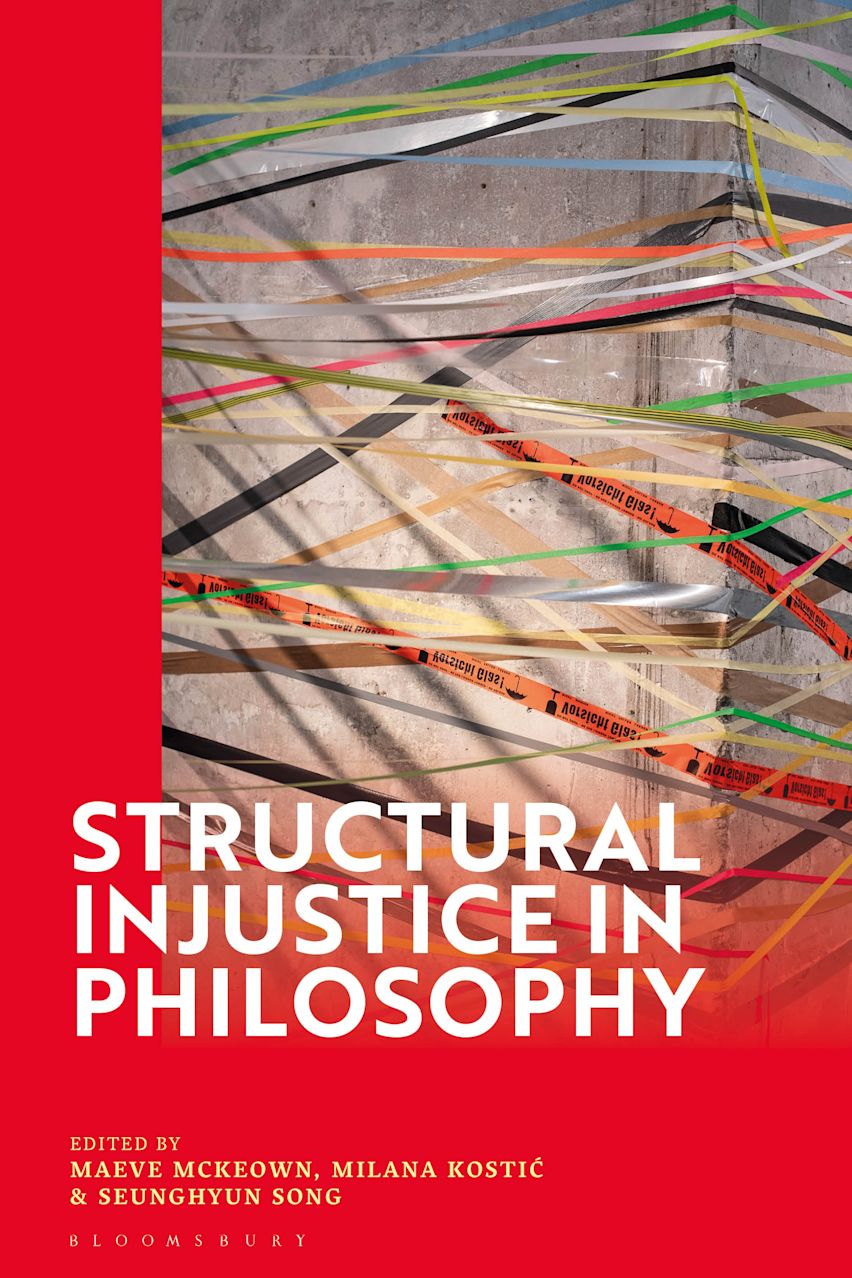
Structural Injustice in Philosophy

Description
More than any other Humanities discipline, philosophy has an underrepresentation problem.
Drawing on the concept of “structural injustice,” this book analyzes underrepresentation as a product of unjust social structures. Within the teaching of philosophy, it explores structural exclusion in the classroom, conversations, and curricula; within philosophical research it investigates power hierarchies and linguistic injustices; as well as how the dominant research methods and practices result from and reinforce unjust structures; and within the philosophy profession it interrogates hiring procedures, evaluative practices, the job market, sexual harassment, and job precarity.
Revealing how these interconnected structures reproduce inequality in academic philosophy, Structural Injustice in Philosophy also advances concrete solutions for change. Its commitment to addressing structural injustice is reflected in its list of contributors, who represent a range of career stages, ages, nationalities, genders, races, levels of ability, and institutional affiliations. In this way, the collection seeks not only to diagnose the problem but also to help transform the discipline.
This project is an initiative of the Minorities and Philosophy organization.
Accessibility Information
Additional accessibility information
- PDF/UA-2, 1.4
- accessibility@bloomsbury.com
Hazards
The publication contains no hazards
Support for non-visual reading
Has alternative text descriptions for images
Navigation
- Page list to go to pages from the print source version
- Elements such as headings, tables, etc for structured navigation
- All or substantially all textual matter is arranged in a single logical reading order
Table of Contents
Part I: Structural Injustice in Philosophy Education
1. Philosophical Miseducation - Philosophy's Structural Exclusions and the Paralysis of Critique, Kelly Agra (University College Dublin, Ireland, and University of the Philippines Baguio, Philippines), Christine Tan (National University of Singapore, Singapore), Pamela Joy (PJ) Mariano Capistrano (Université de Namur, Belgium & Ateneo de Manila University, Philippines)
2. Black philosophy graduates in America: Fanon and Yancy, Najii Wilcox (University of Memphis, USA)
3. Student Evaluations of Teaching as Oppression through Institutionalized Violence, Cecilea Mun (Independent Scholar)
4. Reading Philosophy, Jorge Lizarzaburu (Southwestern University, USA) & students
Part II: Structural Injustice in Philosophy Research
5. Structural Injustice and Philosophy in the Global South: The Colonising Problem, Roxanne Burton (The University of the West Indies, Jamaica)
6. Gentrification of Thought: A Field-Theoretical Approach to Tensions in Emancipatory Philosophical Research, Alex Thinius (Harvard University, USA & Radboud University Nijmegen, Netherlands)
7. Sweaty Concepts, Rowan Bell (University of Guelph, Canada)
8. Structural Linguistic Injustice in Academia, Seunghyun Song (University of Tilburg, Netherlands)
9. Uncovering Epistemic Structural Injustice: Linguistic Diversity and the Philosophical Discipline, Lemogang Modisakeng (Nelson Mandela University, South Africa)
10. 'Class Remains the Greatest Unexamined Factor' – Auto-theories of Class as Analysis of Structural Exclusions and Resistant Writing Practices, Eva-Maria Aigner (University of Vienna, Austria) and Jonas Oßwald (University of Vienna, Austria)
Part III: Structural Injustice in the Philosophy Profession
11. Class and Structural Injustice, Charlotte Knowles (University of Groningen, Germany)
12. What Is It Like To Be a Fat Philosopher?: Fat Stigma, Structural Injustice, and the Discipline of Philosophy, Kristin Rodier (Athabasca University, Canada) and Samantha Brennan (University of Guelph, Canada)
Product details

| Published | 21 Jan 2027 |
|---|---|
| Format | Ebook (PDF) |
| Edition | 1st |
| Pages | 256 |
| ISBN | 9781350521797 |
| Imprint | Bloomsbury Academic |
| Publisher | Bloomsbury Publishing |
Related Titles