Subversive Intertextuality in Helen Oyeyemi's The Icarus Girl
Critiquing and Reimagining Western and Nigerian Metanarratives
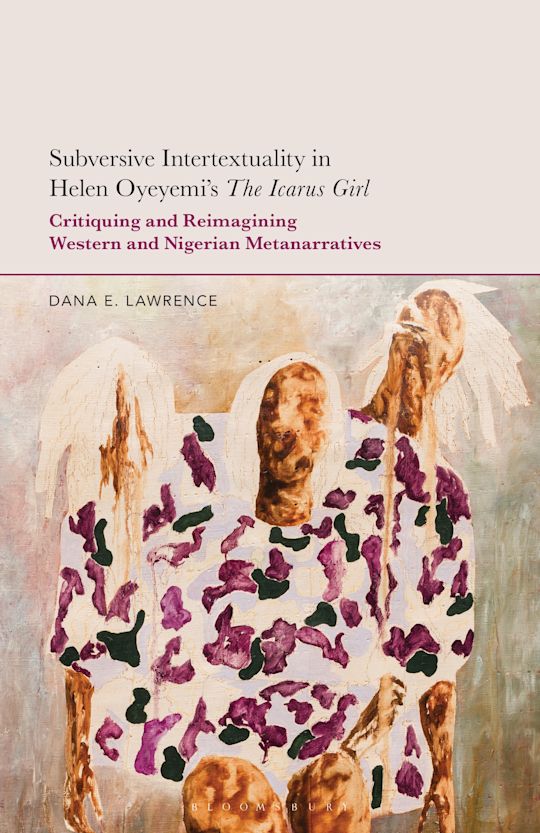

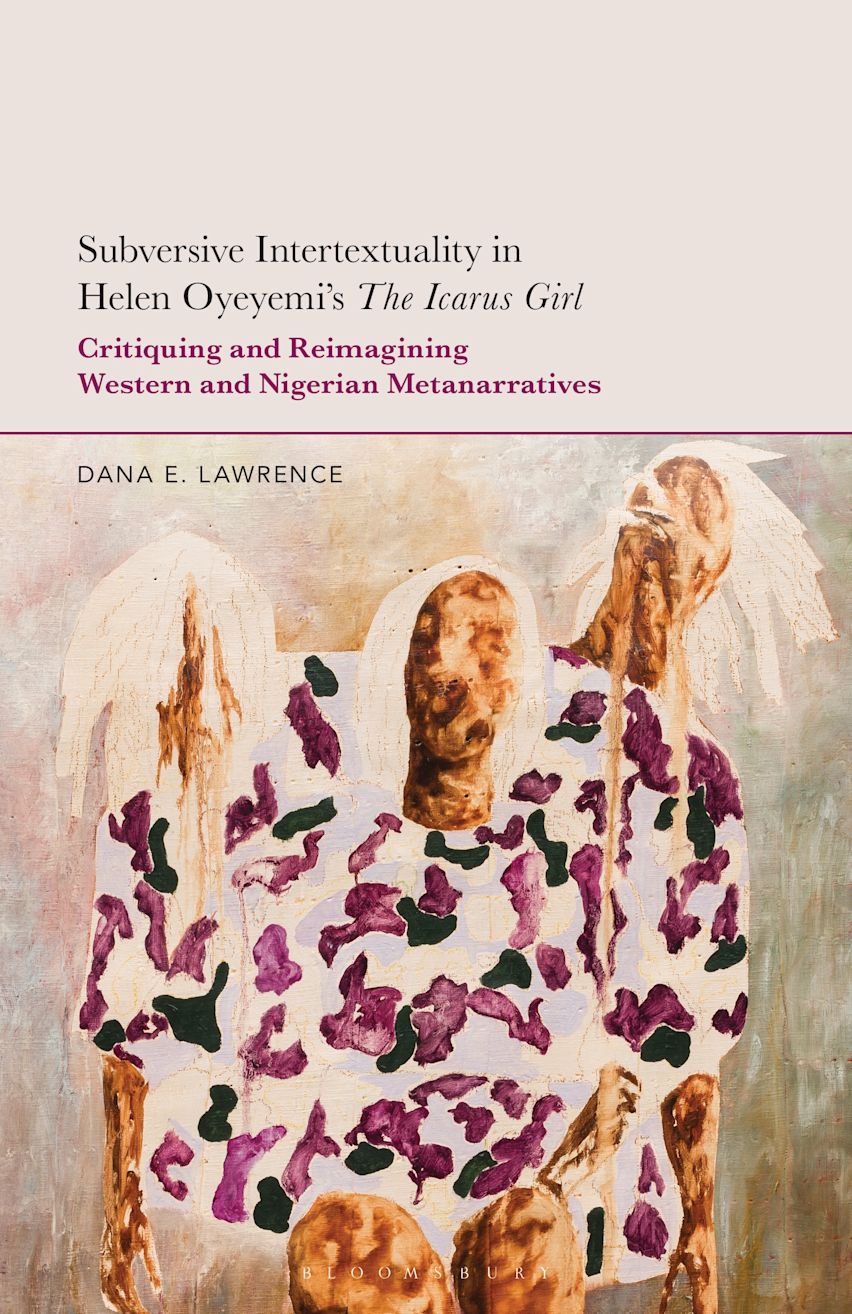
Subversive Intertextuality in Helen Oyeyemi's The Icarus Girl
Critiquing and Reimagining Western and Nigerian Metanarratives
Description
Dana E. Lawrence unveils the ways Helen Oyeyemi employs adaptation and allusion to locate herself and her work within the intersections of British literature, women's literature, Nigerian literature, and Yoruba folk traditions.
Lawrence argues that in addition to its place within diasporic literature, The Icarus Girl (2005) belongs in larger conversations about adaptation and intertextuality, women's writing, and Gothic literature. Despite the prevalence and specificity of intertextual references in Oyeyemi's first novel, scholars have not yet examined the significance of its literary influences beyond a few brief mentions of the many allusions to British, American, and Nigerian literature and European and Yoruba mythologies contained within the work. However, none of these studies have engaged in a true comparative analysis that situates Oyeyemi's novel within the various literary traditions that influence its narrative.
Subversive Intertextuality in Helen Oyeyemi's The Icarus Girl seeks to remedy gaps in existing scholarship by putting The Icarus Girl in direct conversation with foundational 19th-century works such as Mary Shelley's Frankenstein, Charlotte Brontë's Jane Eyre, Louisa May Alcott's Little Women, and Frances Hodgson Burnett's A Little Princess, alongside Nigerian canonical texts like Chinua Achebe's Things Fall Apart and Wole Soyinka's A Dance of the Forest. This comparative analysis reveals Oyeyemi's deeper engagement with 19th-century women writers, Gothic literature, and postcolonial literary traditions. Lawrence shows that The Icarus Girl examines the use of adaptation, appropriation, intertextuality, and allusion as rhetorical modes of resistance as it simultaneously admires and talks back to Western and Nigerian canonical texts.
Accessibility Information
Additional accessibility information
- EPUB 3.0
- Conforms with the requirements of EPUB Accessibility Spec v1.1
- WCAG level AA
- WCAG v2.2 compliant
- accessibility@bloomsbury.com
Hazards
The publication contains no hazards
Support for non-visual reading
- No accessibility features offered by the reading system, device or reading software are disabled or otherwise unusable with the product
- Has alternative text descriptions for images
Visual adjustments
Appearance of the text and page layout can be modified according to the capabilities of the reading system (font family and size, spaces, as well as color of background and text)
Navigation
- Page list to go to pages from the print source version
- Elements such as headings, tables, etc for structured navigation
- All or substantially all textual matter is arranged in a single logical reading order
- Content is enhanced with ARIA roles to optimize organization and facilitate navigation
- Purposes of all links are made clear
Rich content
Language tagging provided
Table of Contents
Introduction: Subversive Intertextuality as Critical Practice
1. Echoes and Revisions: Narrative Fissures as Spaces of Resistance in The Icarus Girl
2. The Haunting of Empire: Unannounced Adaptations and Spectral Revisions of Frankenstein and Jane Eyre in The Icarus Girl
3. The “Madwoman” Revisited: Mental Health, Empire, and the Legacies of Shelley, Brontë, Alcott, and Burnett in The Icarus Girl
4. The Imperial Classroom: Contested Histories and Cyclical Trauma in The Icarus Girl
5. Mapping the Literary Rhizome: The Icarus Girl as the Genesis of Oyeyemi's Distinctive Voice and Vision
Bibliography
Product details

| Published | 07 Jan 2027 |
|---|---|
| Format | Ebook (Epub & Mobi) |
| Edition | 1st |
| Pages | 208 |
| ISBN | 9798765112083 |
| Imprint | Bloomsbury Academic |
| Publisher | Bloomsbury Publishing |
Related Titles