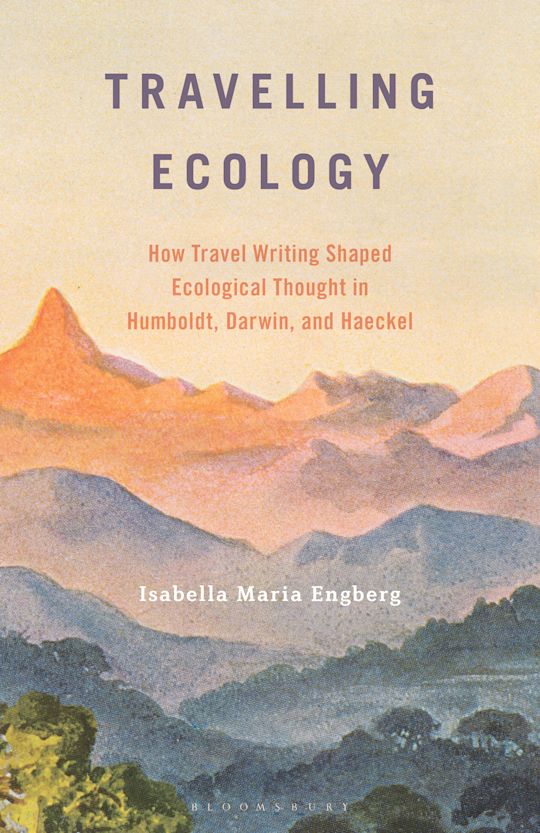
Travelling Ecology
How Travel Writing Shaped Ecological Thought in Humboldt, Darwin, and Haeckel

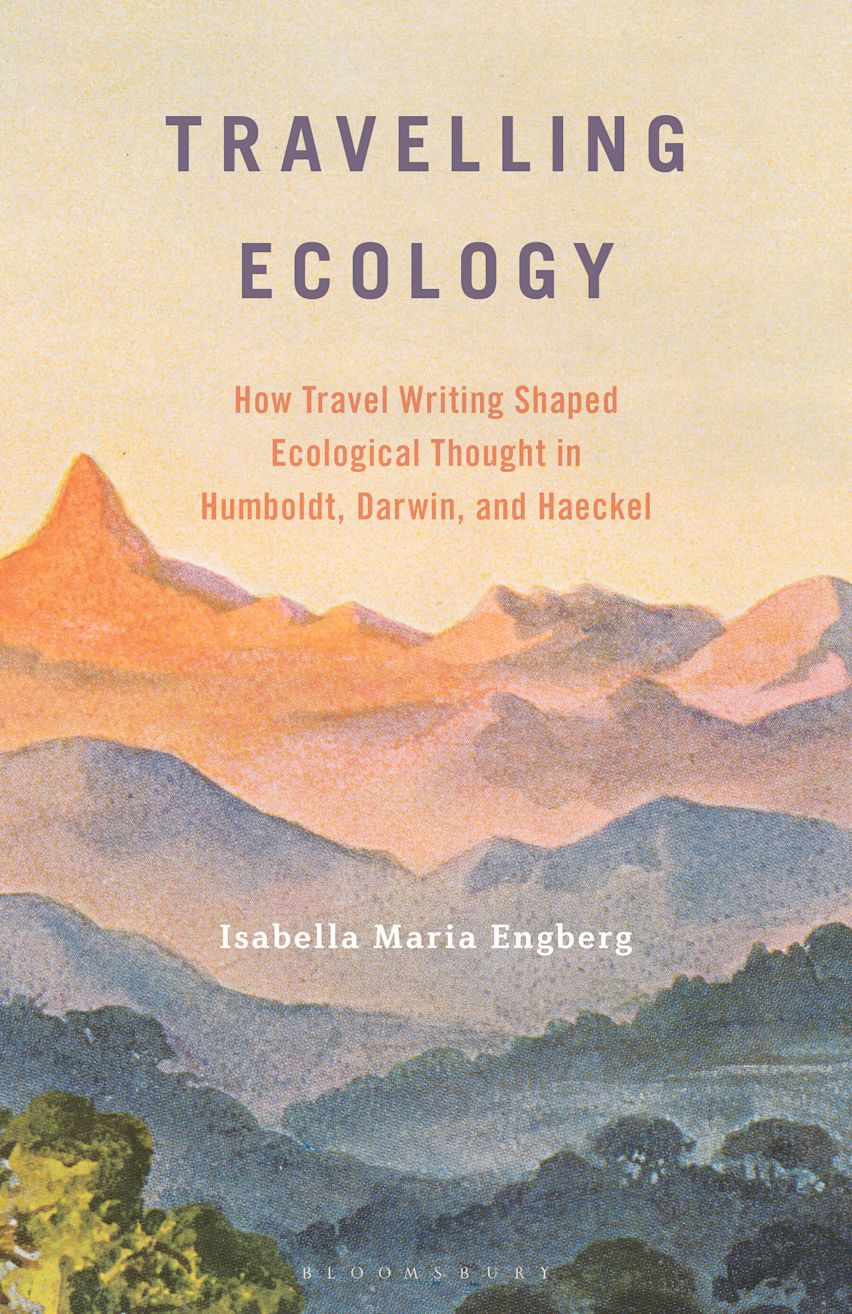
Travelling Ecology
How Travel Writing Shaped Ecological Thought in Humboldt, Darwin, and Haeckel
Description
Shows how travel writing helped shape major 19th-century naturalists' perceptions of ecological relationships and contributed to the development of ecological thought.
Alexander von Humboldt (1769–1859), Charles Darwin (1809–1882), and Ernst Haeckel (1834–1919) are renowned for shaping ecological thought. Less widely known is how their travel writings formed a chain of literary and scientific influence, inspiring new ways of exploring, researching, and writing about the natural world. Travelling Ecology argues that indeed travel writing played a major role in the development of 19th-century ecological thought.
Through close readings of scenes from the three travelogues, Engberg draws on recent ecocritical and narratological approaches to examine the relationship between literary form, material environments, and environmental perception. First, by tracing changes in the representation of ecological relationships, she shows how travelling and narrating their journeys enabled Humboldt, Darwin, and Haeckel to attend to and creatively engage with the environments they encountered. Second, through a historical comparison of their travelogues, she demonstrates how scenes depicting ecological relationships developed intertextually from one author to the next.
Ultimately, Travelling Ecology uncovers connections and transformations in Humboldt's, Darwin's, and Haeckel's representations of the natural world. In doing so, it offers new perspectives on both the history of science and travel writing.
Accessibility Information
Additional accessibility information
- PDF/UA-2, 1.4
- accessibility@bloomsbury.com
Hazards
The publication contains no hazards
Support for non-visual reading
Has alternative text descriptions for images
Navigation
- Page list to go to pages from the print source version
- Elements such as headings, tables, etc for structured navigation
- All or substantially all textual matter is arranged in a single logical reading order
Table of Contents
Acknowledgements
Note on Translation and Text
List of Abbreviations
Introduction
Part I: Nature and Narrative in Exchange: Alexander von Humboldt's Personal Narrative
Prologue: Fragments and the Whole of Nature
1. Mediator of Views
2. Dynamic Nature, Dynamic Sequences
3. Exchanging Scales of Environmental Spheres
Interlude: Spatial Networks
Part II: Nature and Narrative in Process: Charles Darwin's Journal of Researches
Prologue: Changing Worlds and Transformable Writing
4. Processes of Change in Narration
5. Imagining 'Evolutionary Ecology'
6. Telling the (Hi)stories of Environments
Interlude: Temporal Directions
Part III: Nature and Narrative in Formation: Ernst Haeckel's A Visit to Ceylon
Prologue: Serialized Letters and Extensive Preparations
7. Transformative Travel
8. Formatted Environments
9. Formative Narration
Interlude: Form, Development, and the Biological Self
Conclusion
Bibliography
Product details

| Published | 04 Mar 2027 |
|---|---|
| Format | Ebook (PDF) |
| Edition | 1st |
| Pages | 304 |
| ISBN | 9798216381563 |
| Imprint | Bloomsbury Academic |
| Illustrations | 19 bw & color illus |
| Publisher | Bloomsbury Publishing |
Related Titles