Why Leaders and Nations Choose War
Emotions and Decision Making

Why Leaders and Nations Choose War
Emotions and Decision Making
Description
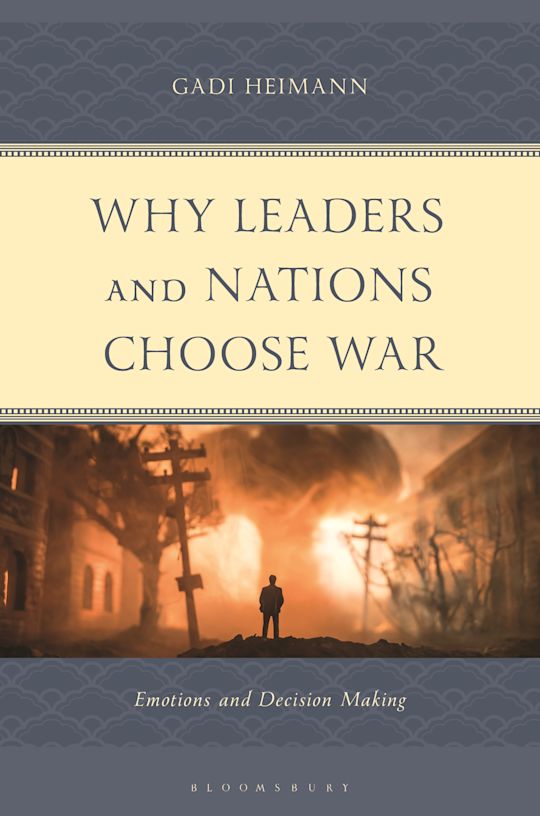
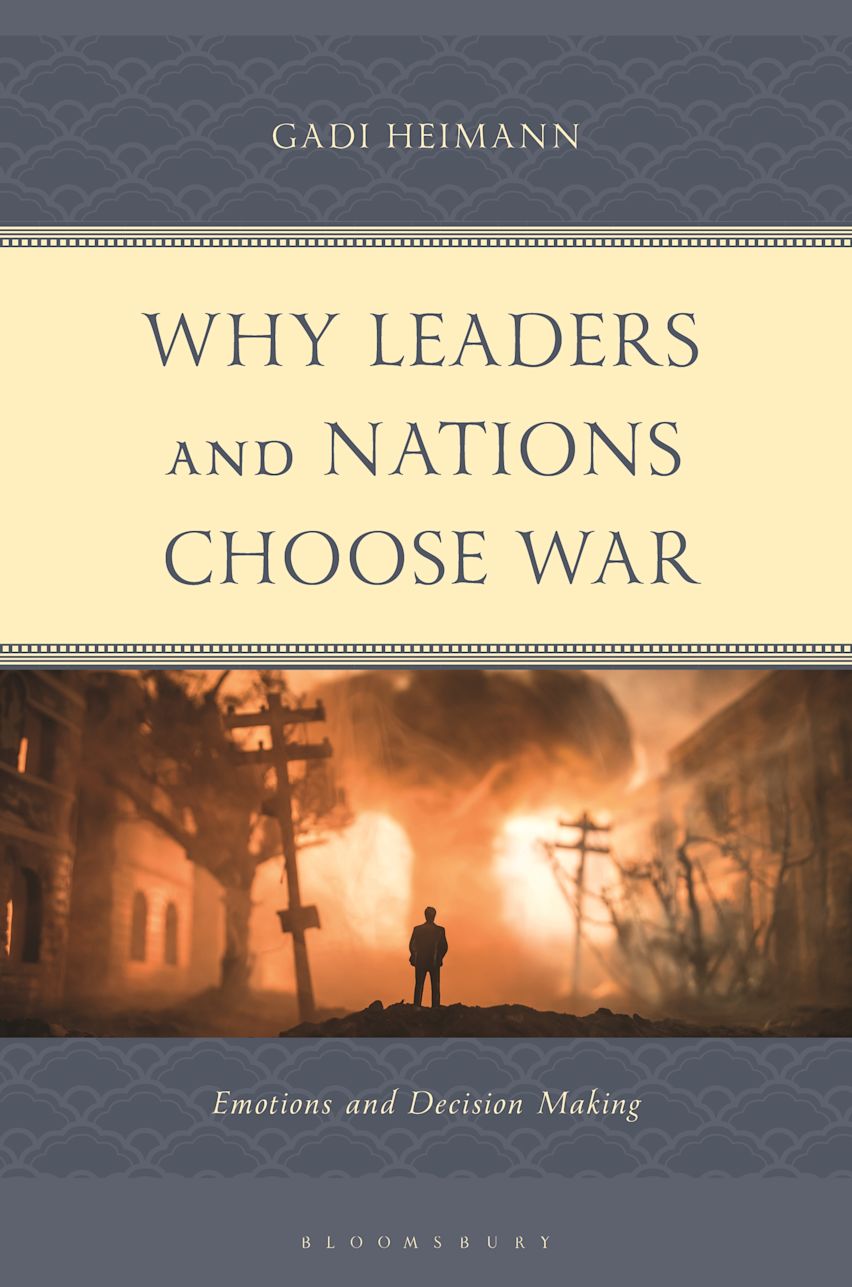
Why Leaders and Nations Choose War: Emotions and Decision Making analyses the decisive role that emotions play in one of the most consequential arenas of human life-war. Challenging the assumption that leaders act purely on rational calculation, this demonstrates how fear, wishful thinking, and regret have repeatedly shaped fateful decisions in modern history. Drawing on psychological theory, international relations, and historical case studies, Gadi Heimann explains how emotions can both enhance and distort judgment, tipping the scales between peace and conflict.
Through vivid accounts of twentieth-century wars, Why Leaders and Nations Choose War reveals how fear drove Germany into World War I and Israel into preemptive strikes throughout its history; how wishful thinking fueled Germany's submarine offensive and Japan's attack on Pearl Harbor; and how regret shaped U.S. isolationism and later the Cold War. By weaving together theory and narrative, the book provides a new lens for understanding the complex interplay between emotion and statecraft.
Accessibility Information
Additional accessibility information
- EPUB 3.0
- Conforms with the requirements of EPUB Accessibility Spec v1.1
- WCAG level AA
- WCAG v2.2 compliant
- accessibility@bloomsbury.com
Hazards
The publication contains no hazards
Support for non-visual reading
- No accessibility features offered by the reading system, device or reading software are disabled or otherwise unusable with the product
- Has alternative text descriptions for images
Visual adjustments
Appearance of the text and page layout can be modified according to the capabilities of the reading system (font family and size, spaces, as well as color of background and text)
Navigation
- Page list to go to pages from the print source version
- Elements such as headings, tables, etc for structured navigation
- All or substantially all textual matter is arranged in a single logical reading order
- Content is enhanced with ARIA roles to optimize organization and facilitate navigation
- Purposes of all links are made clear
Rich content
Language tagging provided
Table of Contents
Introduction
Part One: Fear
Chapter 1: Fear, Security, and War as Tragedy
Chapter 2: The “German Complex” and World War I
Chapter 3: The Road to the Six-Day War
Part Two: Wishful Thinking
Chapter 4: Optimism and the Rational Actor Model
Chapter 5: Germany Opts for a Submarine Offensive
Chapter 6: Japan's Road to Pearl Harbor
Part Three: Regret
Chapter 7: Regret, Historical Lessons, and National Trauma
Chapter 8: The Arms Manufacturers' Conspiracy and American Isolationism
Chapter 9: The Specter of Munich and the Cold War
Epilogue
About the Author
Product details

| Published | 11 Jun 2026 |
|---|---|
| Format | Ebook (Epub & Mobi) |
| Edition | 1st |
| Pages | 256 |
| ISBN | 9781978759466 |
| Imprint | Bloomsbury Academic |
| Illustrations | 2 b/w tables |
| Publisher | Bloomsbury Publishing |
Reviews

ONLINE RESOURCES
Bloomsbury Collections
This book is available on Bloomsbury Collections where your library has access.
Related Titles