
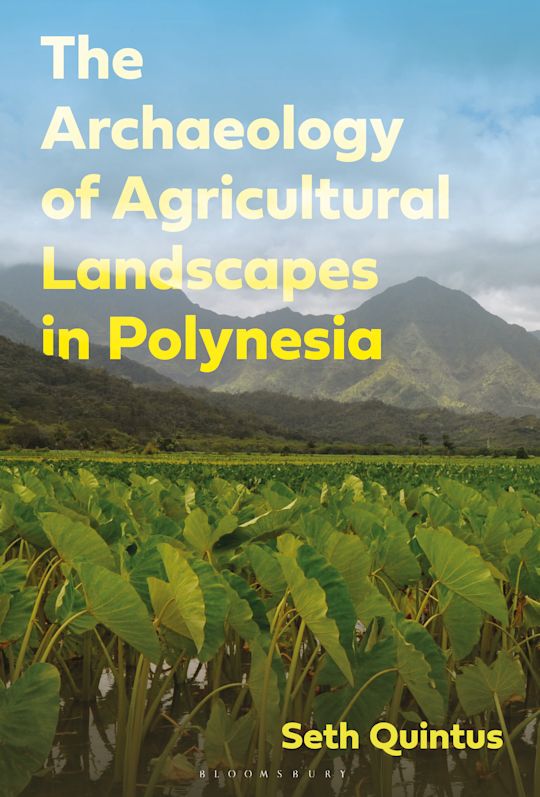

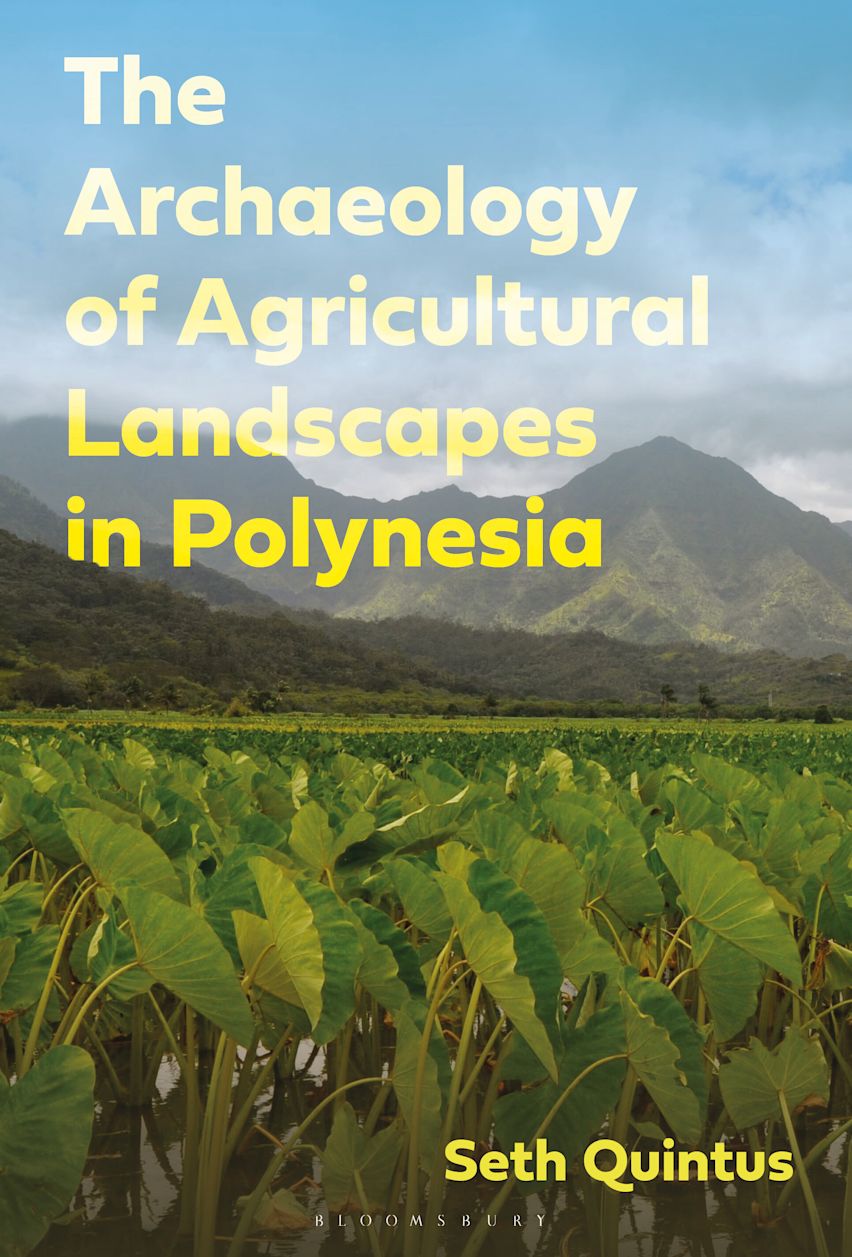
The Archaeology of Agricultural Landscapes in Polynesia
Buying pre-order items
Ebooks and Audiobook
You will receive an email with a download link for the ebook or audiobook on the publication date.
Payment
You will not be charged for pre-ordered books until they are available to be shipped. Pre-ordered ebooks will not be charged for until they are available for download.
Amending or cancelling your order
For orders that have not been shipped you can usually make changes to pre-orders up to 72 hours before the publishing date.
Payment for this pre-order will be taken when the item becomes available
Description
The archaeological landscapes of Polynesia are an immense store of social and ecological knowledge, and this book examines how that knowledge was linked to agricultural change.
Polynesia is often viewed as culturally and environmentally homogeneous. This popular image is far from the truth, and this book explores that diversity through the lens of the agricultural landscapes of the region. Using an archaeological framework, it tracks how people migrated across the region successfully, bringing the crops and animals on which they would rely, and how their agricultural economies developed once they arrived. The communities that settled these islands not only adapted to diverse environments and ecosystems, but also engineered their landscapes to ensure long-term survival. This engineering was conditioned by the constraints and opportunities within environments recognized by generations of farmers. Farmers made decisions about how best to ensure access to food and resources, both for themselves and to meet the demands of a growing population that was divorced from everyday food production.
This book highlights the complexity of agricultural landscapes in Polynesia, integrating the physical remnants of agriculture, the daily lives of those who worked fields, gardens, and plots, and the social groups in which those farmers were embedded. These archaeological landscapes, produced through centuries of applied ecological knowledge and influenced by social relationships, persist across the islands as resources for use.
Accessibility Information
Additional accessibility information
- EPUB 3.0
- Conforms with the requirements of EPUB Accessibility Spec v1.1
- WCAG level AA
- WCAG v2.2 compliant
- accessibility@bloomsbury.com
Hazards
The publication contains no hazards
Support for non-visual reading
- No accessibility features offered by the reading system, device or reading software are disabled or otherwise unusable with the product
- Has alternative text descriptions for images
Visual adjustments
Appearance of the text and page layout can be modified according to the capabilities of the reading system (font family and size, spaces, as well as color of background and text)
Navigation
- Page list to go to pages from the print source version
- Elements such as headings, tables, etc for structured navigation
- All or substantially all textual matter is arranged in a single logical reading order
- Content is enhanced with ARIA roles to optimize organization and facilitate navigation
- Purposes of all links are made clear
Rich content
Language tagging provided
Table of Contents
List of Tables
Preface
Introduction: Thinking Agriculturally
Chapter 1: Polynesia as an Agricultural Landscape
Chapter 2: The Foundations of Polynesian Food Production
Chapter 3: How Agriculture was Practiced in Polynesia
Chapter 4: The Engineering of Agricultural Landscapes in Polynesia
Chapter 5: Farmers, Families, and Social Corporations
Chapter 6: Theology and Politics in Polynesian Agriculture
Chapter 7: Considering Sustainability, Resilience, and Persistence
Chapter 8: The Future of the Past in Polynesia
Glossary
References
Index
Product details

| Published | 18 Feb 2027 |
|---|---|
| Format | Ebook (Epub & Mobi) |
| Edition | 1st |
| Pages | 256 |
| ISBN | 9798881806019 |
| Imprint | Bloomsbury Academic |
| Illustrations | 53 bw illus |
| Publisher | Bloomsbury Publishing |
Reviews
Related Titles


