The Bloomsbury Handbook of Children and Youth at Risk and Education
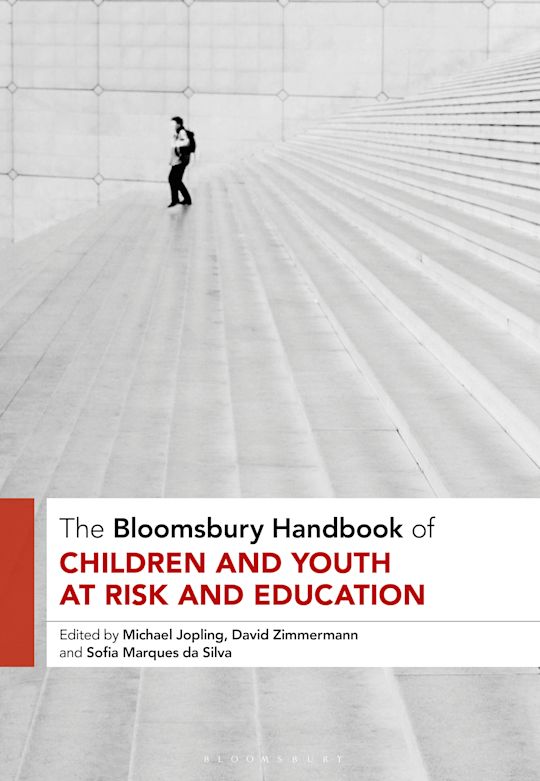

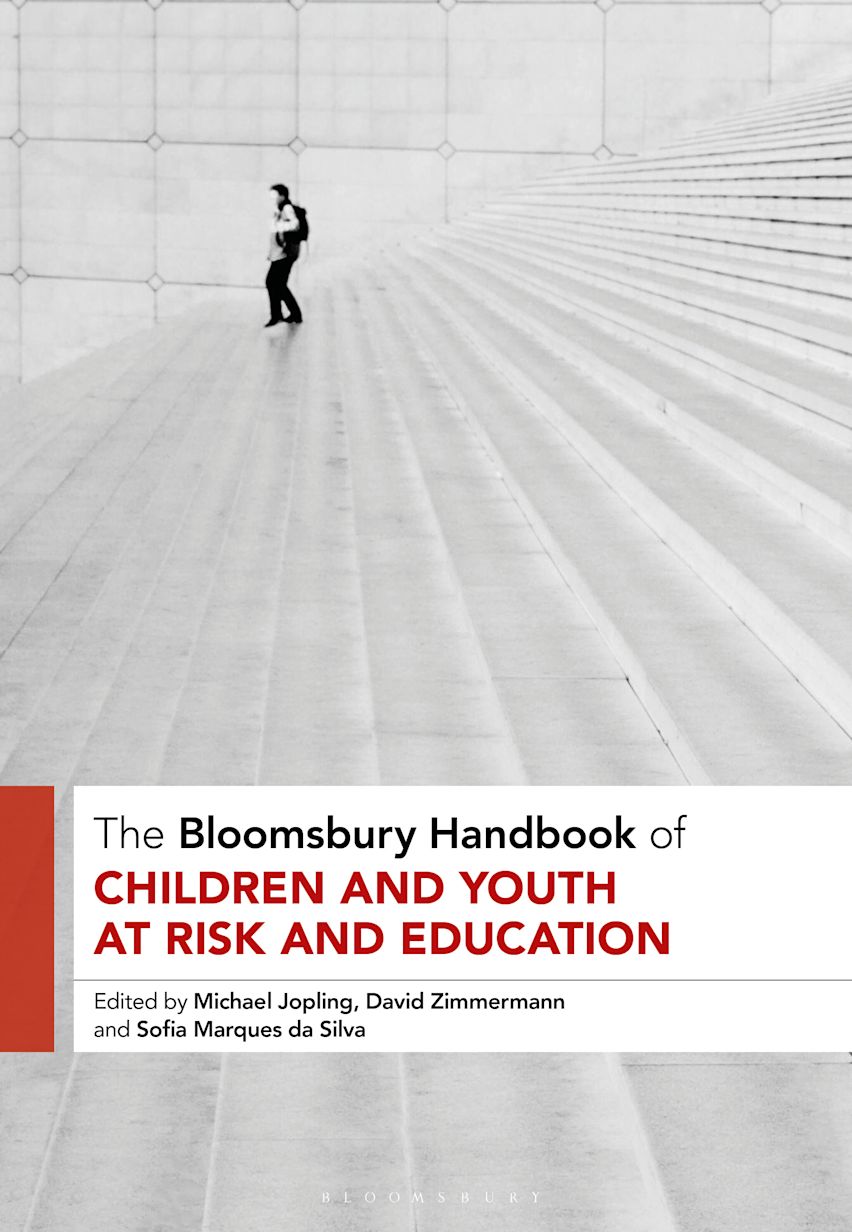
The Bloomsbury Handbook of Children and Youth at Risk and Education
Buying pre-order items
Ebooks and Audiobook
You will receive an email with a download link for the ebook or audiobook on the publication date.
Payment
You will not be charged for pre-ordered books until they are available to be shipped. Pre-ordered ebooks will not be charged for until they are available for download.
Amending or cancelling your order
For orders that have not been shipped you can usually make changes to pre-orders up to 72 hours before the publishing date.
Payment for this pre-order will be taken when the item becomes available
Description
This handbook provides a comprehensive overview of the key issues relating to children and youth at risk, focusing on how they experience education and how education attempts to support them. It does this against a backdrop of increasing uncertainty, instability and socioeconomic tensions across the world, which are increasing the intensity of risk and the frequency of social and relational conflicts, such as violence, which increase young people's vulnerability. Adopting a strengths-based approach to the upbringing, support and education of children and young people at risk, the handbook brings together contributions from academics and practitioners working in contexts ranging from Bulgaria, China and Germany to Turkey, the UK and the USA. The chapters cover the most pressing research issues relating to children and youth at risk, as well as key theoretical perspectives, methodologies and ethical issues. They examine areas such as poverty, crime, safeguarding, victimization, and young people's experiences of schools, communities or institutions, in combination providing a systemic and interdisciplinary understanding of risk ecologies. Contributors also explore how professional and institutional development for these groups of young people should be constituted. This enables the book to bridge gaps between research, practice and policy and is suitable for anyone working with, researching with, or developing strategies to support children and youth at risk.
Accessibility Information
Additional accessibility information
- PDF/UA-2, 1.4
- accessibility@bloomsbury.com
Hazards
The publication contains no hazards
Support for non-visual reading
Has alternative text descriptions for images
Navigation
- Page list to go to pages from the print source version
- Elements such as headings, tables, etc for structured navigation
- All or substantially all textual matter is arranged in a single logical reading order
Table of Contents
Introduction: Turning the Tide, Michael Jopling, David Zimmermann and Sofia Marques da Silva
Section 1: Inclusion/exclusion: Developments in policy and research on children and youth at risk
Michael Jopling, Sofia Marques da Silva and David Zimmermann
1. Research into Children and Youth at Risk and Education since 1998: Insights from Topic Modelling ECER abstracts, Michael Jopling and Alexander Christ
2. The Rhetoric and Reality of School Participation Rights: The Status of Children and Youth at Risk, Svenja Nike Hoffmann and Birgit Herz
3. What Counts as Success? Improving Outcomes for Children and Young People at Risk in 21st century Scotland, David Watt
4. Care Leavers and Deinstitutionalization in Bulgaria, Radostina Antonova, Teodora Koleva, Nikolay Zlatev
5. Addressing Juvenile Delinquency in Totalitarian and Post-totalitarian Contexts: The Case of Lithuania, Gintautas Sakalauskas, Birute Švedaite-Sakalauske and Jolita Buzaityte-Kašalyniene
Section 2: Methodological and ethical issues in conducting research with children and youth at risk
Sofia Marques da Silva, David Zimmermann and Michael Jopling
6. Empowering Voices: Participatory Research Methods for the Active Involvement of Children and Youth, Michaela Wright, Franziska Reitegger and Barbara Gasteiger-Klicpera
7. Questioning Youth Participatory Approaches: Epistemic injustice and the Undoing of Adultism, Tara Ciric
8. When Vulnerabilities Unearth Caring, Disruptive and Unmanageable Children's Agencies, Anna Majo´ Rossell, Montserrat Rifa`-Valls, Mireia Foradada Villar and Marta Bertran Tarre´s
9. Intersectionality as a Guiding Concept in Qualitative Research with Marginalised Young People, Marlene Märker and Veronika Wöhrer
Section 3: Poverty and care
David Zimmermann, Sofia Marques da Silva and Michael Jopling
10. Safeguarding Children and Young People in Education: Learning from Reviews of Cases Where Children Have Died or Been Seriously Harmed, Sharon Vincent
11. On the Edges of Care: Caring about and Caring for Young People Affected by Parental Drug Use in Education, Joyce Nicholson?
12. Youth Support Systems in the Ethos of Vulnerability: Between Care and Control???, Kouhia Anni and Brunila Kristiina
13. The Instrumentality of School for Children in Poverty within the School Wellbeing Model, Büsra Gündes Orman and Alperen Senol
14. Power, Discipline and Marginalised Youth in the Dispositif of School, Thorsten Hertel
Section 4: Supporting children, young people and families at risk
Michael Jopling, David Zimmermann and Sofia Marques da Silva
15. Schools and Communities Promoting Young People's Educational Pathways in Low Density Regions in Portugal, Sofia Marques da Silva, Nicolas Martins da Silva, Marta Sampaio and Sara Faria
16. Impact of a Mobile Library Bus Intervention on the Reading Habits of Singapore Children Living in Poverty: Enablers and Barriers, Chin Ee Loh, Baoqi Sun, Jeremy Pour and Yu Qun Koh
17. Inclusion of Young People at Risk in Parent-Teacher Conferences: Between Zones of Alienation and Spaces of Resonance, Stine Helms and Clara Ina Severin Steensen
18. Supporting At-Risk Youth: A Resilience Perspective on School-Family Partnerships during COVID-19 in the Netherlands, Petrie van der Zanden, Annemie Struyf, Frank Cornelissen, Eddie Denessen, Femke Geijsel, Bieke Schreurs, and Peter Sleegers
19. Children and Youth at Risk and School Attendance Problems, Ulf Fredriksson and Susanne Kreitz-Sandberg
20. Bullying and Victimisation of Students with Emotional and Behavioural Disorders, Jule Eilts, Tijs Bolz, Jessica Wilke and Ute von Düring
21. Educating Boys and Young Men in an Age of Extremism, Garth Stahl, Ben Adams, Glenys Oberg, Lisa Holohan, Laura Scholes, Mair Underwood and Yang Zhao
22. Interrelationships between Emotional and Behavioural Problems and Language Skills: A Synthesis of Theoretical Frameworks and Selected Empirical Findings, Clara Schramm, Thomas Hennemann and Tanja Ulrich
23. Chinese Left-behind Children's Agency in Collective Class Governance: Formal Class Committee Leadership and its Informal Equivalents, Shichong Li
Section 5: Keeping children and youth at risk in education
Sofia Marques da Silva, Michael Jopling and David Zimmermann
24. Second Chance Schools and Popular Education against School Dropout: The Italian Experience in the European Context, Valeria Cotza
25. Exploring Student Perspectives on Second Chance Education in Denmark, Ulla Højmark Jensen
26. Relational Teaching as Inclusive Pedagogy of Practice: Engaging Excluded Students and Those at Risk of Exclusion, Su Corcoran, Lucy Davies, Jennifer McGahan and Juliette Wilson-Thomas
27. Understanding Common Risk Factors and Effective Tutorial Actions: Enhancing Support Strategies to Combat Early School Leaving, Sandrina Milhano, Carla Freire, Catarina Mangas and Sara Lopes
28. Promoting Student Agency to Reduce NEET: The Contribution of Student Cooperatives, Alessia Bevilacqua
Section 6: Insights into institutional and professional development
David Zimmermann, Sofia Marques da Silva and Michael Jopling
29. Highly Stressful Social Experiences as Forms of Sequential Traumatisation: Theoretical Considerations and Pedagogical Options, David Zimmermann
30. The institution éclatée: A Structural-Psychoanalytical Approach to Transforming Educational Institutions, Pierre-Carl Link, Ulrike Becker and Robert Langnickel
31. Multi-Grade Multi-Level Pedagogy and Children and Adolescents at Risk, Milind Brahme, Thomas Müller and Subhra Shankha Chakraborty
32. Supporting children with chronic illness at school: Insights from an exploratory intervention study into the importance of teacher training, Nicola Sommer, Katja Höglinger and Julia Klug
Section 7: Futures for children and youth at risk
Michael Jopling, David Zimmermann and Sofia Marques da Silva
33. Professionalisation at University for Pedagogical Relationships with Children and Youth at Risk, Marian Kratz
34. Youth and Climate Justice: Representations of Young People in Action for Sustainable Futures, Onyx Sloan Morgan, Fabiola Melchior, Kimberley Thomas and Laura McNab-Coombs
35. 'Community Member' and 'Researcher': Reflections on Conducting Youth-led Participatory Action Research (YPAR) as a Youth, Fabiola Melchior
Product details

| Published | 18 Mar 2027 |
|---|---|
| Format | Ebook (PDF) |
| Edition | 1st |
| Pages | 448 |
| ISBN | 9781350537750 |
| Imprint | Bloomsbury Academic |
| Series | Bloomsbury Handbooks |
| Publisher | Bloomsbury Publishing |
Reviews
Related Titles