
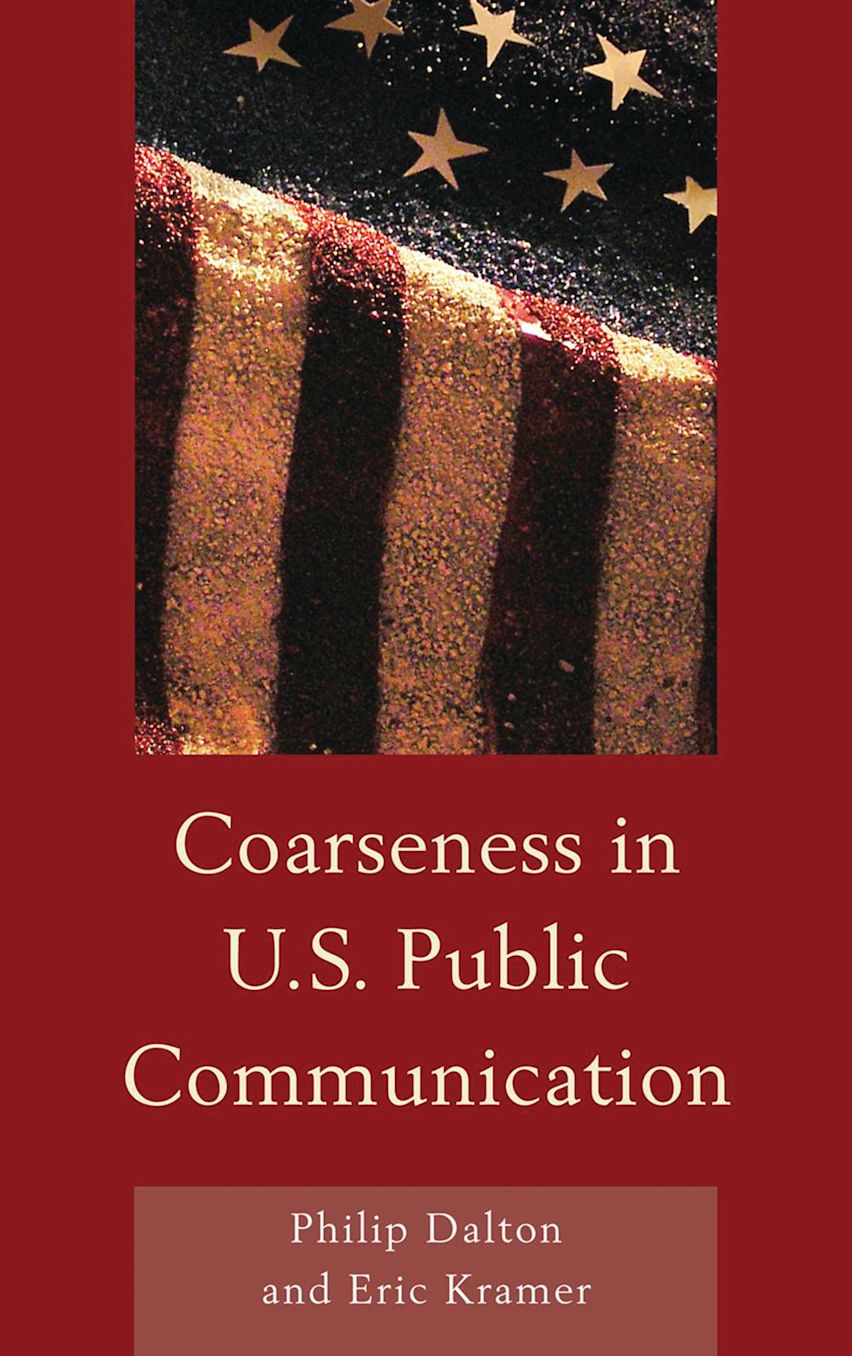
Coarseness in U.S. Public Communication
- Delivery and returns info
-
Free UK delivery on orders £30 or over
Description
Public expression in the United States has become increasingly coarse. Whether it’s stupid, rude, base, or anti-intellectual talk, it surrounds us. Popular television, film, music, art, and even some elements of religion have become as coarse, we argue, as our often-disparaged political dialogue. This book’s contention is that the U.S. semantic environment is governed by tactics, not tact. We craft messages that work—that perform their desired function. We are instrumental, strategic communicators. As such, entertainment and journalism that draw an audience, for instance, are “good.” This follows the logic that the marketplace, an aggregate of hedonically motivated individuals, decides what’s good. Market logic, when unencumbered by what some characterize as quaint human sentimentalities, liberates us to cynically communicate whatever and however we want. Whatever improves ratings, web traffic, ticket sales, concession sales, repeat purchases, and earnings is good. Embracing this communicative paradigm more fully necessitates the culture’s abandonment of collective notions of both taste and veracity, thus weakening the forces that keep individual desires in check. Our present communication environment is one that invites the hypertrophic expression of the ego, enabling elites to erode public communication standards and repeal laws and regulations resulting in immeasurable individual fortunes. Meanwhile, perpetual plutocratic rule is made even more certain by the cacophonous public noise the rest of us are busy making, leaving us incapable, disinterested, and unwilling to listen to one another.
Table of Contents
Introduction: Atlas Slouched
Chapter 1: Noise, Fragmentation, and Absurdity in U.S. Public Communication
Chapter 2: Coarseness in the Public Sphere
Chapter 3: Coarseness in U.S. Politics
Chapter 4: Coarseness and Reason
Chapter 5: Art and Cultivated Vulgarity
Chapter 6: Post-Denominational Christianity and Coarseness
Chapter 7: Entertainment and the Entertainment Market-as-Democracy Meme
Conclusion: Our Age of Cynicism
About the Authors
Index
Product details
| Published | 31 Aug 2012 |
|---|---|
| Format | Hardback |
| Edition | 1st |
| Pages | 232 |
| ISBN | 9781611475036 |
| Imprint | Fairleigh Dickinson University Press |
| Dimensions | 236 x 158 mm |
| Series | The Fairleigh Dickinson University Press Series in Communication Studies |
| Publisher | Bloomsbury Publishing |

Reviews
Related Titles