Cognitive Poetics of Cinema
Cognition, Narrative, and the Art of Multimodal Storytelling
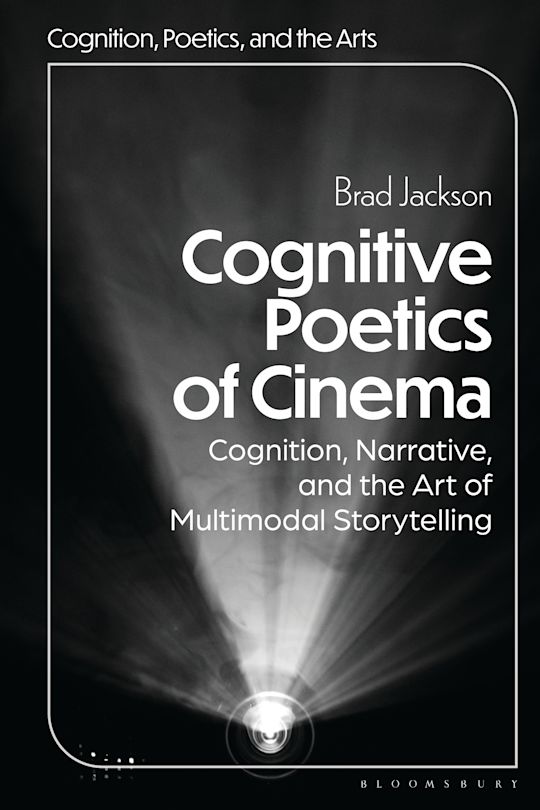

Cognitive Poetics of Cinema
Cognition, Narrative, and the Art of Multimodal Storytelling
Buying pre-order items
Ebooks and Audiobook
You will receive an email with a download link for the ebook or audiobook on the publication date.
Payment
You will not be charged for pre-ordered books until they are available to be shipped. Pre-ordered ebooks will not be charged for until they are available for download.
Amending or cancelling your order
For orders that have not been shipped you can usually make changes to pre-orders up to 72 hours before the publishing date.
Payment for this pre-order will be taken when the item becomes available
- Delivery and returns info
-
Free UK delivery on orders £30 or over
Description
How does a film tell a story? Whose viewpoint is the story told from? And how do we know what characters feel? Cognitive poetics and cognitive linguistics address these questions, showing how filmmakers craft meaning through creative and conventional forms.
Cognitive Poetics of Cinema examines how films construct meaning, shape narrative understanding, and evoke affective experiences through the lens of cognitive poetics. Bridging cognitive film theory, multimodal communication, and narrative analysis, this book develops a dynamic framework for interpreting how viewers make sense of cinema.
At its core, the book introduces three interrelated frameworks: cinematic viewpoint networks, cinematic anchors, the camera “I”, and embodied affective cues to explain how films guide conceptual integration across time, space, and modality. The book first offers a theoretical foundation for understanding how meaning emerges in film through the intersection of visual, auditory, and textual modes. Then it applies this framework to in-depth analyses of films including Eternal Sunshine of the Spotless Mind and Get Out to show how subjective experience and complex temporal structures are constructed through multimodal anchoring and conceptual blending.
By combining conceptual, narrative, and affective perspectives, Cognitive Poetics of Cinema provides an original methodology for analyzing film as a cognitive and communicative artifact. It shows how cinematic meaning is not simply represented, but actively constructed through multimodal patterns that orient, guide, and reshape viewer interpretation. For scholars of cognitive humanities, film theory, and cognitive linguistics, this book offers essential tools for understanding how we think, feel, and make meaning through film.
Table of Contents
About the Author
Introduction: Cognitive Poetics of Cinema
1. Cinematic Viewpoint Networks
2. Cinematic Anchors: An Approach to Narrative Spaces and Multimodality in Cinema
3. Refocusing the Camera “I”: Cinematic Viewpoint and Narration
4. Embodied Figuration and Character Emotion: The Role of Embodied Affective Cues
5. Subjective Representations of Experience in Cinema
6. Building a Case for a Conceptual Framework for Film Analysis
Conclusion: The Future of Cognitive Poetics in Film Studies
Product details

| Published | 13 May 2027 |
|---|---|
| Format | Hardback |
| Edition | 1st |
| Pages | 272 |
| ISBN | 9798216396703 |
| Imprint | Bloomsbury Academic |
| Illustrations | 51 bw illus |
| Dimensions | 229 x 152 mm |
| Series | Cognition, Poetics, and the Arts |
| Publisher | Bloomsbury Publishing |
Related Titles