
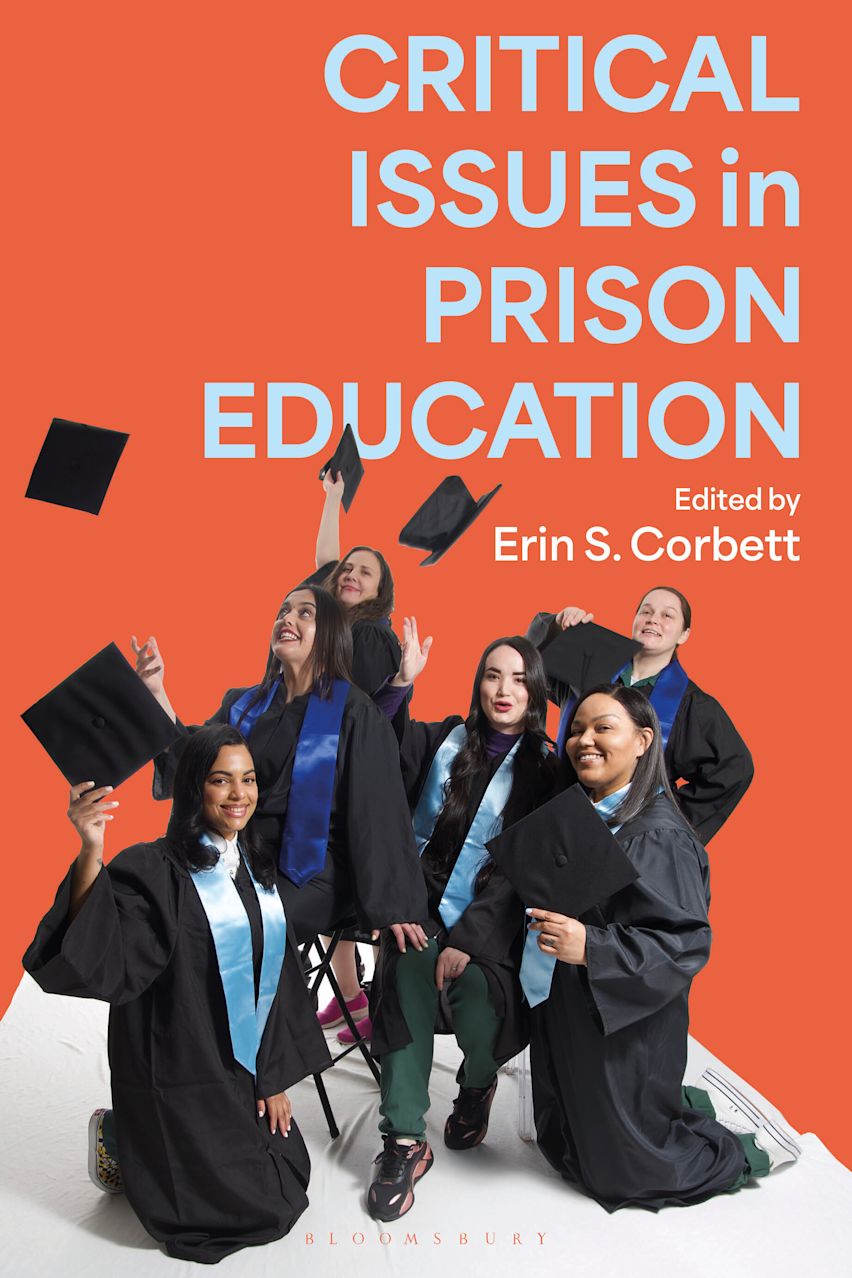
Critical Issues in Prison Education
Buying pre-order items
Ebooks and Audiobook
You will receive an email with a download link for the ebook or audiobook on the publication date.
Payment
You will not be charged for pre-ordered books until they are available to be shipped. Pre-ordered ebooks will not be charged for until they are available for download.
Amending or cancelling your order
For orders that have not been shipped you can usually make changes to pre-orders up to 72 hours before the publishing date.
Payment for this pre-order will be taken when the item becomes available
Description
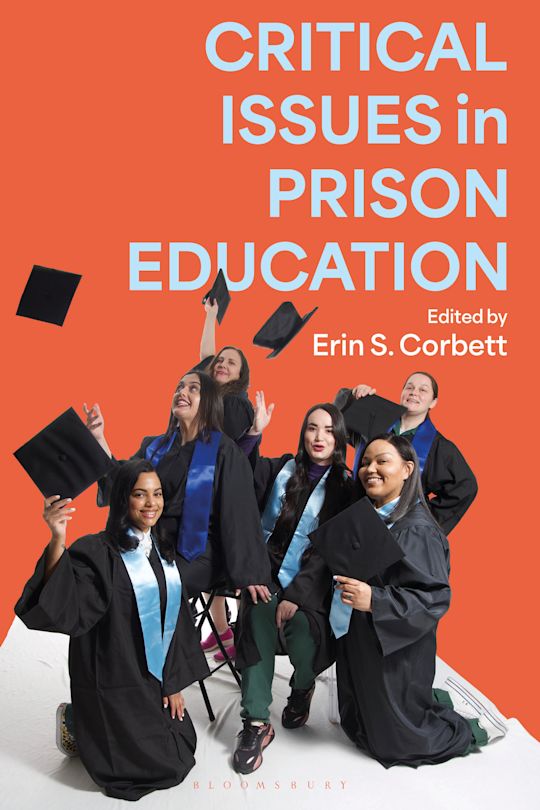
This book critically surveys the key issues in prison education today. Including contributions from practitioners, activists, scholars, researchers, and advocates, the majority of whom are currently or formerly incarcerated, it considers current and future educational opportunity for confined learners. The US prison system is discussed in most detail and the book includes comparative chapters from researchers based in New Zealand and Tanzania. The contributors show how and why mass incarceration is the byproduct of the systemic denial of quality education to poor communities and communities of color in particular and discuss how the school-to-prison pipeline continues to disrupt the educational programming of children of color with increased exposure to law enforcement at younger ages. They consider how participatory action research can help to find solutions and look at how race/ethnicity/cultural affiliation play a role in the broader picture of mass incarceration as well as who does and does not have access to educational opportunities while inside. The chapters also cover issues of mental health, employment, trauma-informed pedagogy, digital and distance learning, leadership, university-prison partnerships, rehabilitations programs and the economics of prison education. The book offers practical solutions for educators and policy makers working to make prison education more equitable for systems-impacted people.
Accessibility Information
Additional accessibility information
- PDF/UA-2, 1.4
- accessibility@bloomsbury.com
Hazards
The publication contains no hazards
Support for non-visual reading
Has alternative text descriptions for images
Navigation
- Page list to go to pages from the print source version
- Elements such as headings, tables, etc for structured navigation
- All or substantially all textual matter is arranged in a single logical reading order
Table of Contents
Introduction, Erin S. Corbett (Second Chance Educational Alliance, USA)
Part I: Ideological and Theoretical Perspectives
1. Raising Voices from Inside the Carceral Classroom, Kristen Discola (California State University, Los Angeles, USA)
2. The Life and Times of an Incarcerated Mind, Alexander Bolling (incarcerated writer and education advocate, USA)
3. Access to Higher Education as a Tool to Survive Incarceration, Michelle Daniel, (Constructing our Futures, USA)
4. A Philosophy of Prison Education, Hanan Al-Zubaidy (University of Oregon, USA)
5. Education as a Means of Punishment, Jacob Robles (NYU, USA)
6. An Open Letter to Students of College in Prison Program, Rob Scott (Cornell University, USA)
7. The Prison Graduate Humanities, Matthew Luckett (California State University, Dominguez Hills, USA)
Part II: Distance Learning Inside
8. Interconnected Technologies (ICT) in Prison Settings, Michael Saine (Prison to Professionals, USA)
9. Challenges and Innovations in Technology Access for People in Prison, Helen Farley (University of Canterbury, New Zealand)
10. How Distance Learning in Prison Teaches the Most Important Lessons of All, Lyle May (Incarcerated Student, USA)
Part III: Participatory Action Research
11. PAR Higher Education in Prison (HEP) and Program Evaluation, Erin S. Corbett and students (Second Chance Educational Alliance, USA)
12. Positionality in PAR: Notes from an HEP Program Evaluation, Jarrod M. Wall and Katie Owens-Murphy (University of North Alabama, USA)
13. Conducting PAR in Prison, Jarrod M. Wall (University of North Alabama, USA)
Part IV: Needs Inside and Outside of the Classroom
14. Restoring Relationships, Tanya Wiggins (Pace University, USA)
15. Trauma-Responsive Teaching: Interrupting Cycles of Harm, Emareena Danielles (USA)
16. Cultivating Leadership in Higher Education Behind and Beyond Prison Walls, Terrell Blount (Formerly Incarcerated College Graduate Network, USA)
17. Supporting Incarcerated Scholars through Holistic Academic Advising, Lila McDowell (Hudson Link for Higher Education in Prison, USA)
18. Infusing Mental Health in the Classroom, Taylor Ford (Educator, USA)
19. Using Culture to Create Inclusion, Erin O'Donoghue (Curtin University, New Zealand)
20. Trauma-Informed Education in Prison, Mneesha Gellman (Emerson College, USA)
21. Student-Centeredness in Higher Education in Prison Programs, Maggie Shelledy (Education Justice Project, USA)
Part V: Program Logistics to Consider
22. Female Prisoner Rehabilitation and Empowerment Programmes in Tanzania, Valeria Kyumana (Institute of Finance Management, Tanzania)
23. University-Prison Partnership in Education Provision to Incarcerated People in Tanzania, Valeria Kyumana (Institute of Finance Management, Tanzania)
24. The Economics of Education for Impacted Scholars, Sheila Meiman (NASFAA, USA)
25. Preparing Students for Successful Parole, Jesse Corson (University of Maryland, USA)
26. Aging and Workforce Development Post-Release, Pamela Keye (Keye Global Group, USA)
References
Index
Product details

| Published | 15 Apr 2027 |
|---|---|
| Format | Ebook (PDF) |
| Edition | 1st |
| Pages | 288 |
| ISBN | 9781350563636 |
| Imprint | Bloomsbury Academic |
| Publisher | Bloomsbury Publishing |
Related Titles