A Cultural History of Slavery and Human Trafficking in the Age of Global Conflict
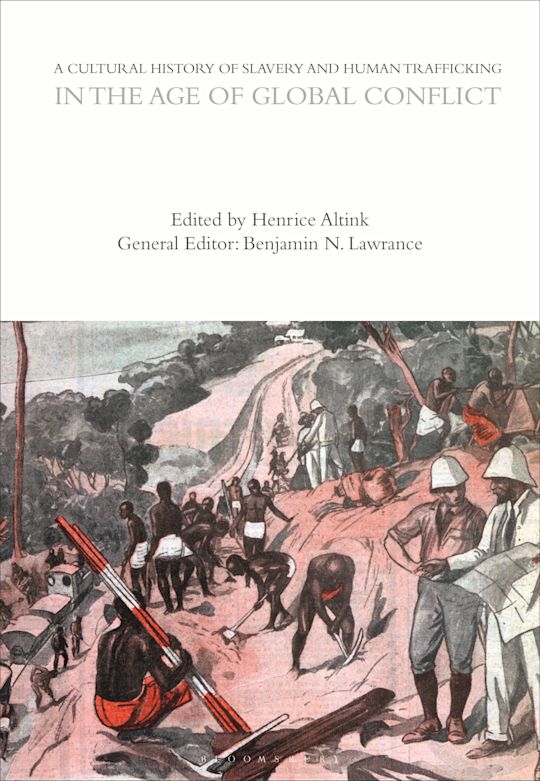

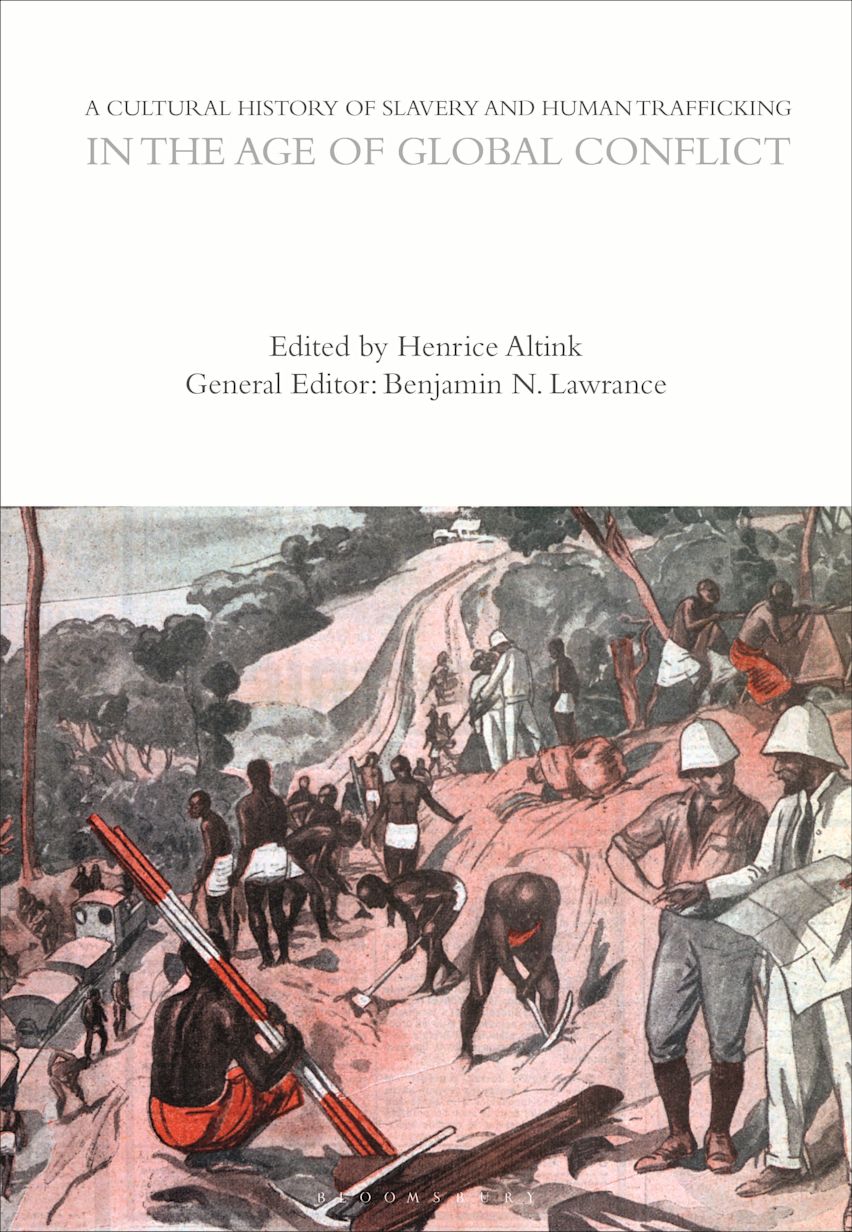
A Cultural History of Slavery and Human Trafficking in the Age of Global Conflict
Buying pre-order items
Ebooks and Audiobook
You will receive an email with a download link for the ebook or audiobook on the publication date.
Payment
You will not be charged for pre-ordered books until they are available to be shipped. Pre-ordered ebooks will not be charged for until they are available for download.
Amending or cancelling your order
For orders that have not been shipped you can usually make changes to pre-orders up to 72 hours before the publishing date.
Payment for this pre-order will be taken when the item becomes available
Description
In the first half of the 20th century, the first formal, truly global attempts at abolition and prohibition transformed the global contours of slavery, forced labor, and related exploitation. Yet the period 1900 and 1945 was also marked by an increase in the number of slaves and a greater range of forced labor, ranging from sharecropping and prison labor to sex trafficking and debt peonage. This paradox was the result of several factors, including European colonialization; globalization; commercialization; warfare; and the economic policies of the major global powers.
The contributors to this volume reveal how contemporaries embraced the model of Atlantic or chattel slavery, which had been prevalent in the Americas until 1888. Colonial officials failed to legislate for many types of unfree labor because they did not closely match the Atlantic slavery model, allowing for the continuation of such practices as slave concubinage in various parts of Africa. Anti-slavery activists embraced the Atlantic slavery model to denounce certain labor practices, because it was a powerful rhetorical tool to highlight an extreme degree of abuse. Piecing together their voices from official records, ethnographic accounts, and other evidence, the contributors to this book highlight that many slaves and other unfree laborers in the half of the 20th century were aware of changes in legislation governing unfree labor and that they used a range of means to resist or improve their situation.
A Cultural History of Slavery and Human Trafficking is part of The Cultural Histories Series. Titles are available as hardcover sets for libraries needing just one subject or preferring a tangible reference for their shelves or as part of a fully-searchable digital library. The digital product is available to institutions via www.bloomsburyculturalhistory.com . Individual volumes for academics and researchers are also available in print or digitally via www.bloomsburycollections.com.
Accessibility Information
Additional accessibility information
- EPUB 3.0
- Conforms with the requirements of EPUB Accessibility Spec v1.1
- WCAG level AA
- WCAG v2.2 compliant
- accessibility@bloomsbury.com
Hazards
The publication contains no hazards
Support for non-visual reading
- No accessibility features offered by the reading system, device or reading software are disabled or otherwise unusable with the product
- Has alternative text descriptions for images
Visual adjustments
Appearance of the text and page layout can be modified according to the capabilities of the reading system (font family and size, spaces, as well as color of background and text)
Navigation
- Page list to go to pages from the print source version
- Elements such as headings, tables, etc for structured navigation
- All or substantially all textual matter is arranged in a single logical reading order
- Content is enhanced with ARIA roles to optimize organization and facilitate navigation
- Purposes of all links are made clear
Rich content
Language tagging provided
Table of Contents
Note on Contributors
General Editor's Preface
Introduction Henrice Altink (University of York, UK)
1. Definitions and Ideologies of Slavery and Trafficking Katarina Schwartz(University of Nottingham, UK)
2. Slavery, Trafficking, and the Law Jean Allain (Monash University, Australia)
3. Political Cultures Joel Quirk(University of the Witwatersrand, South Africa)
4. Coercive Laboring Economies Wilson Bell (Thompson Rivers University, Canada)
5. Social Organization, Culture, Identity, and Ritual Abbass Braham, Robin P. Chapdelaine(Duquesne University, USA), & Benjamin N. Lawrance (University of Arizona, USA)
6. Gender, Enslavement, and Trafficking Jessica Pliley (Texas State University, USA)
7. Family, Age, and Bondage Robin P. Chapdelaine (Duquesne University, USA) & Benjamin N. Lawrance (University of Arizona, USA)
8. Anti-Slavery, Anti-Trafficking, Resistance, and Abolition Outcomes Katrina Keefer (Trent University, Canada)
Notes
Bibliography
Index
Product details

| Published | 12 Nov 2026 |
|---|---|
| Format | Ebook (Epub & Mobi) |
| Edition | 1st |
| Pages | 232 |
| ISBN | 9781350547476 |
| Imprint | Bloomsbury Academic |
| Illustrations | 43 bw illus |
| Series | The Cultural Histories Series |
| Publisher | Bloomsbury Publishing |
Related Titles