
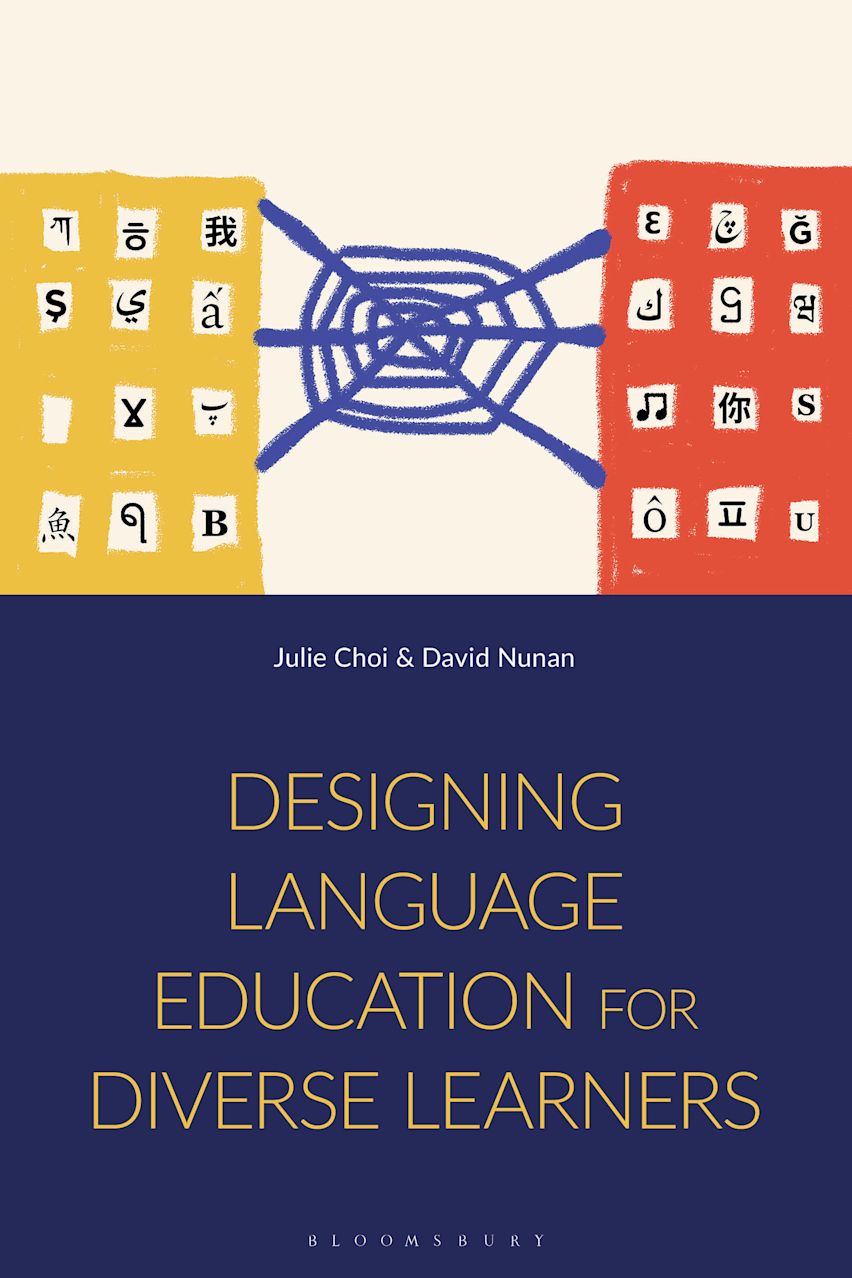
Designing Language Education for Diverse Learners
Buying pre-order items
Ebooks and Audiobook
You will receive an email with a download link for the ebook or audiobook on the publication date.
Payment
You will not be charged for pre-ordered books until they are available to be shipped. Pre-ordered ebooks will not be charged for until they are available for download.
Amending or cancelling your order
For orders that have not been shipped you can usually make changes to pre-orders up to 72 hours before the publishing date.
Payment for this pre-order will be taken when the item becomes available
- Delivery and returns info
-
Free UK delivery on orders £30 or over
Description
What looks like learner deficit is often a deficit in curriculum design and assessment procedures. Given the right conditions, capabilities emerge that no standardised measure can detect. This book sets out how multilingual learners bring sophisticated capabilities developed through navigating multiple languages, modes, and cultural contexts, only to find these qualities rendered invisible by conventional pedagogies and assessments.
How teachers position students is critical. Is affect engaged or discouraged? Does content connect to lived experience? Does learning unfold as fragmented skill-building or sustained meaning-making? Drawing on sociocultural and aesthetic theories of learning, and on their own research across classrooms and community settings spanning early childhood to adult education, Julie Choi and David Nunan show what happens when learning conditions support the interplay of affect, identity and lived experience, and build on the funds of knowledge, aspiration and 'dark funds' that learners bring. While their examples often feature multilingual learners, these are principles that apply to all learners, regardless of first language or ethnicity, whose lives, experiences, or ways of knowing differ from what mandated curricula promote. What learners can show depends on the conditions we are willing to bring to light.
Table of Contents
Preface, Ester de Jong
Introduction: Design, diversity and the problem of invisible capabilities
1. Literacy: What phonics assessments cannot see
2. Writing: When voice emerges
3. Assessment: Making the invisible visible
4. Contexts and tools: Creating conditions for capability
5. Extended engagement and the return of the "I"
6. Teachers as change agents
Coda: What design makes visible
Afterword, Joseph Lo Bianco
Glossary
Index
Product details

| Published | 27 May 2027 |
|---|---|
| Format | Hardback |
| Edition | 1st |
| Pages | 240 |
| ISBN | 9781350647855 |
| Imprint | Bloomsbury Academic |
| Illustrations | 45 bw illus |
| Dimensions | 234 x 156 mm |
| Publisher | Bloomsbury Publishing |

Related Titles