Doing Qualitative Secondary Analysis
Research Methods


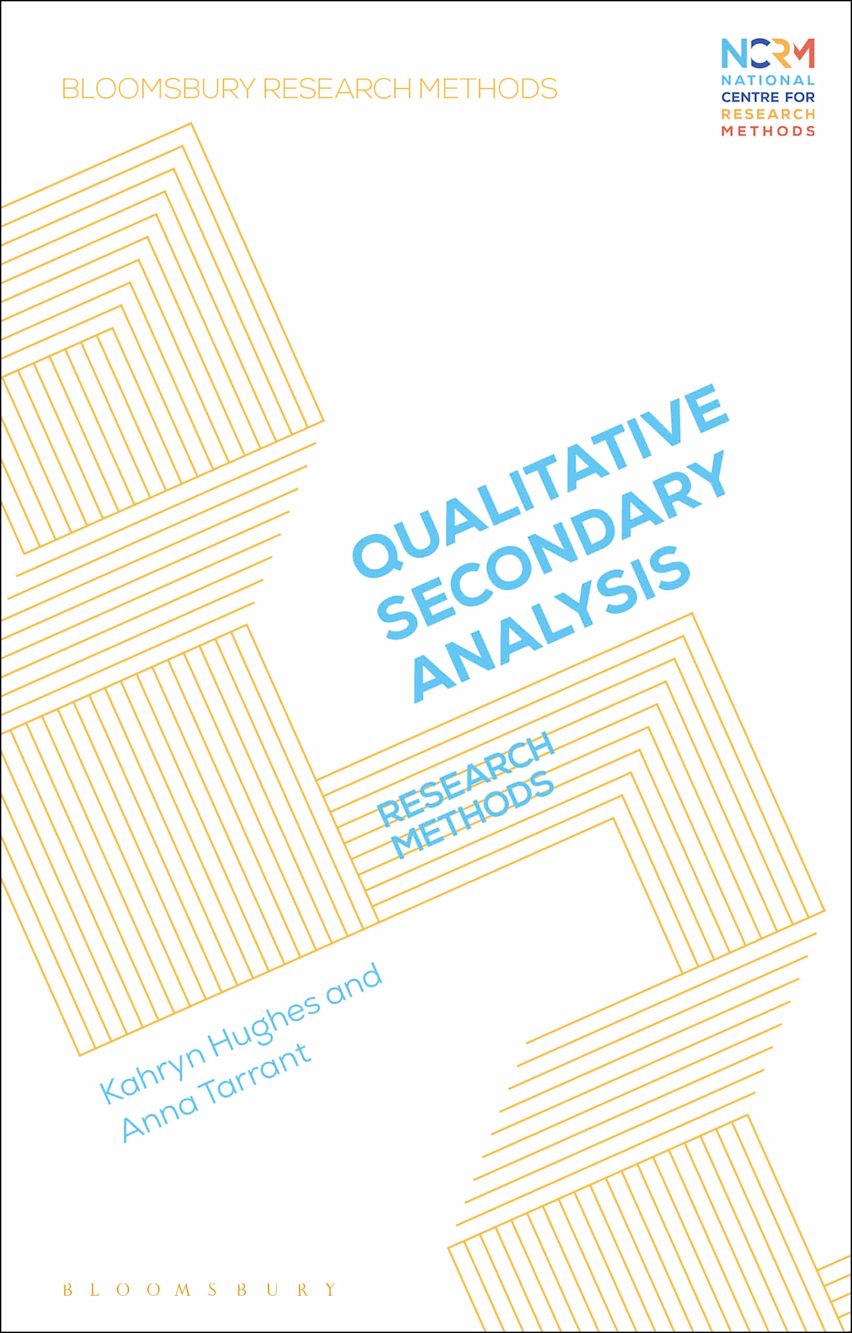
Doing Qualitative Secondary Analysis
Research Methods
Buying pre-order items
Ebooks and Audiobook
You will receive an email with a download link for the ebook or audiobook on the publication date.
Payment
You will not be charged for pre-ordered books until they are available to be shipped. Pre-ordered ebooks will not be charged for until they are available for download.
Amending or cancelling your order
For orders that have not been shipped you can usually make changes to pre-orders up to 72 hours before the publishing date.
Payment for this pre-order will be taken when the item becomes available
Description
Designed as a flagship, accessible text that introduces the field of Qualitative Secondary Analysis as it has developed in the past 25 years, the book details how, why and when the range of associated methods would be used and for what advantages for existing knowledge production.
Qualitative Secondary Analysis (QSA) is introduced not as a replacement for primary research, but as an established alternative or addition to the broader repertoire of qualitative research methods. Based on advanced methods training delivered by the authors for the National Centre for Research Methods, and consolidating their existing corpus of work on QSA, the main aim of the book is to address common questions that we receive, including: Should we do QSA, when and why? How do we do QSA? What data are there for QSA and how can we sample from existing datasets? What are the main ethical challenges of doing QSA?
This book maps out these challenges and provides researchers with clear guidance on how to make best use of the opportunities for new research offered through QSA. Providing an overview of existing debate and more recent innovations in QSA, they introduce and explain the broad range of methods that can be used to design robust QSA studies, clarifying each of these in terms of their various purposes and defining challenges. Finally, they provide a clear set of analytical strategies that can be used for research using existing qualitative data, which can also be used and applied in primary qualitative research.
Through the range of chapters and use of clear examples, this book covers questions from design to analysis to support researchers in using existing data in robust and rigorous research to address contemporary questions and concerns.
Accessibility Information
Additional accessibility information
- EPUB 3.0
- Conforms with the requirements of EPUB Accessibility Spec v1.1
- WCAG level AA
- WCAG v2.2 compliant
- accessibility@bloomsbury.com
Hazards
The publication contains no hazards
Support for non-visual reading
- No accessibility features offered by the reading system, device or reading software are disabled or otherwise unusable with the product
- Has alternative text descriptions for images
Visual adjustments
Appearance of the text and page layout can be modified according to the capabilities of the reading system (font family and size, spaces, as well as color of background and text)
Navigation
- Page list to go to pages from the print source version
- Elements such as headings, tables, etc for structured navigation
- All or substantially all textual matter is arranged in a single logical reading order
- Content is enhanced with ARIA roles to optimize organization and facilitate navigation
- Purposes of all links are made clear
Rich content
Language tagging provided
Table of Contents
1. Introduction
2. Conceptual Foundations: Rethinking Questions of Data Reuse
3. Rethinking the Ethics of Qualitative Secondary Analysis
Part II: Addressing 'How To' Questions
4. Identifying and Accessing Data
5. Designing Research Using QSA
Part III: Addressing Future Directions and Questions
6. The Analytics of QSA: Strategies for Approaching Data Analysis
7. Should I Archive My Data? From Data Ownership to Stewardship
8. Conclusion
References
Product details

| Published | 22 Jul 2027 |
|---|---|
| Format | Ebook (Epub & Mobi) |
| Edition | 1st |
| Pages | 144 |
| ISBN | 9781350415522 |
| Imprint | Bloomsbury Academic |
| Series | Bloomsbury Research Methods |
| Publisher | Bloomsbury Publishing |
Related Titles