Feathers, Frills and Fancy Goods
The British millinery trade from the 17th to the 19th centuries

Feathers, Frills and Fancy Goods
The British millinery trade from the 17th to the 19th centuries
Description
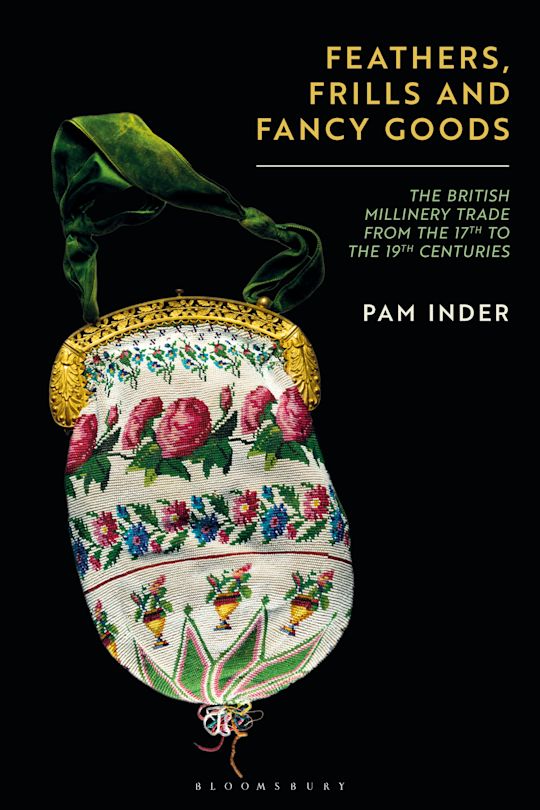
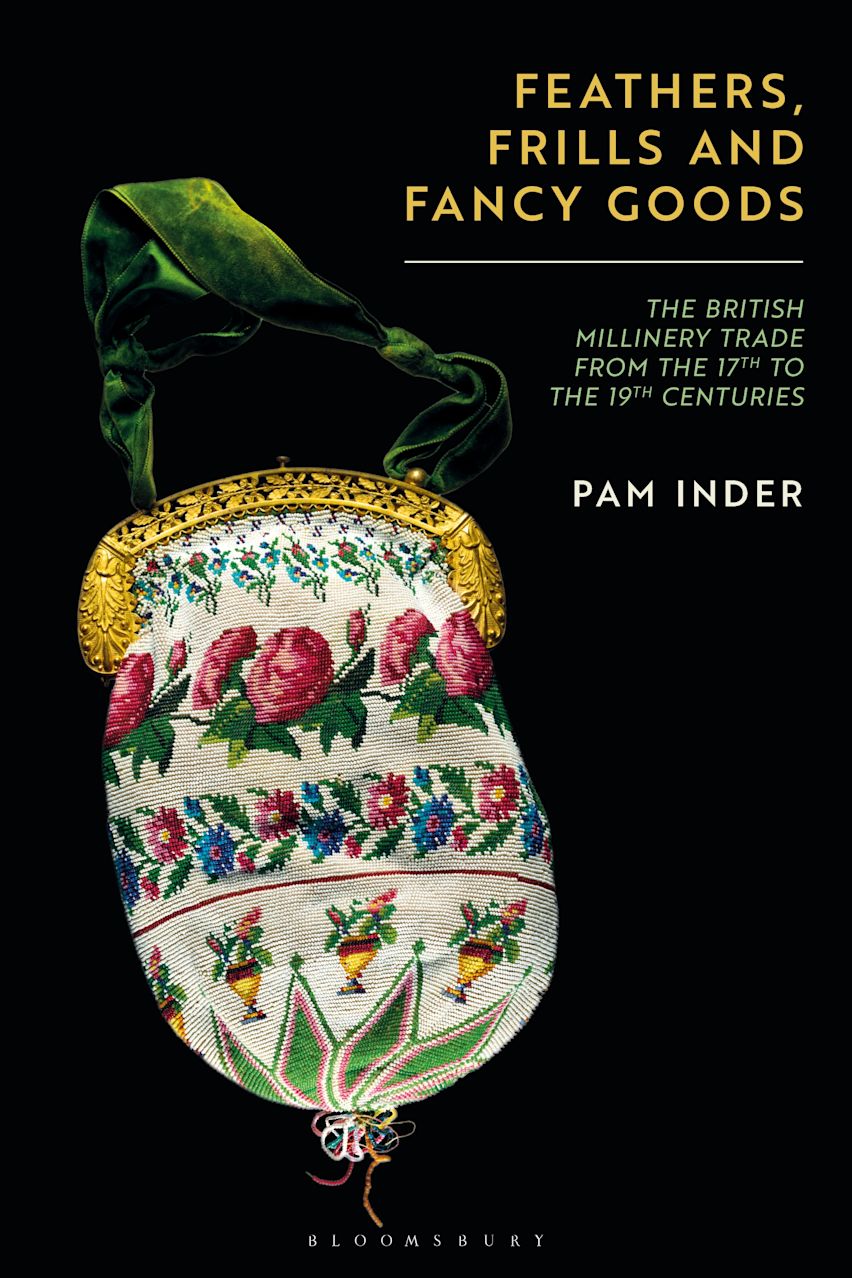
Tracing its development from a trade devoted to selling small needlework articles, ribbons and trimmings to one chiefly concerned with making and selling hats and bonnets, Feathers, Frills and Fancy Goods is an examination of the millinery trade from the early 17th century to the Victorian period.
The term 'milliner' derives from milan-er – seller of goods from Milan. Milliners sold 'small wares' – pins, needles, thread, tapes, ribbons, laces, soft leathers for belts and purses, gloves, hosiery and other decorative items which often, but not invariably, included caps and hats. Feathers, Frills and Fancy Goods traces the history of the millinery trade from the late 16th century, when most milliners were men, to the 19th century, when an increasing number of women had moved into the industry, and the term 'milliner' began to take on its contemporary meaning of 'hat maker/seller'.
Drawing on a wealth of unpublished and primary sources, and illustrated with over 65 images, Feathers, Frills and Fancy Goods traces the evolution of this complex and under-researched trade and grants new insights into working class life in 18th- and 19th-century Britain.
Accessibility Information
Additional accessibility information
- EPUB 3.0
- Conforms with the requirements of EPUB Accessibility Spec v1.1
- WCAG level AA
- WCAG v2.2 compliant
- accessibility@bloomsbury.com
Hazards
The publication contains no hazards
Support for non-visual reading
- No accessibility features offered by the reading system, device or reading software are disabled or otherwise unusable with the product
- Has alternative text descriptions for images
Visual adjustments
Appearance of the text and page layout can be modified according to the capabilities of the reading system (font family and size, spaces, as well as color of background and text)
Navigation
- Page list to go to pages from the print source version
- Elements such as headings, tables, etc for structured navigation
- All or substantially all textual matter is arranged in a single logical reading order
- Content is enhanced with ARIA roles to optimize organization and facilitate navigation
- Purposes of all links are made clear
Rich content
Language tagging provided
Table of Contents
Sources of illustrations
Acknowledgements
Notes on money, measurements and place names
Introduction
Chapter 1. 'As many etceteras …'
Chapter 2. 'Wares in my Shoppe'
Chapter 3. 'Frivolous productions'
Chapter 4. 'The taste and caprice of the moment'
Chapter 5. 'At every fine shop'
Chapter 6. 'Headgear does date so'
Chapter 7. 'Her people are worked half to death'
Chapter 8. 'All milliners delight in show'
Conclusion
Glossary
Notes
Bibliography
Index
Product details
| Published | 11 Dec 2025 |
|---|---|
| Format | Ebook (Epub & Mobi) |
| Edition | 1st |
| Pages | 304 |
| ISBN | 9781350253049 |
| Imprint | Bloomsbury Visual Arts |
| Illustrations | 53 bw and 15 colour illus |
| Publisher | Bloomsbury Publishing |
Reviews

ONLINE RESOURCES
Bloomsbury Collections
This book is available on Bloomsbury Collections where your library has access.
Related Titles