Global Perspectives on Language, Sustainability, and Pedagogy
An Ecolinguistic Approach
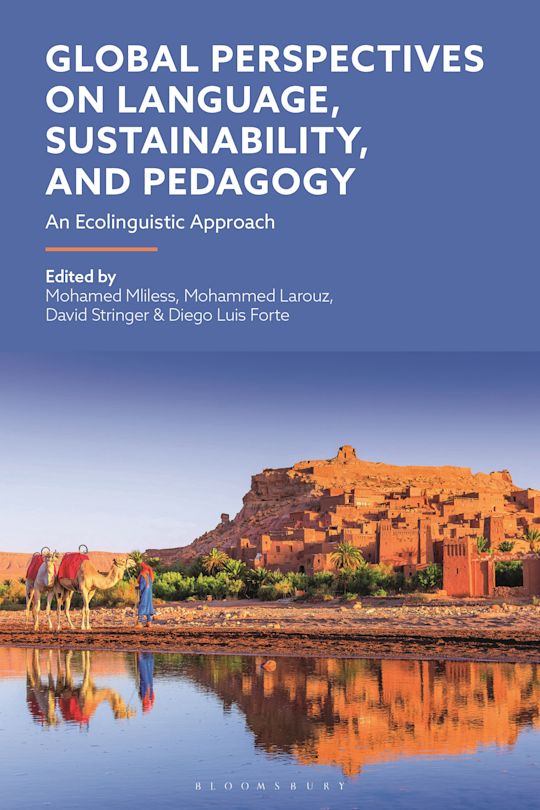

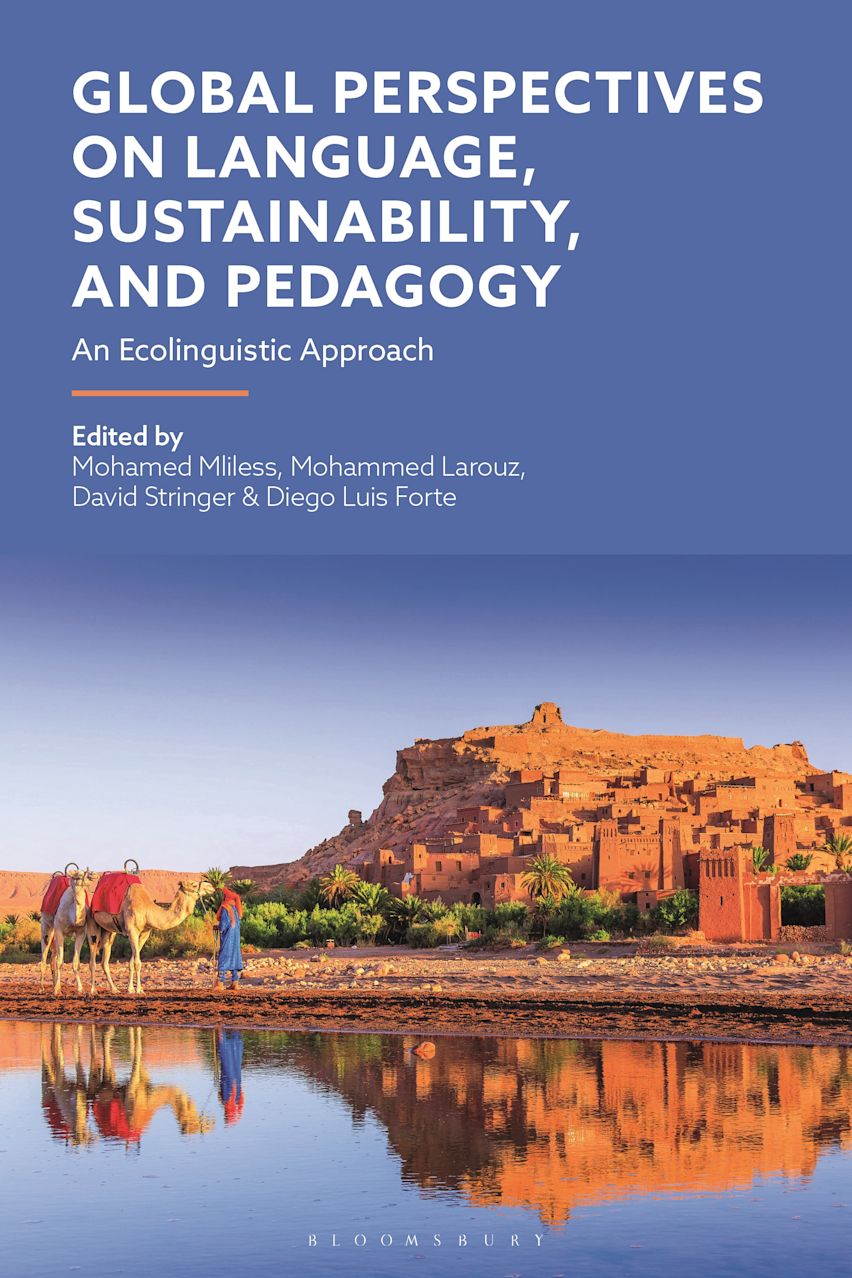
Global Perspectives on Language, Sustainability, and Pedagogy
An Ecolinguistic Approach
Buying pre-order items
Ebooks and Audiobook
You will receive an email with a download link for the ebook or audiobook on the publication date.
Payment
You will not be charged for pre-ordered books until they are available to be shipped. Pre-ordered ebooks will not be charged for until they are available for download.
Amending or cancelling your order
For orders that have not been shipped you can usually make changes to pre-orders up to 72 hours before the publishing date.
Payment for this pre-order will be taken when the item becomes available
- Delivery and returns info
-
Free UK delivery on orders £30 or over
Description
This edited collection takes a forward-thinking approach to some of the most pressing global issues, positioning ecolinguistic pedagogy as a transformative tool for environmental education and sustainability.
By tackling climate change education, linguistic diversity, and ecological awareness, it bridges theoretical discourse with practical applications in classrooms and policy frameworks. The inclusion of AI-powered ecolinguistic education tools highlights an innovative direction in ecolinguistics, making it relevant for scholars, educators, and policymakers looking to integrate technology into sustainability-driven language learning. Furthermore, the focus on multilingual perspectives and Indigenous ecological knowledge preservation sets it apart by advocating for culturally responsive and inclusive approaches to environmental literacy.
With global case studies spanning Iran, Morocco, Argentina, Bali, Nigeria, and beyond, this collection offers diverse cultural perspectives on ecolinguistic education rarely found in a single volume. The book's interdisciplinary nature, spanning applied linguistics, discourse studies, TESOL, and education policy, ensures broad appeal across multiple fields. With its strong emphasis on developing environmental stewardship and critical thinking, it has the potential to shape sustainable education practices globally.
Table of Contents
Part I: Theoretical Foundations and Critical Frames
1. Critical Trans/Multilingualism in Ecolinguistics, Kate Alice Garnett (Kansai Gaidai University in Osaka, Japan)
2. The Place of Foreign Language Teaching in Contemporary Ecolinguistics: Some Theoretical and Practical Reflections, Davi Albuquerque (Nankai University, China)
3. Integrating the Anthropocene into Curricula for Stronger Sustainability Education, Mohamed Mliless and Elhoucine Echougrani (Cadi Ayyad University, Morocco)
4. Eco Perspectives, Periphery and Colonial Identity: Higher Education in Argentina and the Climate Change Debate, Diego Forte
Part II: Frameworks, Methods and Tools
5. AI Adaptive Assistants for Ecolinguistic Education, Jorge Vallego
6. An Ecolinguistic Approach to Measuring Environmental Literacy Among EFL Students at the School of Arts and Humanities, Meknes, Maryam Charafi (Ismail University of Meknes, Morocco)
Part III: Pedagogies and Curriculum Integration
7. Eco-Critical Thinking and Environmental Awareness: The Role of Educational Textbooks, Drissia Ounnich Drissia Ounnich (Moulay Ismail University, Morocco)
8. English Language Teaching and Environmental Awareness: Iranian Students' Perspectives on Integrating Environmental Education into ELT Textbooks, Amir Ghorbanpour (Tarbiat Modares University in Tehran, Iran), Ghodrat Hassani (Damghan University, Iran), Hossein Davari (Damghan University, Damghan, Iran), Abutaleb Iranmehr(Shahrood University of Technology, Iran)
9. Architecture Ecoliteracy: Moroccan student perspectives, Mohamed Mliless, Mohammed Larouz (Moulay Ismail University, Morocco) and Mohamed Messaoudi (Moulay Ismail University, Morocco)
10. Bridging Environmental Awareness and Sustainable Practices: A Qualitative Study of University Students' Perceptions and Engagement, Benzehaf Bouchaib, Razkane Hassane and Benzehaf Oumaima (Chouaïb Doukkali University, Morocco)
Part IV: Discourse and Regional Case Studies
11. A Positive Discourse Analysis of Reader's Digest Articles: An Eco-Critical Perspective, Ammara Sharif (Riphah International University, Pakistan), Gul-E-Raana Qureshi (Riphah International University, Pakistan) and Maimoona Abdulaziz (Faisalabad Campus, Pakistan)
12. Learning Through Living Traditions: An Ecolinguistic EFL Study of Bali's Ritual Plants, I Gusti Agung Sri Rwa Jayantini, Sang Putu Kaler Surata, Putu Desi Anggerina Hikmaharyanti and Ni Nyoman Deni Ariyaningsih (Universitas Mahasaraswati Denpasar, Indonesia)
Conclusion
Product details

| Published | 18 Feb 2027 |
|---|---|
| Format | Hardback |
| Edition | 1st |
| Pages | 272 |
| ISBN | 9781350612686 |
| Imprint | Bloomsbury Academic |
| Illustrations | 10 bw illus |
| Dimensions | 234 x 156 mm |
| Publisher | Bloomsbury Publishing |


Related Titles