
Buying pre-order items
Ebooks and Audiobook
You will receive an email with a download link for the ebook or audiobook on the publication date.
Payment
You will not be charged for pre-ordered books until they are available to be shipped. Pre-ordered ebooks will not be charged for until they are available for download.
Amending or cancelling your order
For orders that have not been shipped you can usually make changes to pre-orders up to 72 hours before the publishing date.
Payment for this pre-order will be taken when the item becomes available
- Delivery and returns info
-
Free UK delivery on orders £30 or over
Description
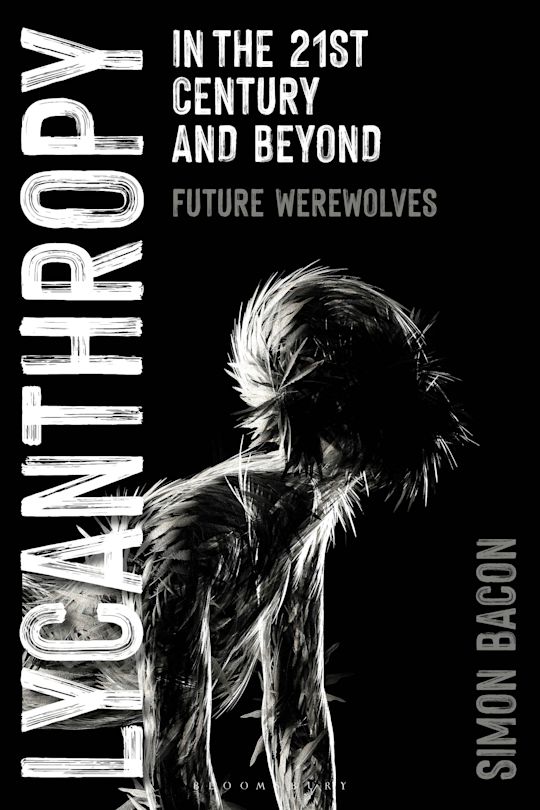
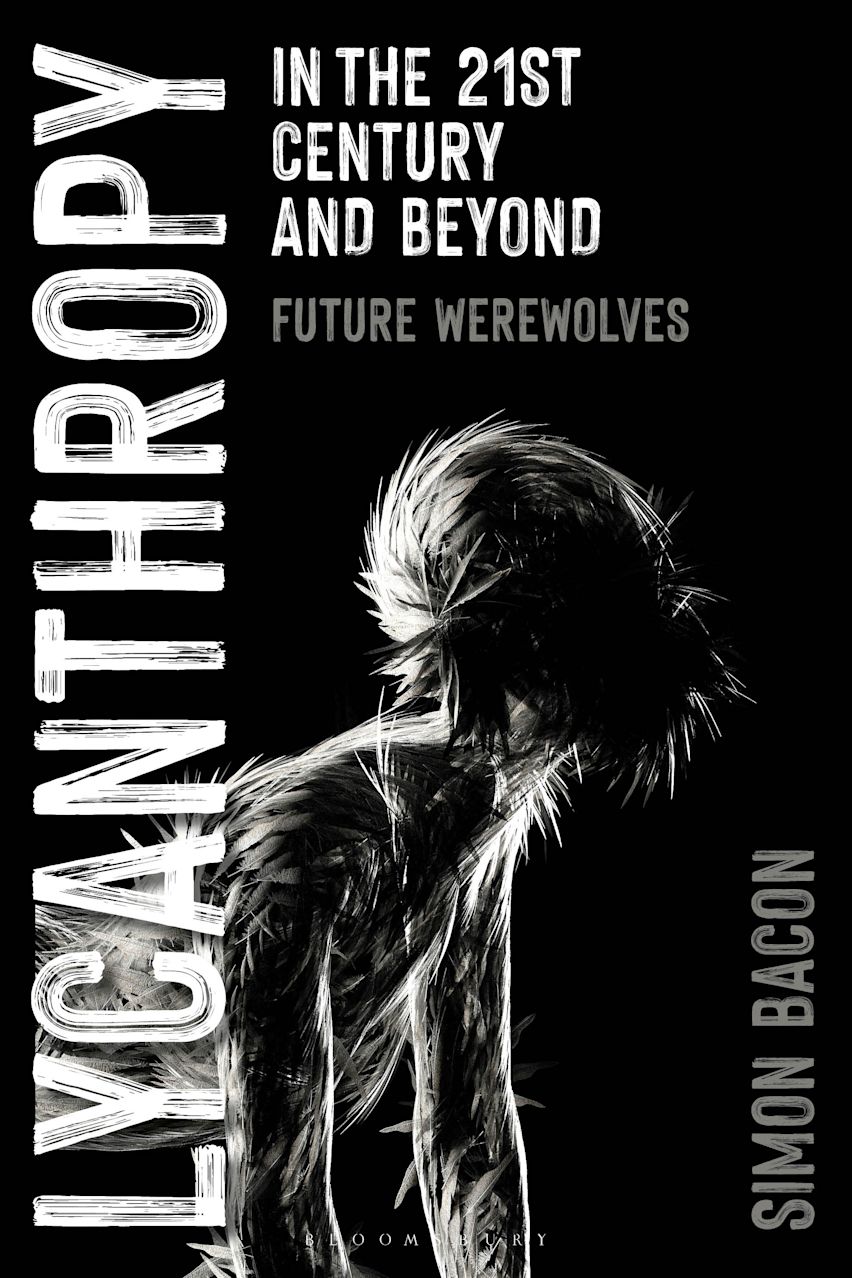
An exploration of the representation of the werewolf in the present moment, this book examines lycanthropy as a manifestation of modern anxieties surrounding environmental crisis and humanity's uncertain future alongside, and entangled with, the many companion species with which we share our planet.
Whether in ancient Greece, medieval France, or 21st-century America, werewolves have been depicted as monstrous because they exceed the limits of normative society, threatening to disrupt how it sees itself and what it considers as human. With the wolf/man beyond and more-than-human, it reveals humanity's essential connection to nature and the environment.
Covering a broad range of media – from literature and TV shows to video games – this book looks at race, gender, ethnicity, and sexuality in relation to the figure of the werewolf. Some of the works featured include novels Empire of the Wild, Unleashed,The Phantom Ship, Werewolf of London, Mongrels, Loups-Garous, and Nightbitch; video games including The Legend of Zelda, Shadow of the Moon, and Bloodborne; multi-cultural films such as Jaani Dushman, Punnami Naagu, Underworld, When Animals Dream, Good Manners and Wildling; and TV shows from Teen Wolf and Dragon Ball Z. Lycanthropy in the 21st Century and Beyond not only shows us how to reconnect with nature, but offers us a glimpse of possible post-human futures that humanity might still be part of.
Table of Contents
Image by Dr. Derek Newman-Stille, Trent University, Canada.
How to Become a Werewolf:
Poem by Elizabeth Davis, Author, USA.
Introduction
Simon Bacon, Independent Scholar, Poland.
Part I: The Future in the Past
1) Symbiotic Werewolves and Cybernetic Anchoresses: Premodern Posthumans in Medieval Literature
Dr. Jennifer K. Cox, Idaho State University, USA.
2) “Not a Wolf, but his Wife”: The Influence of Medieval Lycanthropy on Victorian Monstrosity
Alex Carabine, Liverpool University, UK.
3) Moonstruck: Werewolves and Moonlight from Scroll to Screen
India Stronach, Sorbonne Nouvelle University, France
4)From Loner to Homemaker: The Domestication of the Werewolf in the Horror Genre
Prof. Shannon Scott, University of St. Thomas, USA.
Part II: Challenging the Traditional
5)“Our thirst for blood satiates us”: Werewolves in Bloodborne
Dr. Dawn Stobbart, Independent Scholar, UK.
6)“Hunting in Packs: Examining Werewolf Clusters on Screen
Dr. Lauren Rosewarne, University of Melbourne, Australia.
7) A Multicultural Werewolf in India: Reading Indrapramit Das's The Devourers Through a Multiculturalist Lens
Dr. Debaditya Mukhopadhyay, Manikchak College, India.
8) Reimagining the Rogarou: Cherie Dimaline's Empire of Wild as Indigenous Ecohorror
Dr. Jennifer Schell, University of Alaska Fairbanks, USA.
Part III: Teenaged Futures
9) “But where the wolf seeks a pack, the Kanima seeks a friend...Maybe it's lonely? Like a teenager”: Examining the representation of the teenage body in MTV's Teen Wolf (2011-17).
Dr. Blair Speakman, Independent Scholar, New Zealand.
10) “And the Wolf behowls the Moon”; Mushrooms, the Urban Gothic and Lycanthropy in Kristopher Reisz's Unleashed
Dr. Carys Crossen, Independent Scholar, UK.
11) Virtual Werewolfery: Surveillance Bites in Loups-Garous(2010) by Natsuhiko Kyogoku
Dr. Martyn James Colebrook, Independent Scholar, UK
Part IV: Lycanthropic Sexuality
12) “Punish All Those That Would Pollute, Destroy, and Corrupt our Mother Earth”: Environmental Protection as Justification for Masculine Power Fantasies in Werewolf: The Apocalypse - Earthblood
Dr. Connor Jackson, Edgehill University, UK, and Dr. Catherine Pugh, Independent Scholar, UK.
13) “You're just a woman”: Female Werewolves and their Meaning Beyond Female Sexuality
Bruna Folleto Lucas, Kingston University, UK.
14) The Fresh Prince of Baked Goods: Josh Hoberman's Queer Futuristic Relationshipping
Kai D'Argenta, Author and Independent Scholar, Wales.
Part V: Not of this World
15) “Half lycan, half vampire, but stronger than both”: Vampire-Lycan Hybridity in the Underworld Franchise
Hannah Hansen, Massey University, New Zealand.
16) Because That's Where They're From: Moonbane as Lunar Gothic
Prof. Kevin J. Wetmore, Jr., Loyola Marymount University, USA.
17) Dragon Ball Z: Reimagining Mutant Werewolves in an Age of Invasions via Spaceships
Stephanie Farnsworth, University of Sunderland, UK.
Part VI: Hybrid Futures
18) The Technological Werewolf: Military Metaphors of Technological Dog-men in Speculative Fiction
Lucy Neld, University of Liverpool, UK.
19) Hybrid Genres, Hybrid Creatures: Stephen Graham Jones' Mongrel (2016) and Werewolf (Anti)Heroes
Dr. Kaja Franck, University of Hertfordshire, UK.
20) “There is no future in your form:” The Anti Werewolf and African Mythology in Marlon James's Black Leopard, Red Wolf
Nikta Sadati, Queens University, Canada.
21) Designed for the Future: Dog-men, Wolf-men and Symbiotic Tomorrows
Dr. Valerie Frankel, San José City College, USA.
Bibliography
Index
Product details

| Published | 15 Apr 2027 |
|---|---|
| Format | Hardback |
| Edition | 1st |
| Pages | 256 |
| ISBN | 9781350516199 |
| Imprint | Bloomsbury Academic |
| Illustrations | 12 bw illus |
| Dimensions | 234 x 156 mm |
| Publisher | Bloomsbury Publishing |
Related Titles