Means of Law
The Dialectic of the State of Emergency and Human Rights
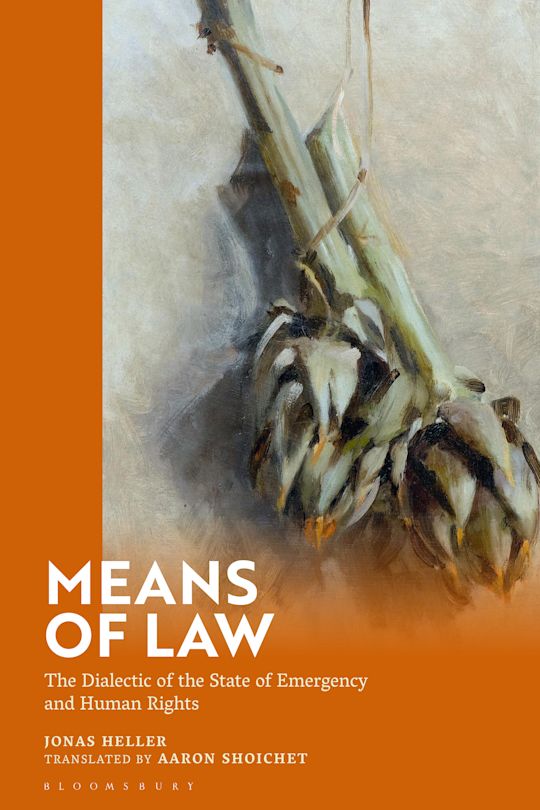

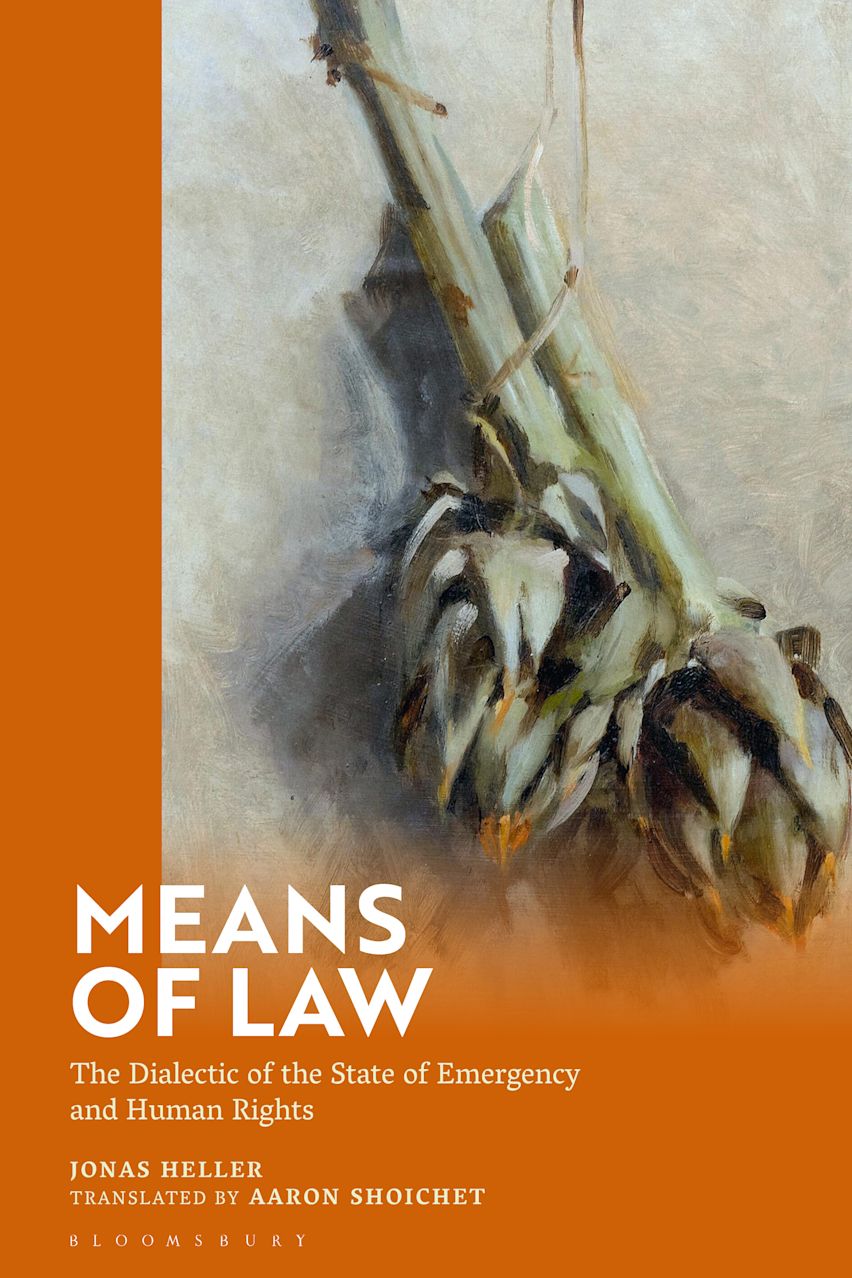
Means of Law
The Dialectic of the State of Emergency and Human Rights
Buying pre-order items
Ebooks and Audiobook
You will receive an email with a download link for the ebook or audiobook on the publication date.
Payment
You will not be charged for pre-ordered books until they are available to be shipped. Pre-ordered ebooks will not be charged for until they are available for download.
Amending or cancelling your order
For orders that have not been shipped you can usually make changes to pre-orders up to 72 hours before the publishing date.
Payment for this pre-order will be taken when the item becomes available
Description
Means of Law rethinks the relationship between the state of emergency and human rights as a dialectic.
Challenging the widespread assumption that emergency powers and individual rights stand in simple opposition, Jonas Heller argues that they are structurally and functionally complementary. At the heart of this complementarity lies the modern concept of the legal person. Modern law liberates individuals from the forms of traditional rule only at the cost of new forms of domination, since the legal person who is the subject of human rights is also the means by which the state can exercise political agency.
Departing from a sustained engagement with the works of Carl Schmitt and Giorgio Agamben, the book reconstructs the juridical form of modern law as a dialectic between entitlement and disenfranchisement. Human rights appear not only as normative limits on state power but also as legal means through which individuals are constituted, addressed, and regulated as a population. Likewise, the state of emergency is shown not merely as a suspension of law, but as an intensified form of state action that draws on the same juridical structures that underwrite rights.
Finally, Means of Law develops an alternative proposal for understanding the link between the state of emergency and human rights via Franz Neumann's critique of the concept of the legal person, returning to the question of sovereignty as that which allows the state to act upon the people by means of law.
Accessibility Information
Additional accessibility information
- EPUB 3.0
- Conforms with the requirements of EPUB Accessibility Spec v1.1
- WCAG level AA
- WCAG v2.2 compliant
- accessibility@bloomsbury.com
Hazards
The publication contains no hazards
Support for non-visual reading
- No accessibility features offered by the reading system, device or reading software are disabled or otherwise unusable with the product
- Has alternative text descriptions for images
Visual adjustments
Appearance of the text and page layout can be modified according to the capabilities of the reading system (font family and size, spaces, as well as color of background and text)
Navigation
- Page list to go to pages from the print source version
- Elements such as headings, tables, etc for structured navigation
- All or substantially all textual matter is arranged in a single logical reading order
- Content is enhanced with ARIA roles to optimize organization and facilitate navigation
- Purposes of all links are made clear
Rich content
Language tagging provided
Table of Contents
Introduction: On the Relationship Between the State of Emergency and Human Rights
Part I: Theory of Juridical Form
1. State of Exception and the "Form of Law" According to Carl Schmitt
2. State of Exception and "Statutory Form" According to Giorgio Agamben
Part II: Body and Person
3. Critiques of Human Rights: Body, State, Nation
4. Person and Exception: Human Rights and the State of Emergency as Means of Law
Conclusion: The Dialectic of Enlightenment and Disenfranchisement
Notes
References
Index
Detailed Table of Contents
Product details

| Published | 12 Nov 2026 |
|---|---|
| Format | Ebook (Epub & Mobi) |
| Edition | 1st |
| Pages | 304 |
| ISBN | 9781350578173 |
| Imprint | Bloomsbury Academic |
| Publisher | Bloomsbury Publishing |

Reviews
Related Titles