Narrative and History in the Works of Umberto Eco, Carlo Ginzburg, and Wu Ming
Untangling the Strands
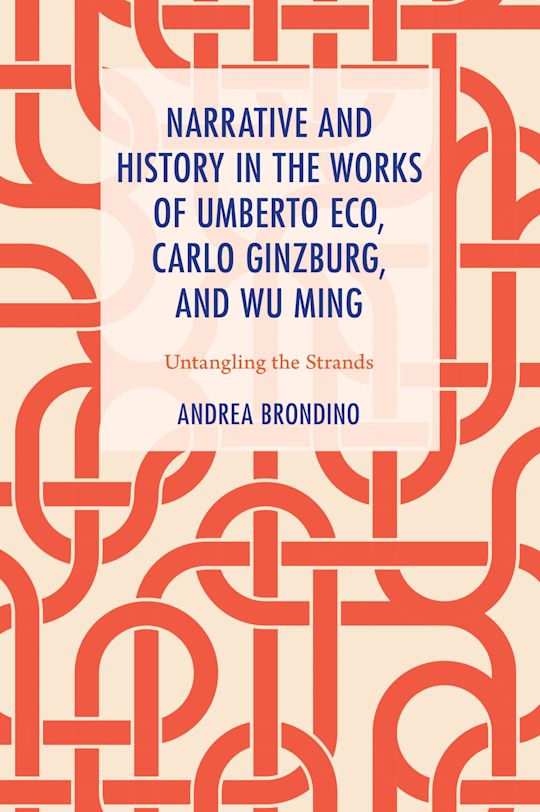

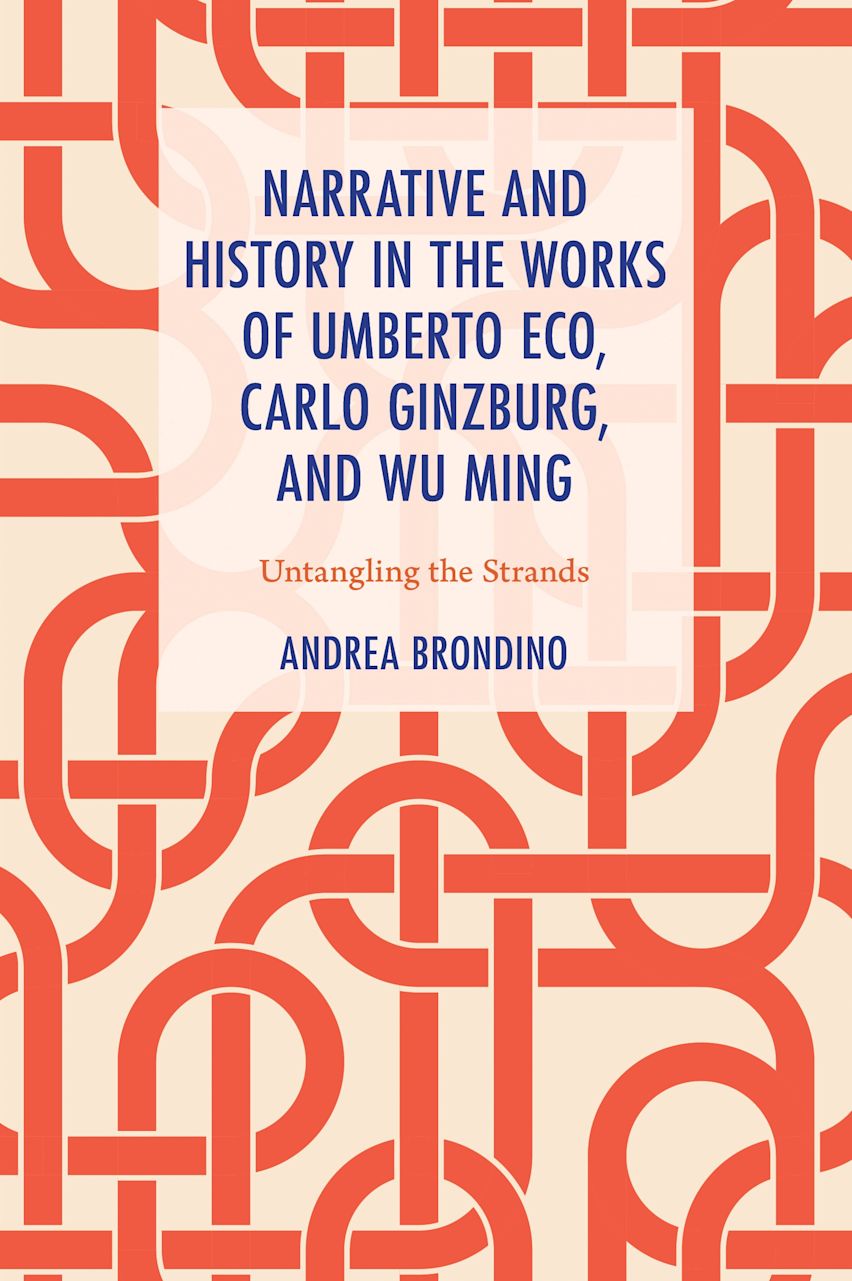
Narrative and History in the Works of Umberto Eco, Carlo Ginzburg, and Wu Ming
Untangling the Strands
Buying pre-order items
Ebooks and Audiobook
You will receive an email with a download link for the ebook or audiobook on the publication date.
Payment
You will not be charged for pre-ordered books until they are available to be shipped. Pre-ordered ebooks will not be charged for until they are available for download.
Amending or cancelling your order
For orders that have not been shipped you can usually make changes to pre-orders up to 72 hours before the publishing date.
Payment for this pre-order will be taken when the item becomes available
Description
This book challenges the established critical accounts of hybrid narratives, using the works of prominent Italian authors of both fiction and nonfiction to examine how literature and history have influenced each other in terms of style, content, and ambition.
In a world where facts and reality are constantly manipulated, blurring the boundaries between fictional and historical writing raises problematic aesthetical, ethical, and political questions. The book focuses on contemporary (1980-present) historical novels by Umberto Eco and the Italian writing collective Wu Ming, as well as on the essays by the historian Carlo Ginzburg. Through these three globally influential cases, the study offers new insight into the long-standing relationship between literature and history, marked by both conflict and productive exchanges. Through different means and modes of writing, these authors closely explore the practical and theoretical issues concerning historical accuracy, reconstruction, and retelling. Be it fiction or non-fiction, their works challenge the boundaries of genre and influence further disciplines and writing across borders. The book analyses in detail how Eco's novels provide an oblique commentary on his own theory, the connections and fundamental points of divergence between the approaches adopted by Eco and Ginzburg, how Wu Ming inherit their legacy while devising their own distinctly political way of writing about history, and how Ginzburg's essays influence contemporary fiction on a transnational scale.
Accessibility Information
Additional accessibility information
- PDF/UA-2, 1.4
- accessibility@bloomsbury.com
Hazards
The publication contains no hazards
Support for non-visual reading
Has alternative text descriptions for images
Navigation
- Page list to go to pages from the print source version
- Elements such as headings, tables, etc for structured navigation
- All or substantially all textual matter is arranged in a single logical reading order
Table of Contents
Preface
1. From Literature to History, and Back Again
2. Umberto Eco: History as Irony
3.Umberto Eco Versus Carlo Ginzburg: Or, On the Uses and Disadvantages of Narrative for History
4. Wu Ming: History as Allegory
Conclusion
Bibliography
Index
About the Author
Product details
| Published | 12 Nov 2026 |
|---|---|
| Format | Ebook (PDF) |
| Edition | 1st |
| Pages | 288 |
| ISBN | 9798216438434 |
| Imprint | Fairleigh Dickinson University Press |
| Illustrations | 1 bw |
| Series | The Fairleigh Dickinson University Press Series in Italian Studies |
| Publisher | Bloomsbury Publishing |
Related Titles