The Orphan Paradox
Destinies, Autocracies and Democracies in India and the United States
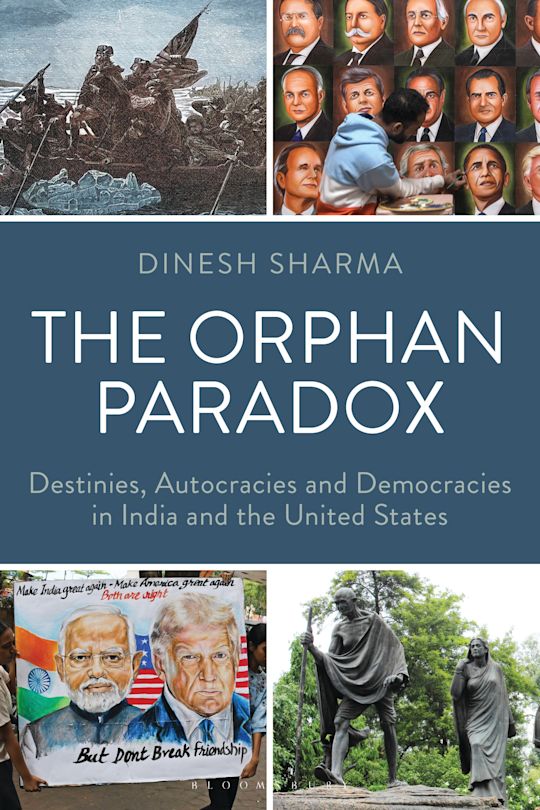

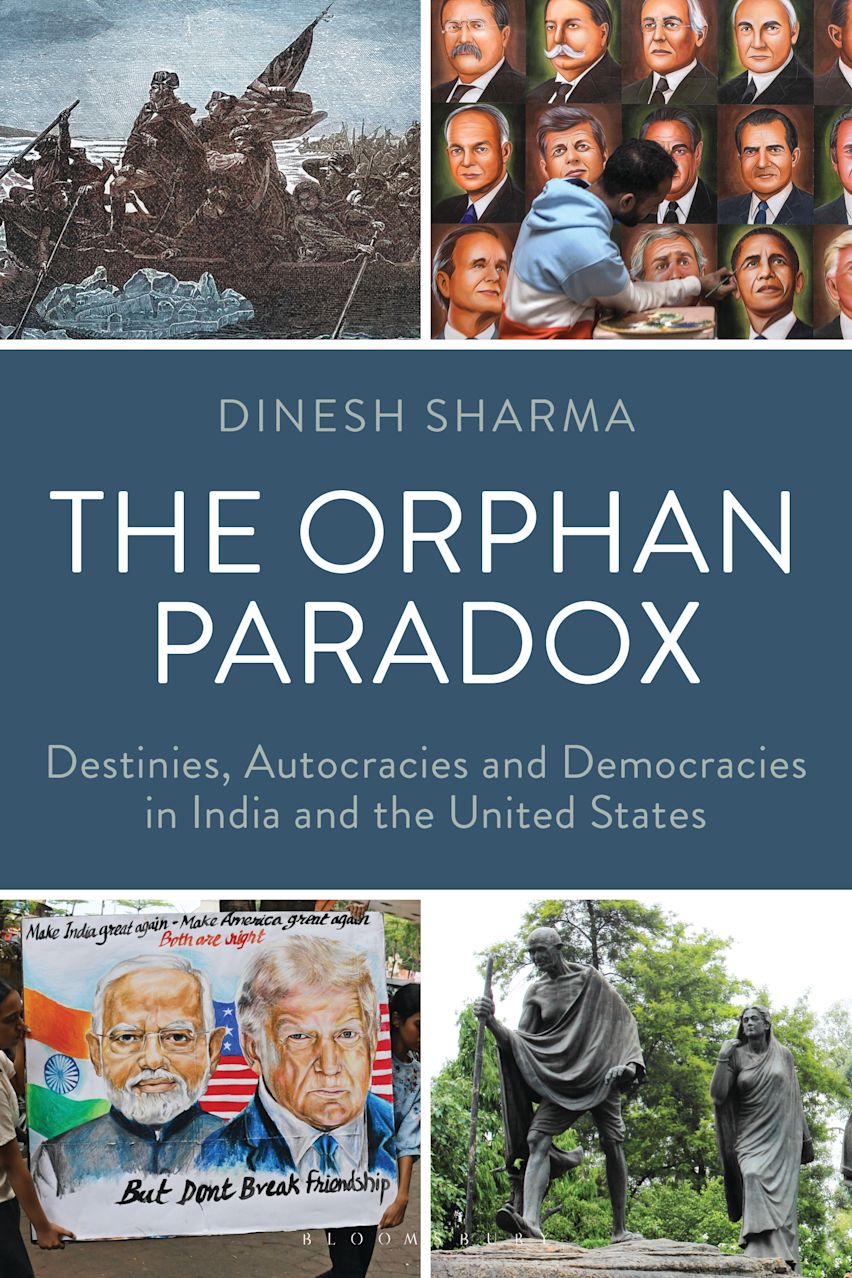
The Orphan Paradox
Destinies, Autocracies and Democracies in India and the United States
Description
Why do democracies continue to elect 'orphaned' outsiders versus 'patrician' elites?
In The Orphan Paradox, Sharma offers an original meditation on the hidden wounds that shape political leadership. Building on his earlier works, including Barack Obama in Hawai'i and Indonesia (2012), Sharma fuses psychology, history, and political science to illuminate how leaders transform vulnerability into vision. Through vivid portraits that traverse continents and centuries, he traces how the United States and India - twin experiments in democracy born of colonial rupture - produced leaders who embodied both loss and renewal: Washington, Jefferson, and Madison in America; Gandhi, Nehru, and Ambedkar in India. From these founders emerged patrician families –the Adamses, Kennedys, Bushes, and the Nehru-Gandhi dynasty - whose inheritance of power eventually met the populist insurgencies of figures like Trump and Modi. For psychologists, historians and political scientists alike, The Orphan Paradox provides a new framework on the foundations of democracy, showing how personal loss shapes institutional design and how nations, like individuals, oscillate between trauma and transcendence. The result is a work of scholarship with a moral urgency - a study of how the orphaned souls continue to haunt, and perhaps redeem the democratic experiment.
Accessibility Information
Additional accessibility information
- EPUB 3.0
- Conforms with the requirements of EPUB Accessibility Spec v1.1
- WCAG level AA
- WCAG v2.2 compliant
- accessibility@bloomsbury.com
Hazards
The publication contains no hazards
Support for non-visual reading
- No accessibility features offered by the reading system, device or reading software are disabled or otherwise unusable with the product
- Has alternative text descriptions for images
Visual adjustments
Appearance of the text and page layout can be modified according to the capabilities of the reading system (font family and size, spaces, as well as color of background and text)
Navigation
- Page list to go to pages from the print source version
- Elements such as headings, tables, etc for structured navigation
- All or substantially all textual matter is arranged in a single logical reading order
- Content is enhanced with ARIA roles to optimize organization and facilitate navigation
- Purposes of all links are made clear
Rich content
Language tagging provided
Table of Contents
Note on Author
Foreword
Preface
Ch. 1: Introduction
Ch. 2: The Orphan Paradox
Ch. 3: The Founders of Democracies
Ch. 4: The Inheritors of Autocratic Dynasties
Ch. 5: The Populism of Nationalist Autocrats
Ch. 6: Political Cycles & Trauma Politics
Ch. 7: A Traumagenic Theory of Leadership
Ch. 8: The Orphan, the Strongman and the Oligarch
Ch. 9: Conclusion
References
Appendix
Product details

| Published | 29 Oct 2026 |
|---|---|
| Format | Ebook (Epub & Mobi) |
| Edition | 1st |
| Pages | 312 |
| ISBN | 9781978767584 |
| Imprint | Bloomsbury Academic |
| Illustrations | 10 b/w photos |
| Publisher | Bloomsbury Publishing |
Reviews

ONLINE RESOURCES
Bloomsbury Collections
This book is available on Bloomsbury Collections where your library has access.
Related Titles