
Buying pre-order items
Ebooks and Audiobook
You will receive an email with a download link for the ebook or audiobook on the publication date.
Payment
You will not be charged for pre-ordered books until they are available to be shipped. Pre-ordered ebooks will not be charged for until they are available for download.
Amending or cancelling your order
For orders that have not been shipped you can usually make changes to pre-orders up to 72 hours before the publishing date.
Payment for this pre-order will be taken when the item becomes available
Description
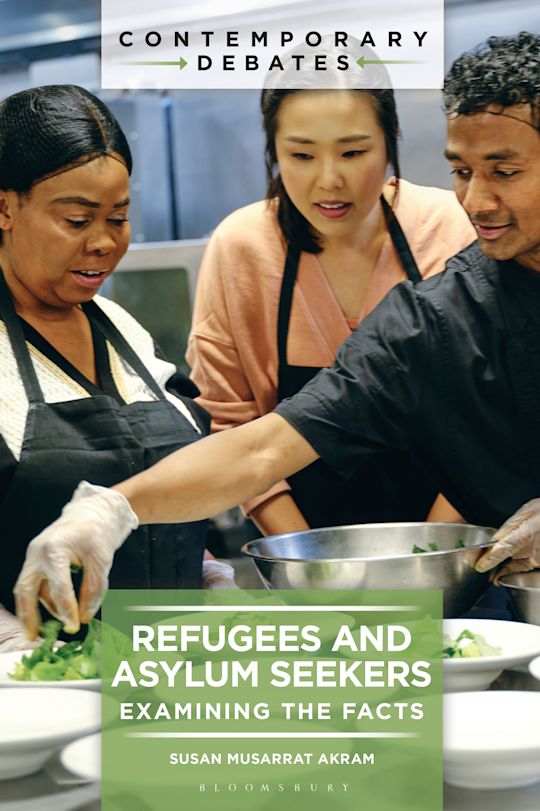
What are the primary forces driving the growth in populations of refugees and asylum seekers around the world? How have the United States and other countries responded to petitions from asylum seekers and refugees for safety, protection, and economic opportunity, both historically and in the present day? What falsehoods about refugees and asylum seekers are commonly held among American citizens? What are the main US laws and policies governing treatment of asylum seekers and refugees seeking to enter and stay in the United States? This comprehensive one-stop resource provides readers with quantifiable, fact-based answers to these and many other questions
Arranged in subject-specific chapters devoted to topics ranging from the countries of origin of most refugees and asylum seekers to the extent of their integration/assimilation in US and European nations and communities, this book gives readers in-depth insights into the true impact on refugees and asylum seekers of US policies, practices, and public attitudes.
Accessibility Information
Additional accessibility information
- PDF/UA-2, 1.4
- accessibility@bloomsbury.com
Hazards
The publication contains no hazards
Support for non-visual reading
Has alternative text descriptions for images
Navigation
- Page list to go to pages from the print source version
- Elements such as headings, tables, etc for structured navigation
- All or substantially all textual matter is arranged in a single logical reading order
Table of Contents
Preface
Introduction
1: Refugees and Asylum Seekers in Global Context
Q1: Who are refugees and asylum seekers under international law, and how are they different from migrants?
Q2: What obligations or requirements does the United States have to admit refugees and asylum seekers?
Q3: Are there greater numbers of migrants, refugees, and asylum seekers than ever before?
Q4: Are all refugees and asylum seekers trying to come to Western and developed countries?
Q5: How generous is the United States in admitting refugees?
Q6: Which countries have accepted the most refugees, asylees, and displaced persons in proportion to their size and wealth?
Q7: What percentage of applicants are granted asylum?
2: US Policies Toward Refugees and Asylees in Historical Context
Q8: Has the United States historically admitted anyone who wants to come?
Q9: How does the current US immigration system work, and how many people are allowed to enter the United States every year?
Q10: How has US policy towards refugees and asylum seekers evolved over time?
Q11: How does the refugee process work in the United States, and how many refugees are admitted each year?
Q12: How does the asylum process work in the United States, and how many people are granted asylum each year?
Q13: Does the United States admit more refugees and asylum seekers than it can absorb?
3: Contemporary US Policies Affecting Refugees and Asylum Seekers
Q14: What are the more recent US refugee and other humanitarian admission measures and their consequences?
Q15: What are the more recent US border and migration policies and their consequences to asylum seekers?
4: Economic Impact of Refugees and Asylum Seekers
Q16: Are refugees and asylum seekers coming to the United States for welfare?
Q17: Do refugees and asylum seekers get benefits that US natives do not receive?
Q18: Are the benefits refugees and asylees receive a net drain on the US and local economies?
Q19: Do refugees and asylees steal jobs from US citizens?
5: Integration of Refugees and Asylum Seekers into US Communities
Q20: Are most refugees and asylum seekers living in the United States educated?
Q21: How do refugees and asylees support themselves in the United States?
Q22: Do most refugees and asylum seekers live in ethnic “ghettos” and fail to assimilate with the wider community?
Q23: How many refugees and asylees become US citizens or eventually return to their countries of origin?
6: Impact of Refugees and Asylees on Crime and Terrorism
Q24: Do refugees and asylum seekers drive up crime?
Q25: Are refugees and asylum seekers likely to be terrorists?
Q26: Why are refugees and immigrants often associated with crime and terrorism?
Q27: Do immigration agents mostly detain and deport traffickers and smugglers?
7: The Costs of US Asylum Deterrence Policies
Q28: How much are border and interior refugee and asylum enforcement policies costing US taxpayers?
Q29: How effective are these measures been at stopping illegal border-crossers and bogus asylum claims?
Q30: Who benefits from these policies?
8: Where Refugees and Asylum Seekers Come From and Why They Stay
Q31: Why can't neighboring host countries absorb refugees and why don't the refugees go home when it is safe?
Q32: Why has the United States admitted so many Somali refugees, and why can't they stay in host countries in Africa?
Q33: Why can't Iraqis, Syrians, and Palestinians stay in neighboring countries where they are culturally integrated?
Q34: Why has the United States admitted so many Afghan refugees instead of letting them stay in neighboring countries?
Q35: Why have so many Central Americans sought asylum in the United States for decades?
Q36: Why has the United States fast-tracked admission of white South Africans as refugees?
9: Legal and Public Responses to Refugee and Migration Policies
Q37: How have courts ruled on whether US policies align with legal obligations towards refugees and asylum seekers?
Q38: Is the American public opposed to admitting refugees and asylum seekers?
Q39: What other countries are implementing policies that benefit refugees, asylum seekers and other immigrants as well as host communities?
Index
About the Author
Product details

| Published | 27 May 2027 |
|---|---|
| Format | Ebook (PDF) |
| Edition | 1st |
| Pages | 256 |
| ISBN | 9781440878688 |
| Imprint | Bloomsbury Academic |
| Series | Contemporary Debates |
| Publisher | Bloomsbury Publishing |