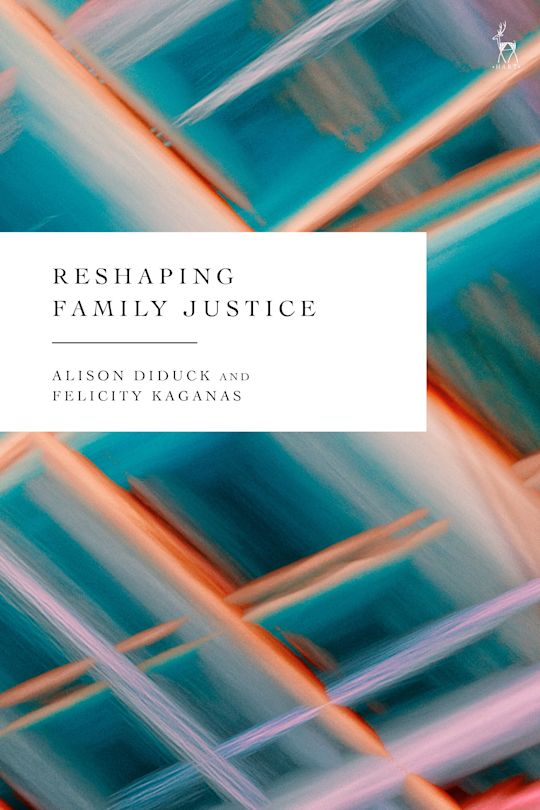

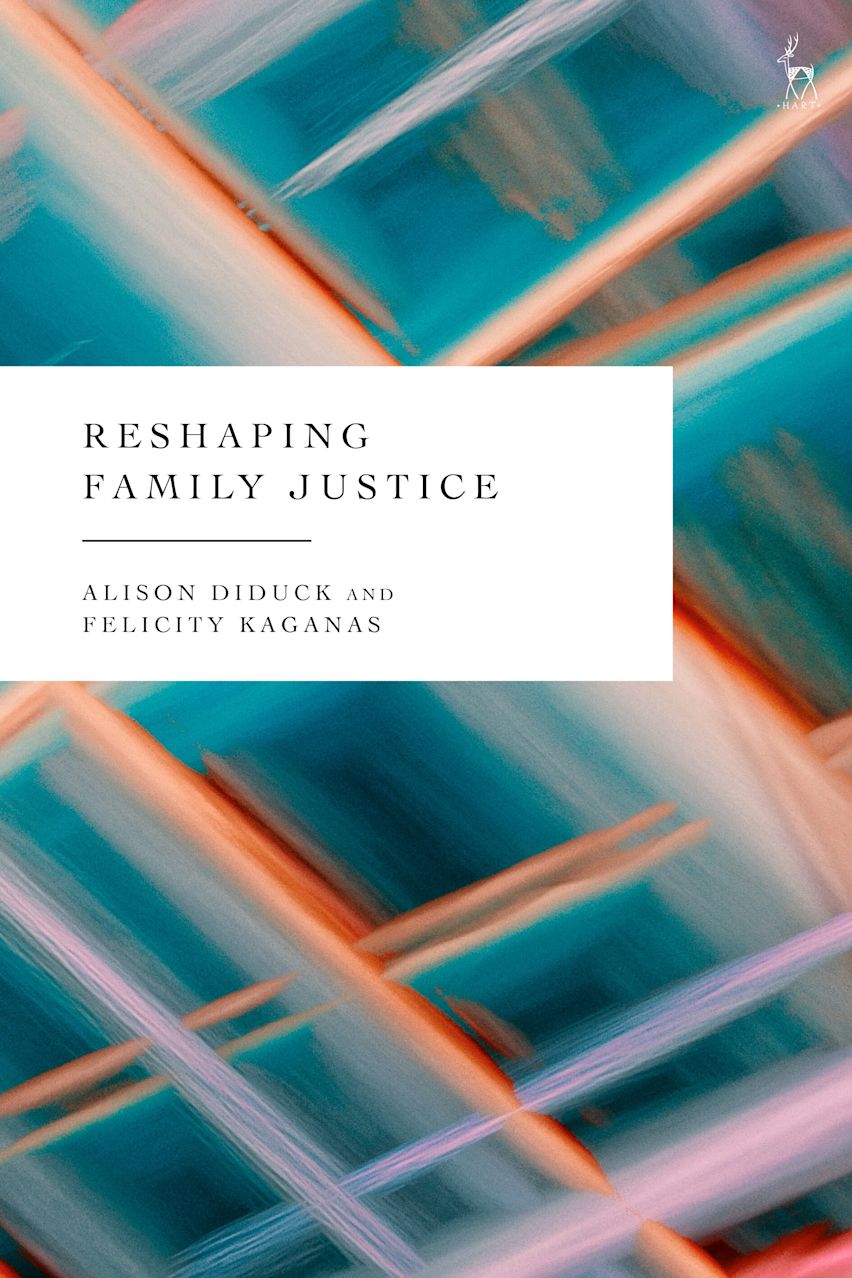
Reshaping Family Justice
Buying pre-order items
Ebooks and Audiobook
You will receive an email with a download link for the ebook or audiobook on the publication date.
Payment
You will not be charged for pre-ordered books until they are available to be shipped. Pre-ordered ebooks will not be charged for until they are available for download.
Amending or cancelling your order
For orders that have not been shipped you can usually make changes to pre-orders up to 72 hours before the publishing date.
Payment for this pre-order will be taken when the item becomes available
- Delivery and returns info
-
Free UK delivery on orders £30 or over
Description
This book examines the changing idea of justice in resolving family disputes.
It does so by examining family law's dichotomies or antinomies, including those between public/private, vulnerability/autonomy and law/non-law. Law operates in the public sphere and court is now primarily intended for the vulnerable, who are considered to need its protection. Non-court resolution of disputes occurs in the private sphere and is intended to promote the autonomy of those who are not vulnerable. This book examines the way in which the domain of the formal legal process, namely the courts and lawyers, has shrunk, while the reach of the Family Justice System has grown to include non-legal services such as mediation as well as therapeutic and advice services. And it suggests that, while the domains of law and non-law may be separate, with distinct functions and disciplines, the boundaries between these shift and are sometimes blurred. The shifting boundaries are the product of the redefinition and reconstruction of categories such that public/private has become court/non-court and law/non-law has become justice/therapy, mediation, advice or information. At the same time, blurring occurs between public and private and between autonomy and vulnerability.
The redefinition and resetting of boundaries function in the Family Justice System to rationalise removing more and more family disputes from the realm of law. The Family justice System seems, as a result of these changes, to have gone beyond traditional ideas of justice; disputes are being resolved by processes that are not transparent, not accountable and are normatively diffuse. As the category of non-law/non-court dispute resolution expands while becoming more firmly embedded within the Family Justice System, the authors argue that a redefinition of justice has emerged in a reshaped Family Justice System and they consider the effect this has on weaker parties, most often women and children.
Table of Contents
2. Antinomies in the Family Justice System: Public/Private, Law/Non-Law; Vulnerability/Autonomy
3. Non-Court 'Solutions'
4. Autonomy, Privacy and Non-law: Non-Court Dispute Resolution
5. The Public: Court-Based Dispute Resolution
6. Justice, Vulnerability and Family Courts
7. Concluding Thoughts
Product details
| Published | 13 May 2027 |
|---|---|
| Format | Hardback |
| Edition | 1st |
| Pages | 272 |
| ISBN | 9781509974887 |
| Imprint | Hart Publishing |
| Dimensions | 234 x 156 mm |
| Publisher | Bloomsbury Publishing |
Related Titles