The Silk Road After Ukraine
A New Vision for Eurasian Integration
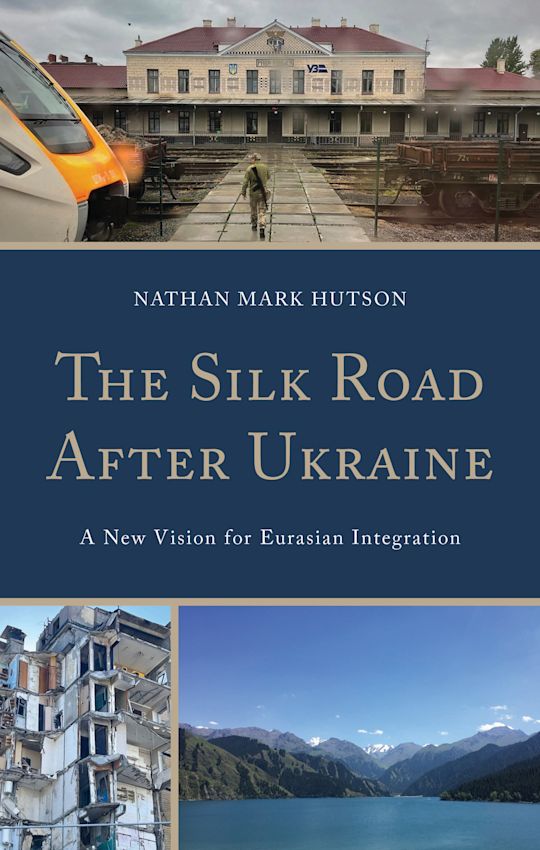


The Silk Road After Ukraine
A New Vision for Eurasian Integration
Description
The Silk Road After Ukraine: A New Vision for Eurasian Integration explores the long-term implications of Russia’s invasion of Ukraine on Eurasian supply chains and Eurasia’s development trajectory. Through an in-depth examination of China’s original motivations for launching the New Silk Road, contextualized with the potential impacts on other players along the trade corridor, this book assesses how states that were largely left out of the pre-invasion may capitalize on the new opportunities brought about by divestment in supply chains that traverse Russian and Belarusian territory. Rather than focusing exclusively on state actors, Nathan Mark Hutson also examines the role of regional and private sector players in creating coalitions for corridor prioritization. This book further illustrates why the liberation and restoration of Ukraine’s ports, along with a guarantee of freedom of commerce in the Black and Caspian Seas, are essential factors for the successful development of Eurasia as a dynamic trade space.
Accessibility Information
Additional accessibility information
- EPUB 3.0
- Conforms with the requirements of EPUB Accessibility Spec v1.1
- WCAG level AA
- WCAG v2.2 compliant
- accessibility@bloomsbury.com
Hazards
The publication contains no hazards
Support for non-visual reading
- No accessibility features offered by the reading system, device or reading software are disabled or otherwise unusable with the product
- Has alternative text descriptions for images
Visual adjustments
Appearance of the text and page layout can be modified according to the capabilities of the reading system (font family and size, spaces, as well as color of background and text)
Navigation
- Page list to go to pages from the print source version
- Elements such as headings, tables, etc for structured navigation
- All or substantially all textual matter is arranged in a single logical reading order
- Content is enhanced with ARIA roles to optimize organization and facilitate navigation
- Purposes of all links are made clear
Rich content
Language tagging provided
Table of Contents
Introduction
Chapter 1: Initial Bargaining Positions
Chapter 2: The BRI in the Context of Eurasia’s Post-1960 Trade Trajectory: A Supercontinent Split in Two
Chapter 3: The Belt and Road Initiative Prior to Ukraine: Connectivity and Infrastructure Gaps
Chapter 4: Analysis of Silk Road Development Needs and Geospatial Analysis of Eurasian Firms in Reference to BRI Corridors
Chapter 5: Political and Institutional Checks on Integration
Chapter 6: The New Beneficiaries of the Middle Corridor
Chapter 7: Returning the Silk Road to Ukraine
Bibliography
About the Author
Product details
| Published | 19 Dec 2024 |
|---|---|
| Format | Ebook (Epub & Mobi) |
| Edition | 1st |
| Pages | 238 |
| ISBN | 9781666944310 |
| Imprint | Lexington Books |
| Illustrations | 8 BW Photos, 12 Graphs, 19 Tables |
| Series | Contemporary Central Asia: Societies, Politics, and Cultures |
| Publisher | Bloomsbury Publishing |
Reviews

ONLINE RESOURCES
Bloomsbury Collections
This book is available on Bloomsbury Collections where your library has access.
Related Titles