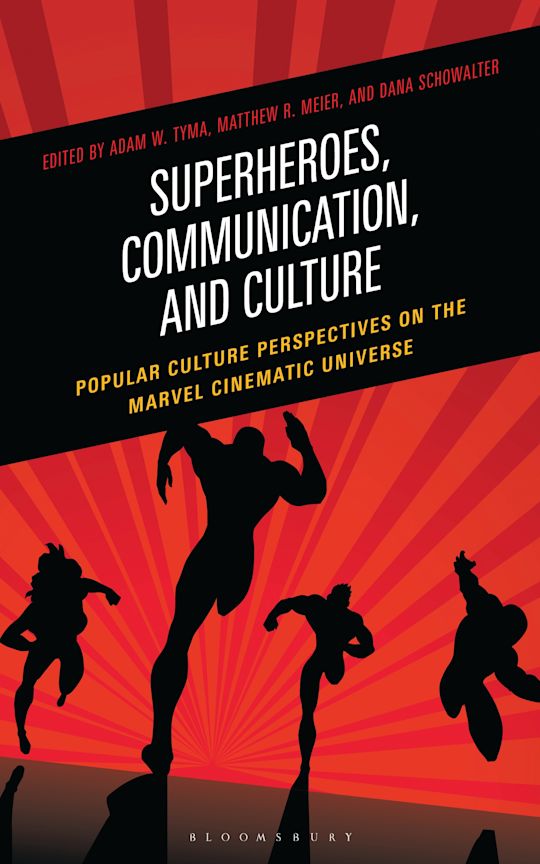
Superheroes, Communication, and Culture
Popular Culture Perspectives on the Marvel Cinematic Universe

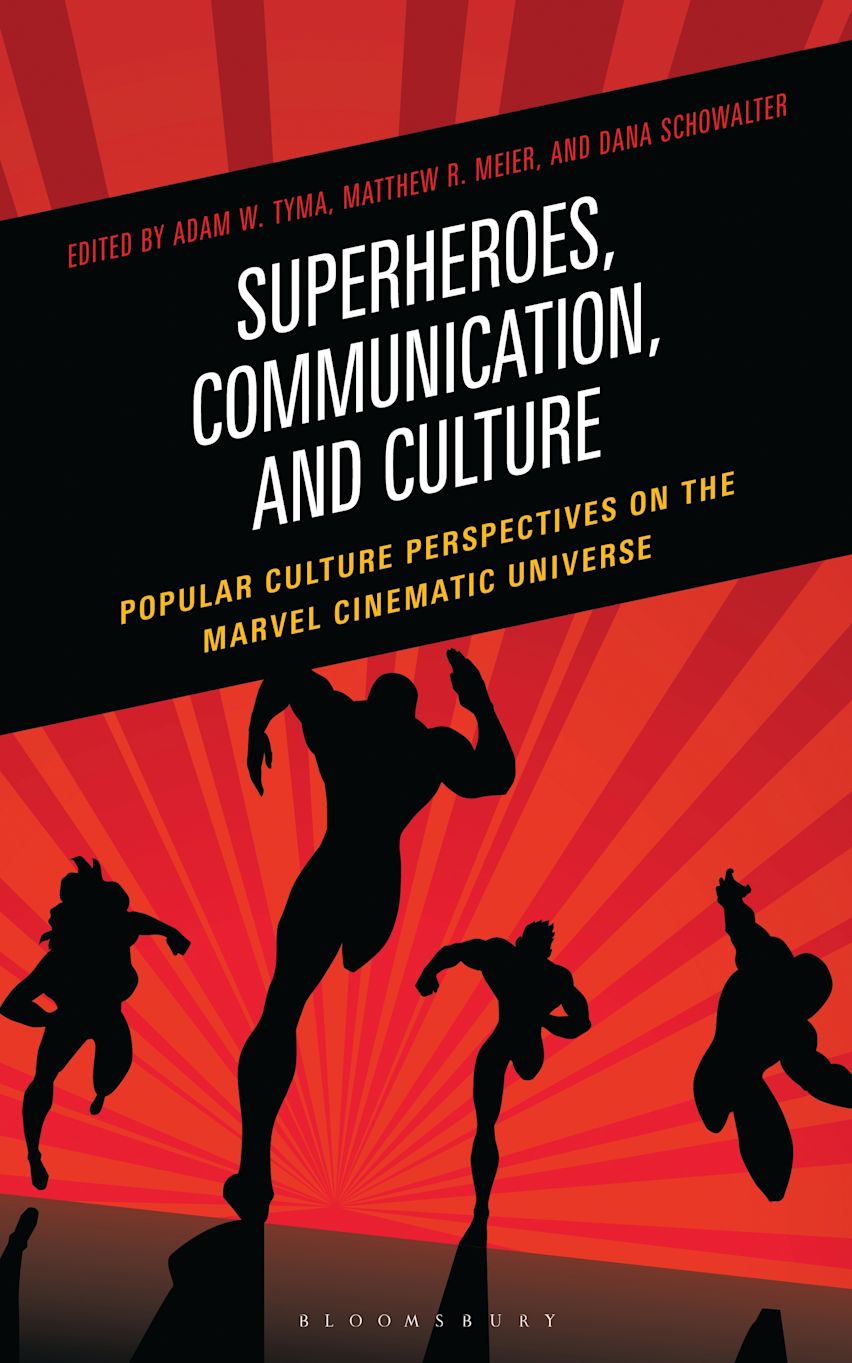
Superheroes, Communication, and Culture
Popular Culture Perspectives on the Marvel Cinematic Universe
Description
Contributors explore the intertextuality of the Marvel Cinematic Universe, illuminating its ability to both interpret and influence audiences and culture.
The sustained popularity of the Marvel Cinematic Universe (MCU) and its continued ability to spark fan and cultural responses with each phase of the franchise – achieving both commercial and critical acclaim in its quest to transform a once-niche genre into a pop culture powerhouse – demonstrate the vast potential it holds to convey, channel, and challenge existing discourses of culture, society, politics, entertainment, and education at their various intersection/s. While the franchise relies heavily on genre-based tropes of good versus evil, the intricate intertextuality of the extended universe offers a diversity in character, story, and setting that renders it a particularly deep well for crafting and communicating culture.
An interdisciplinary roster of contributors has selected a wide range of MCU texts, from series like She-Hulk and The Falcon and the Winter Soldier to feature films including Captain Marvel (2019) and Shang-Chi and the Legend of the Ten Rings (2021), to offer critical interrogations through varied lenses across four thematic sections of the volume: political economy and politics; gender studies and feminisms; race, ethnicity, and identity; and symbols and signs. Through their analyses, contributions to this volume ask us to reflect on what messages may be uncovered and understood through deeper interrogation of the texts that entertain and inform us.
Accessibility Information
Additional accessibility information
- EPUB 3.0
- Conforms with the requirements of EPUB Accessibility Spec v1.1
- WCAG level AA
- WCAG v2.2 compliant
- accessibility@bloomsbury.com
Hazards
The publication contains no hazards
Support for non-visual reading
- No accessibility features offered by the reading system, device or reading software are disabled or otherwise unusable with the product
- Has alternative text descriptions for images
Visual adjustments
Appearance of the text and page layout can be modified according to the capabilities of the reading system (font family and size, spaces, as well as color of background and text)
Navigation
- Page list to go to pages from the print source version
- Elements such as headings, tables, etc for structured navigation
- All or substantially all textual matter is arranged in a single logical reading order
- Content is enhanced with ARIA roles to optimize organization and facilitate navigation
- Purposes of all links are made clear
Rich content
Language tagging provided
Table of Contents
Introduction
Adam W. Tyma (University of Nebraska Omaha, USA), Matthew R. Meier (West Chester University, USA), and Dana Schowalter (Western Oregon University, USA)
Part I: Political Economy and Politics
1. #WheresBlackWidow: Hashtag Activism, Paratexts, and Reluctant Investments in Profitable Women Superheroes
Dana Schowalter
2. Logan, Situated Ideological Allegory, and the American Dream/Nightmare
Talya Slaw (University of Mississippi, USA) and Jacob Justice (University of Mississippi, USA)
Part II: Gender Studies and Feminisms
3. “Unusual Voting Activity” or the Hermeneutics and Aesthetics of Misogyny in the Review-Bombing of She-Hulk
Daniel Horvath (California State University, Stanislaus, USA)
4. Clearing Her Ledger: Natasha Romanoff/Black Widow and Transcending the Male Gaze
Katelyn Lambert (University of Central Florida, USA)
5. “I have nothing to prove to you”: Audience Interpretations of Feminism and Nostalgia in Captain Marvel
Michaela D.E. Meyer (Christopher Newport University, USA)
Part III: Race, Ethnicity, and Identity
6. From Aztlan to Talokan: Namor as Living Memory
Gabriel Cruz (North Carolina Central University Durham, USA)
7. “Just 'cause you carry that shield, it doesn't mean you're Captain America” - Carrying on Steve's Legacy
Elizabeth Shiller (Georgia Southwestern State University, USA)
8. Strong Asian Women: Resisting Stereotypes and Redefining Femininity in Marvel's Shang-Chi and the Legend of the Ten Rings
Stephanie Young (University of Southern Indiana, USA)
Part IV: Symbols and Signs
9. Marvel's Monstrosity: Deadpool and the Delight of White Violence
Matthew R. Meier
10. The Grief that Bewitches Us: Understanding Wanda Maximoff as a Metaphor for Collective Trauma and Its Implications on Cinematic Representations
Erika Thomas
11. “What does that shield mean?” Understanding Captain America's Shield as a Complex Symbolic and Discursive Construct Throughout the MCU, Specifically Falcon and The Winter Soldier
Adam W. Tyma
About the Contributors
Index
Product details

| Published | 11 Jun 2026 |
|---|---|
| Format | Ebook (Epub & Mobi) |
| Edition | 1st |
| Pages | 256 |
| ISBN | 9781978759633 |
| Imprint | Bloomsbury Academic |
| Series | Communication Perspectives in Popular Culture |
| Publisher | Bloomsbury Publishing |

Reviews

ONLINE RESOURCES
Bloomsbury Collections
This book is available on Bloomsbury Collections where your library has access.
Related Titles