
- Home
- ACADEMIC
- Music & Sound Studies
- Music Biographies
- Time Lines
Buying pre-order items
Ebooks and Audiobook
You will receive an email with a download link for the ebook or audiobook on the publication date.
Payment
You will not be charged for pre-ordered books until they are available to be shipped. Pre-ordered ebooks will not be charged for until they are available for download.
Amending or cancelling your order
For orders that have not been shipped you can usually make changes to pre-orders up to 72 hours before the publishing date.
Payment for this pre-order will be taken when the item becomes available
- Delivery and returns info
-
Free UK delivery on orders £30 or over
You must sign in to add this item to your wishlist. Please sign in or create an account
Description
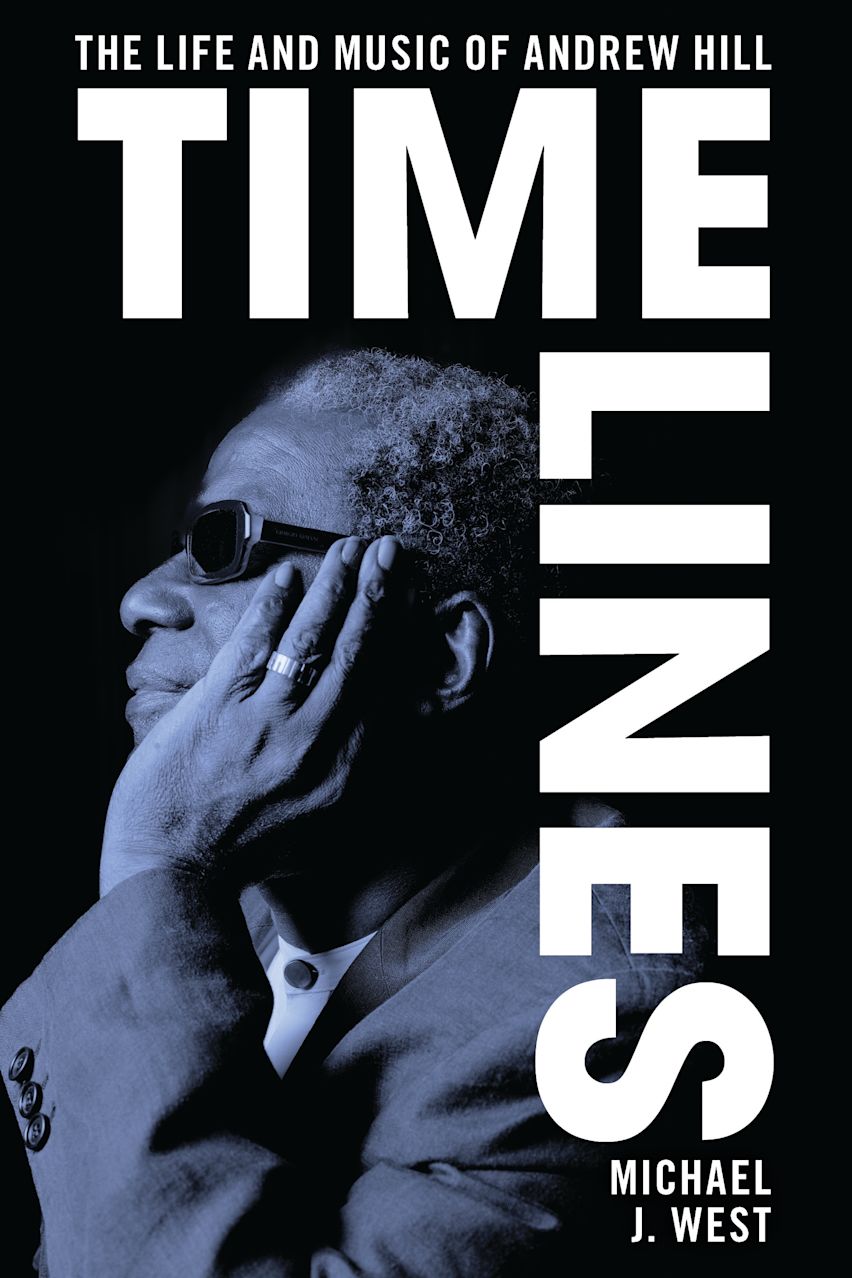
Andrew Hill occupies a unique niche in jazz history: Too iconoclastic to be part of the mainstream, he was initially marketed as part of the “second wave” avant-garde in the 1960s, yet he was too structured and anchored in the tradition to fit comfortably there. He often found himself on the periphery of the jazz world, only properly recognized and honored in the late 1990s.
Notwithstanding his significance for modern jazz, much about Hill's life has been obscured by his exaggerations and outright lies. His fabulism has long frustrated attempts to piece together his background. Born in Chicago, he insisted for decades that he was a native of Haiti and consistently lied about his age. Some falsehoods-like his claim that he studied under Paul Hindemith-went undetected and persist even now.
Time Lines: The Life and Music of Andrew Hill provides as full and accurate an account of Hill's life as possible, while also closely examining the music he created as a composer and performer. Featuring memories and insights from a long list of Hill's collaborators, peers, associates, students, and protégés, as well as subject matter experts, eyewitnesses, and journalists, this is the definitive account of one of the most perplexing, elusive, and endlessly inventive figures in modern jazz.
Table of Contents
2: JULY 1949–MAY 1961
3: MAY 1961–APRIL 1963
4: APRIL 1963–JUNE 1964
5: OCTOBER 1964–APRIL 1965
6: APRIL 1965–FALL 1967
7: OCTOBER 1967–OCTOBER 1968
8: MAY 1969–MARCH 1970
9: JULY 1970–OCTOBER 1974
10: DECEMBER 1974–SEPTEMBER 1976
11: SEPTEMBER 1976–NOVEMBER 1989
12: DECEMBER 1989–DECEMBER 1995
13: JANUARY 1996–FEBRUARY 1998
14: SPRING 1998–DECEMBER 2003
15: FEBRUARY 2004-APRIL 2007
Product details
| Published | 21 Jan 2027 |
|---|---|
| Format | Hardback |
| Edition | 1st |
| Pages | 384 |
| ISBN | 9798765162828 |
| Imprint | Backbeat |
| Illustrations | 20 B/W Run-Ins |
| Dimensions | 229 x 152 mm |
| Publisher | Bloomsbury Publishing |

About the contributors
Reviews
-
It would be easy to listen to Andrew Hill's excellent album, Black Fire, and next put on Point of Departure, having been made curious by Hill's fascinating and idiosyncratic approach, also perhaps drawn to the promise of hearing performances by Eric Dolphy that might be new to you. Stopping there would be to lose out on a great opportunity to hear Hill, a truly unique artist, further reveal his great talent. It is absolutely worthwhile to keep listening through the Andrew Hill catalogue. One of the most profound releases of his came towards the end of his life, in 2005: Mosaic Select is an exquisite collection well worth tracking down.
What's the story behind this singular musician? There is a story-actually, by Hill's account, there are quite a few. Michael J. West does the patient work of carefully unraveling the mystique crafted by Andrew Hill. Part projection, part self-invention, part protection and decisive distancing, Hill didn't make it easy for the prospective biographer to piece together the facts of his life and work. I was thrilled at the opportunity to learn more about Andrew Hill: his playing drew me in immediately when, years ago, someone kindly turned me on to the Black Fire album. West mercifully allows jazz listeners an understanding of Andrew Hill, the man and the musician, without engaging in the thin-air intellectual altitudes where a lot of jazz literature so fiercely resides, often out of the reach of those who simply seek to know more. Time Lines is deeply researched and superbly written. The pages are dense with references and quotes, but never overwhelming. This is a great read about a tremendous artist.Henry Rollins
-
Andrew Hill was simultaneously one of the kindest and most congenial people you could meet and also one of the all-time contrarians. This contrast is beautifully captured in Michael J. West's meticulously researched biography. West takes on the roles of historian, journalist, and fan. Andrew Hill could often exaggerate details of his life to build his mythology-some might call it fibbing-and some of the most entertaining parts of the book are when West gives Hill's side of the story then reins it in with what happened or might have happened.
It is fascinating to see the mind of Hill at work in this book. Though Hill was thoroughly immersed in the jazz culture of his time, his brain worked in a way that was unlike anyone else's, which rendered him his own planet-though still with the outlines of what people recognize as jazz. Andrew Hill is one of the definitive geniuses of jazz from the 1960s onward, and this book is the definitive guide to the beautiful creativity of his universe. No matter how Andrew Hill studies evolve in the future, I have the feeling that you will always have to come back to this book.Matthew Shipp
-
The late, great NEA Jazz Master pianist and composer Andrew Hill was by all accounts a man who rode his own tide. And until his biographer Mike West so successfully broadened our sense of Andrew Hill with Time Lines, the distinctive pianist was a bit of a kind-hearted mystery man-a sensibility he apparently embraced throughout his arc, from fudging his actual birthdate to being a bit of a lifelong trickster (including with his very distinctive musical forms and practices). West beautifully clarifies some of that often-humorous tricksterism and further illuminates Andrew Hill's distinctive contributions to the jazz lexicon. This is a warm, deeply researched, and informative account of a musical life brilliantly lived.
Willard Jenkins, Artistic Director, DC Jazz Festival
-
In his manner and his music, Andrew Hill was a pure enigma-enthralling, elusive, ungoverned by any code outside his own. This remarkable biography draws a vivid context around his genius. Michael J. West, deploying the tenacity of a bloodhound, has given us a sensitive character study, a clear chronology, and a perceptive listening guide.
Nate Chinen, author, Playing Changes: Jazz for the New Century
-
Michael West has accomplished the extraordinary feat of reconciling Hill's colorful self-mythology with both the factual record and his overall character as an artist. West gifts us the musician's full life and work, including his complexities-which is to say, his humanity.
Michelle Mercer, author of Footprints: The Life and Work of Wayne Shorter and Will You Take Me As I Am: Joni Mitchell's Blue Period
-
In a time where truth feels optional, and cultural erasure is increasingly permissible, historical integrity and fact-driven journalism are essential. Through this deeply researched, carefully approached, and insightful work, Michael J. West has painted a holistic, vivid, and palpably rich portrait of one of jazz music's most intriguing figures. With gratitude, West honors a fascinating human and brilliant artist in Andrew Hill, whose somewhat unsung and underexplored status will now be lifted from the mystery that sometimes shrouds the legacy of our jazz legends-especially the most original of them, who are deserving of this level of deeper discovery.
Angélika Beener, writer, DJ, and jazz broadcaster