To Know All Mysteries
The Mystagogue Figure in Classical Antiquity and in Saint Paul’s Letters to the Corinthians
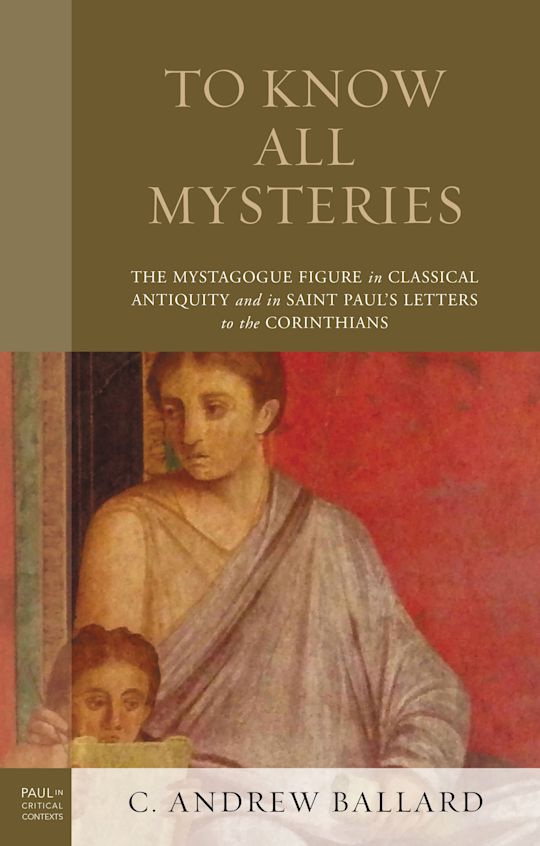

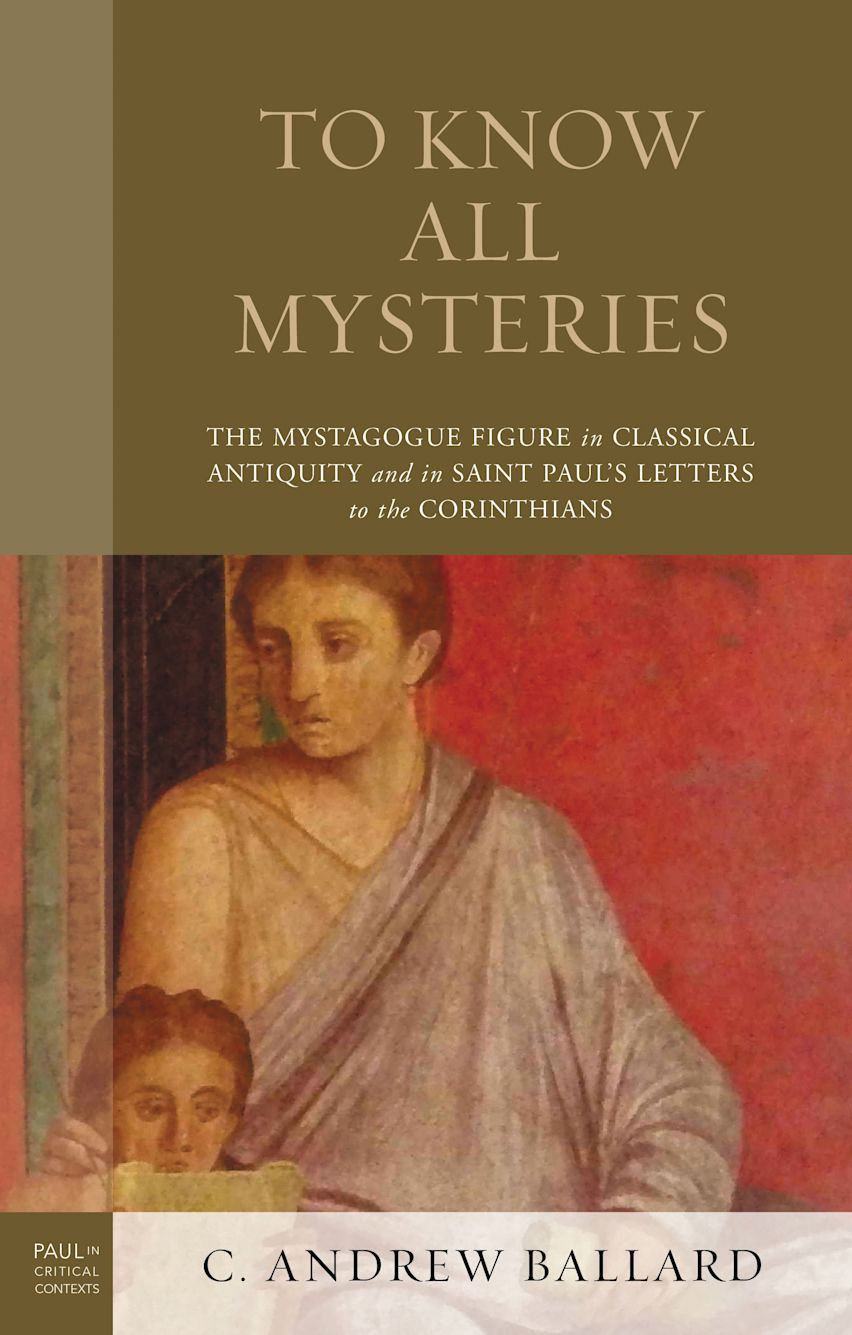
To Know All Mysteries
The Mystagogue Figure in Classical Antiquity and in Saint Paul’s Letters to the Corinthians
Description
This book examines the way that Paul presents himself as a guide into mysteries, a “mystagogue,” in 1–2 Corinthians. By describing himself as a type of mystagogue for the community, Paul was following a precedent in both Jewish and non-Jewish sources for invoking mystagogic language to engage in polemics with a rival. In opposition to the precedent, however, Paul understands the mystagogue to be a bi-partite figure—comprised of both foolishness and wisdom simultaneously. C. Andrew Ballard argues that ancient mystagogues were often described in two disparate ways: figures of power, and figures of weakness and foolishness. Paul synthesizes both aspects of the mystagogue in his self-presentation to the Corinthians. The figure of the mystagogue, as a wise-fool, was useful to Paul because it was descriptive not only of his own experience as a suffering yet authoritative apostle, but also of the experience of his deity, the suffering and glorified Christ. By presenting himself as both a powerful and foolish mystagogue, Paul could argue that he was a more authentic imitator of Christ than his opponents in Corinth, who boasted in self-exaltation instead of self-humility. In this way, Paul used the character of the mystagogue as a strategic rhetorical tool in his communication with the Corinthians.
Accessibility Information
Additional accessibility information
- EPUB 3.0
- Conforms with the requirements of EPUB Accessibility Spec v1.1
- WCAG level AA
- WCAG v2.2 compliant
- accessibility@bloomsbury.com
Hazards
The publication contains no hazards
Support for non-visual reading
- No accessibility features offered by the reading system, device or reading software are disabled or otherwise unusable with the product
- Has alternative text descriptions for images
Visual adjustments
Appearance of the text and page layout can be modified according to the capabilities of the reading system (font family and size, spaces, as well as color of background and text)
Navigation
- Page list to go to pages from the print source version
- Elements such as headings, tables, etc for structured navigation
- All or substantially all textual matter is arranged in a single logical reading order
- Content is enhanced with ARIA roles to optimize organization and facilitate navigation
- Purposes of all links are made clear
Rich content
Language tagging provided
Table of Contents
Chapter 2: Defining Mystagogues in the Mystery Cults of Antiquity
Chapter 3: Initiation into Philosophy and Truth, Part One: Metaphorical Mystagogues in
Classical, Hellenistic, and Early Imperial Literature
Chapter 4: Initiation into Philosophy and Truth, Part Two: Metaphorical Mystagogues in Jewish Literature of the Hellenistic and Early Imperial Periods
Chapter 5: The Duality of the Mystagogue: Power and Foolishness
Chapter 6: Initiating Paul, Part One: The Appropriation and Disruption of the
Mystagogue in 1 Corinthians
Chapter 7: Initiating Paul, Part Two: The Appropriation and Disruption of the Mystagogue in 2 Corinthians
Product details
| Published | 31 Aug 2022 |
|---|---|
| Format | Ebook (Epub & Mobi) |
| Edition | 1st |
| Pages | 404 |
| ISBN | 9781978711112 |
| Imprint | Fortress Academic |
| Series | Paul in Critical Contexts |
| Publisher | Bloomsbury Publishing |
Reviews

ONLINE RESOURCES
Bloomsbury Collections
This book is available on Bloomsbury Collections where your library has access.
Related Titles