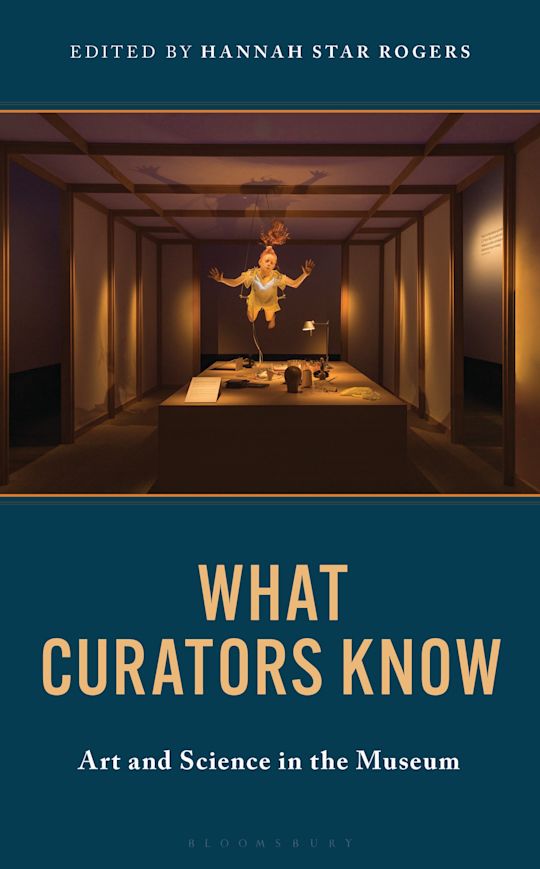
What Curators Know
Art and Science in the Museum

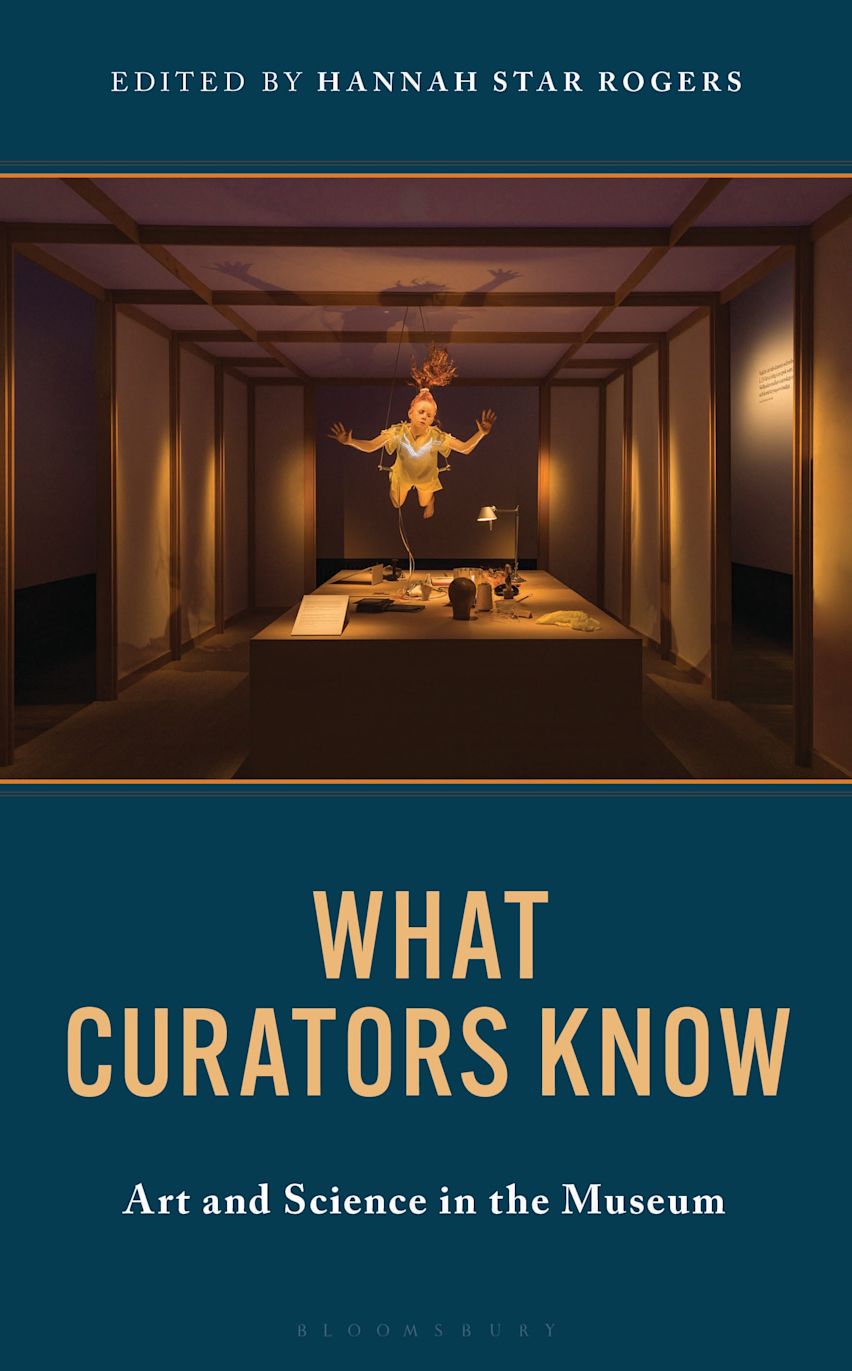
What Curators Know
Art and Science in the Museum
Description
Curation is a way of knowing. Curators work with objects and texts to offer perspectives on the world, situating not only things but also their contexts in material, rhetorical, and aesthetic forms. Curators cross disciplinary boundaries, challenge conventional narratives, and open space for new understandings. Their work shows how scientific and aesthetic knowledges are constructed, communicated, and experienced.
Nowhere are these challenges more visible than in art-science exhibitions. This volume explores how curators draw on Science and Technology Studies (STS) to synthesize subjects ranging from health complexity to nuclear energy, from communication technologies and computing histories to meat and eternal life. In doing so, they reveal the dynamic role of curatorship in shaping how we think, feel, and know.
Accessibility Information
Additional accessibility information
- PDF/UA-2, 1.4
- accessibility@bloomsbury.com
Hazards
The publication contains no hazards
Support for non-visual reading
Has alternative text descriptions for images
Navigation
- Page list to go to pages from the print source version
- Elements such as headings, tables, etc for structured navigation
- All or substantially all textual matter is arranged in a single logical reading order
Table of Contents
Foreword: Eating Vegan Ortolan with Bruno Latour
Michael John Gorman
Acknowledgements
Introduction: What Do Curators Know?
Hannah Star Rogers
Chapter 1: Actor-Network-Theory as Curatorial Method: An STS Framework for Trans-Disciplinary Curation
Kristin D. Hussey
Chapter 2: Engaged Curatorial Practice as STS-Oriented Mode of Inquiry
Bilge Hasdemir
Chapter 3: Beyond the Display: Why Minor Gestures Matter in Curating Research Exhibitions Anne Julie Arnfred
Chapter 4: Boundaries and Imaginaries: STS and Curating Technoscientific Arts
Rodrigo Guzman-Serrano
Chapter 5: Curating Media as Scientific Objects
Geoffrey Belknap and Georgina Grant
Chapter 6: STS in Practice at the Computer History Museum
Hansen Hsu
Chapter 7: The Missing Museum: Curating the PostNatural Blindspot
Rich Pell and Gil Olivera
Chapter 8: Curating Hinterland: Reassembling Invisible Work in Art / Science Practices
Morten Søndergaard
Chapter 9: Curating Health Complexity at Medical Museion: The Exhibition as Medium and Process for Sharing an STS Sensibility
Louise Whiteley and Adam Bencard
Chapter 10: Curating “from an STS Perspective”: Co-Creator, Counter-Expert, and Collider
Makoto Takahashi
Chapter 11: Curating for Controversy: Crearation, Overidentification, Objektinstruments and Pop Sloganeering as Art-Based Strategies for Critical Controversy Studies
Sophia Efstathiou and Alexandra Murray-Leslie
Chapter 12: Life Eternal: A Case of the Importance of Trusting Museum Visitors
Clara Åhlvik
Chapter 13: “Curating AI” or How to Exhibit a Controversy
Chris Salter
Index
About the Editor
About the Authors
Product details

| Published | 09 Jul 2026 |
|---|---|
| Format | Ebook (PDF) |
| Edition | 1st |
| Pages | 488 |
| ISBN | 9798765156582 |
| Imprint | Bloomsbury Academic |
| Illustrations | 33 bw illustrations; 2 tables |
| Publisher | Bloomsbury Publishing |

Reviews

ONLINE RESOURCES
Bloomsbury Collections
This book is available on Bloomsbury Collections where your library has access.
Related Titles