Cognitive Linguistics Across Languages and Communicative Contexts
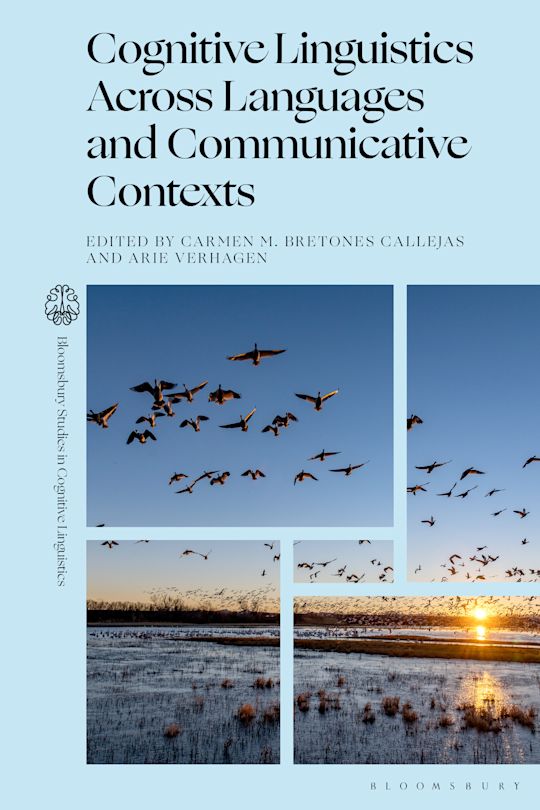

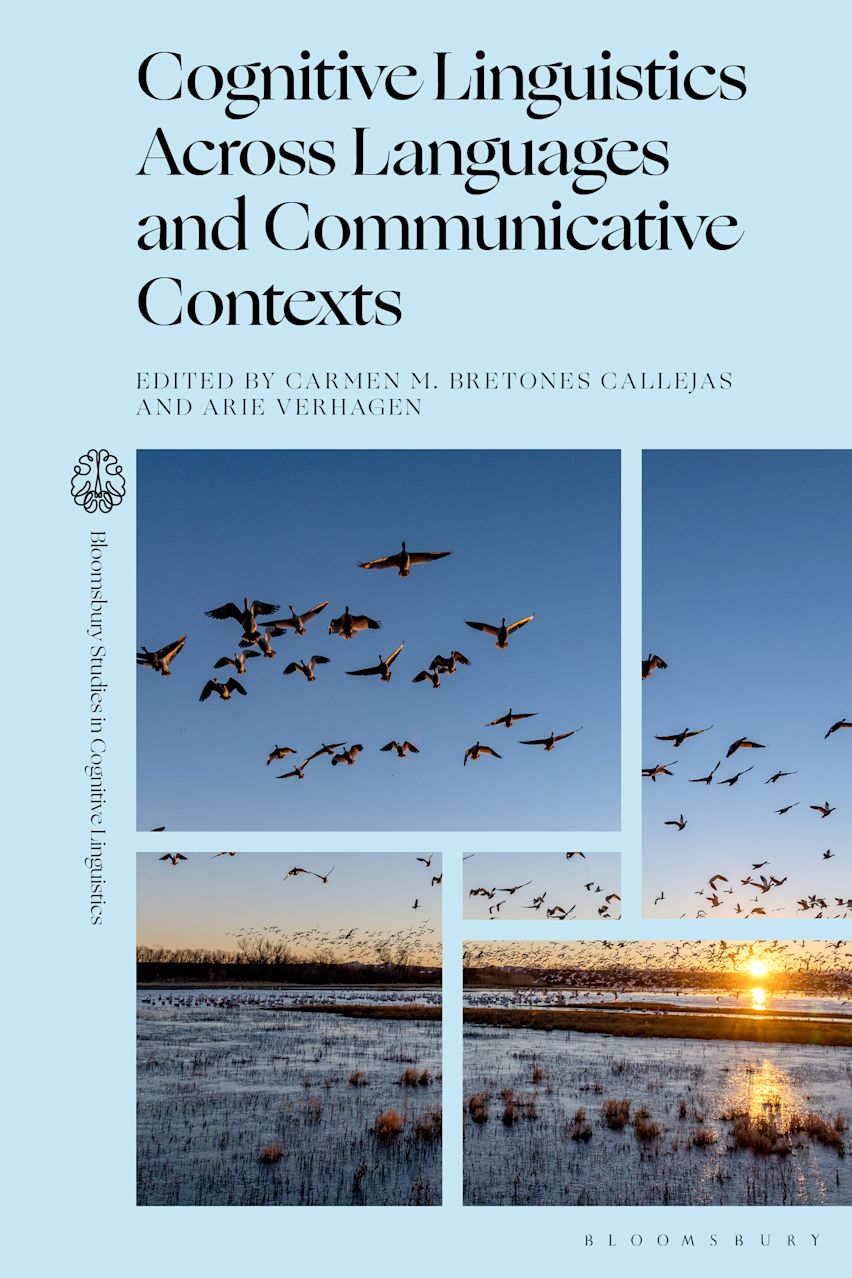
Cognitive Linguistics Across Languages and Communicative Contexts
Buying pre-order items
Ebooks and Audiobook
You will receive an email with a download link for the ebook or audiobook on the publication date.
Payment
You will not be charged for pre-ordered books until they are available to be shipped. Pre-ordered ebooks will not be charged for until they are available for download.
Amending or cancelling your order
For orders that have not been shipped you can usually make changes to pre-orders up to 72 hours before the publishing date.
Payment for this pre-order will be taken when the item becomes available
Description
Providing new insights into the field of cognitive analysis, this book exploring how cognitive processes are influenced by the cultural context in which individuals live and interact.
As cultures come into contact, they exchange ideas, traditions, and languages, leading to the emergence of hybrid cultural forms and linguistic innovations. This diversity enriches the global cultural landscape and contributes to the richness of language through borrowings, loanwords, and code-switching. Within this diverse linguistic landscape, cultural influences play a significant role in shaping semantics and cognition.
This volume brings together original case studies from a wide range of linguistic and cultural contexts, including Bangla, Yanesha (Peruvian Amazonia), Traditional Bedouin Arabic, and Xicanx bilingual discourse, while also covering verbal language, gesture, prosody, touch, and digital communication. Chapters address emotionally, socially, and politically salient domains, such as love and compassion, childbirth and the body, migration and identity, education, and pandemic discourse, demonstrating how cognitive linguistic tools can illuminate lived experience in contemporary and historically grounded contexts.
As a whole, this collection shows how meaning emerges from the interaction of cognition, culture, and situated experience, offering readers a coherent framework that bridges semantics, discourse, and social practice. It provides valuable perspectives on how language reflects and interacts with cognitive and cultural factors, contributing to a comprehensive understanding of human communication and thought.
Accessibility Information
Additional accessibility information
- PDF/UA-2, 1.4
- accessibility@bloomsbury.com
Hazards
The publication contains no hazards
Support for non-visual reading
Has alternative text descriptions for images
Navigation
- Page list to go to pages from the print source version
- Elements such as headings, tables, etc for structured navigation
- All or substantially all textual matter is arranged in a single logical reading order
Table of Contents
Part I: Semantics, Cognition and Culture
1. Love is Water, Love is Sky: Conceptual Metaphor Analysis of Love in Bangla, Sanjukta Ghosh and Namrata Paul (Indian Institute of Technology (BHU) Varanasi, India)
2. Conceptual Metaphor in Loving-Kindness and Compassion Guided Meditations: A Comparative Analysis between Secular and Religious Contexts, Antonio-José Silvestre-López and Ignasi Navarro I Ferrando (Universitat Jaume I, Spain)
3. Language in Multimodal Interaction: Context Aware Interpretation in Verbal and Visual Modalities. A Cognitive Pragmatic Approach, Zsuzsanna Schnell (University of Pécs, Hungary)
4. The Message in the Bottle: Cross-Modal Rhetoric in Wine Reviews, Craig Hamilton (Université de Haute Alsace, France)
5. Semantics, Cognition and Metaphtonymy in Yanesha Medicinal Phytonyms, Frank Joseph Domínguez Chenguayen (Universidad Tecnológica del Perú, Peru), Jeancarlo Joel García Guadalupe (Universidad Nacional de Educación Enrique Guzmán y Valle, Peru), Jean Paul Gotopo Maldonado (Universidad Ricardo Palma, Peru) and Gleydi Araceli Ramírez Juarez (Universidad Nacional Mayor de San Marcos, Peru)
6. The Vertical Axis in Traditional a?-?ani? Arabic: Language, Cognition, and Culture, Letizia Cerqueglini (Tel-Aviv University, Israel)
7. Thinking-for-translating Motion Events: From German to Spanish with a Linearly Extended Ground, Amador García Tejero (University of Salamanca, Spain)
Part II: Nuances in Language and Cognition
8. “Our Bodies, Our Selves”: Linguistic and Discursive Analysis of Interoception and Proprioception in Birthing Stories, Charlotte Danino (Université Sorbonne Nouvelle, France)
9. Code-Switching as an Expression of Cultural Identification in Xicanx Culture: A Case Study on Tanya Saracho's Vida, Katrina Brannon (Université Polytechnique Hauts-de-France, France)
10. Cognitive Approach to Emblematic Gestures, Helena S. Belío-Apaolaza (University of Burgos, Spain)
11. The Table as Metaphoric Space: Touch-based Gestures in Students' Conversations, Loulou Kosmala (Paris-Est Créteil University, France)
12. On the Use of Covid-19-related Terms in Twitter in Spanish and in English during the Strict Lockdown Periods of February to April 2020: A Comparative Analysis, Rocío Trueba Cortavitarte and Ana Ibáñez Moreno (UNED, Spain)
Product details

| Published | May 27 2027 |
|---|---|
| Format | Ebook (PDF) |
| Edition | 1st |
| Pages | 256 |
| ISBN | 9781350650435 |
| Imprint | Bloomsbury Academic |
| Illustrations | 40 bw illus |
| Series | Bloomsbury Studies in Language and Cognition |
| Publisher | Bloomsbury Publishing |
Related Titles