
Buying pre-order items
Ebooks and Audiobook
You will receive an email with a download link for the ebook or audiobook on the publication date.
Payment
You will not be charged for pre-ordered books until they are available to be shipped. Pre-ordered ebooks will not be charged for until they are available for download.
Amending or cancelling your order
For orders that have not been shipped you can usually make changes to pre-orders up to 72 hours before the publishing date.
Payment for this pre-order will be taken when the item becomes available
Description
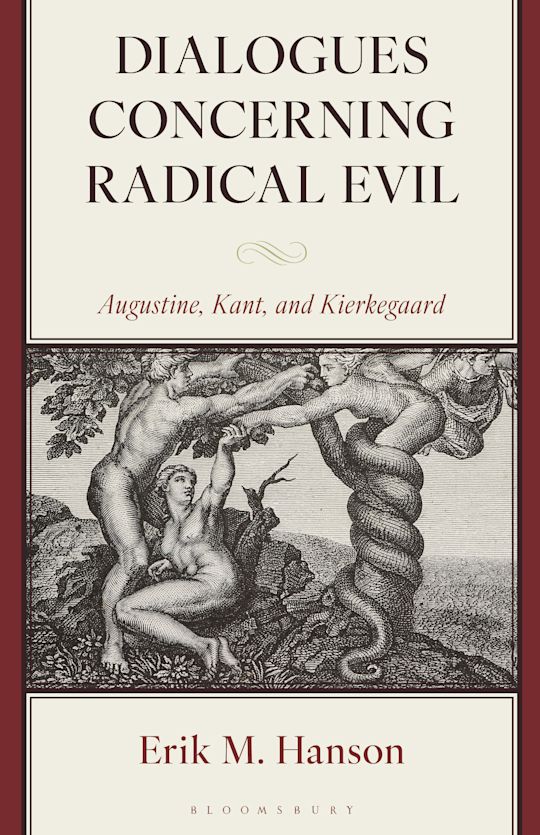
The perennial enigma of the human condition is our propensity-seemingly innate-to subvert the universal moral law that ultimately corrupts our character.
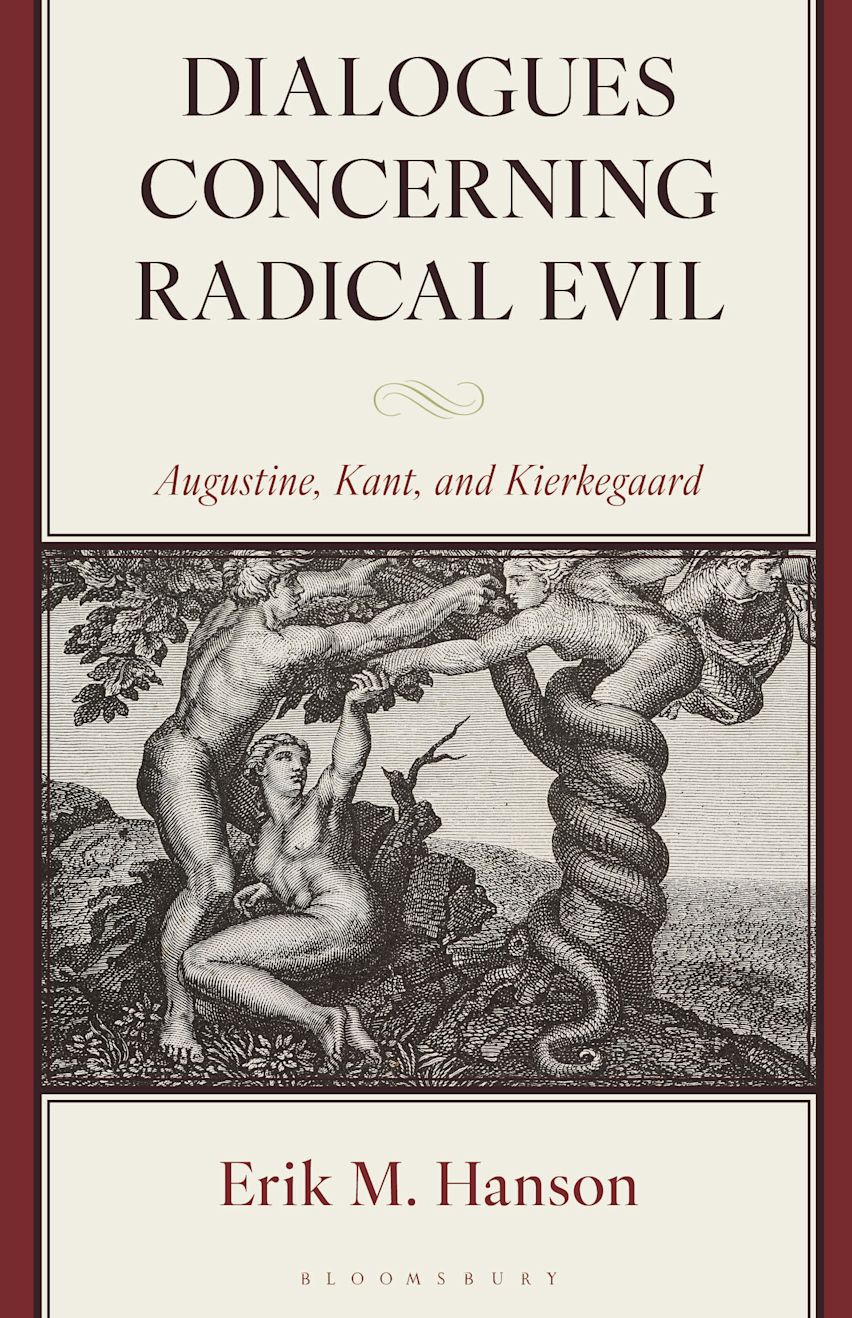
Erik Hanson examines the perennial enigma of the human condition: What Immanuel Kant identified as radical evil, the seemingly universal, innate, and inexplicable propensity to subvert the universal moral law that ultimately corrupts our character. Hanson explores this phenomenon through the perspectives of Augustine, Kant, and Kierkegaard, addressing the paradox of culpability inherent in Augustine's account. He demonstrates that Kierkegaard's assessment retained much of the existential and theological intuition he shared with Augustine, even as he wrote in critical dialogue with Kant.
Hanson shows that Kant's analysis of radical evil (das radikale Böse) presents a philosophical counterpart to Augustine's theological description of original sin (peccatum originale). Augustine held that human evil is the outworking of an inherited corruption of human agency, leading to a tension between inherited guilt (reatus) and inherited corruption (vitium) that medieval and later theologians struggled to resolve.
Hanson shows that while Kant's response retains the centrality of individual liability, it cannot fully account for evil's origin. Kierkegaard takes up this shortcoming while retaining the Augustinian basis for evil's universality in his account of despair (fortvivlelse). For Kierkegaard, despair is not merely a Kantian subversion of the moral law, but an ontological misrelation of the self to itself before God. This defiance against the possibility of a God-relation-rather than mere moral transgression-accounts for every subsequent human evil.
Accessibility Information
Additional accessibility information
- EPUB 3.0
- Conforms with the requirements of EPUB Accessibility Spec v1.1
- WCAG level AA
- WCAG v2.2 compliant
- accessibility@bloomsbury.com
Hazards
The publication contains no hazards
Support for non-visual reading
- No accessibility features offered by the reading system, device or reading software are disabled or otherwise unusable with the product
- Has alternative text descriptions for images
Visual adjustments
Appearance of the text and page layout can be modified according to the capabilities of the reading system (font family and size, spaces, as well as color of background and text)
Navigation
- Page list to go to pages from the print source version
- Elements such as headings, tables, etc for structured navigation
- All or substantially all textual matter is arranged in a single logical reading order
- Content is enhanced with ARIA roles to optimize organization and facilitate navigation
- Purposes of all links are made clear
Rich content
Language tagging provided
Table of Contents
1. Augustine and Inherited Sin
2. Immanuel Kant and Radical Evil
3. Kierkegaard, Despair and Anxiety
4. The Significance of Kierkegaard's Existential and Psychological Analysis
Conclusion
Bibliography
Index
Product details

| Published | Dec 10 2026 |
|---|---|
| Format | Ebook (Epub & Mobi) |
| Edition | 1st |
| Pages | 206 |
| ISBN | 9781978768932 |
| Imprint | Bloomsbury Academic |
| Series | New Kierkegaard Research |
| Publisher | Bloomsbury Publishing |
Related Titles