Dispute Resolution and State Formation in Early Greece
From Homer to Solon
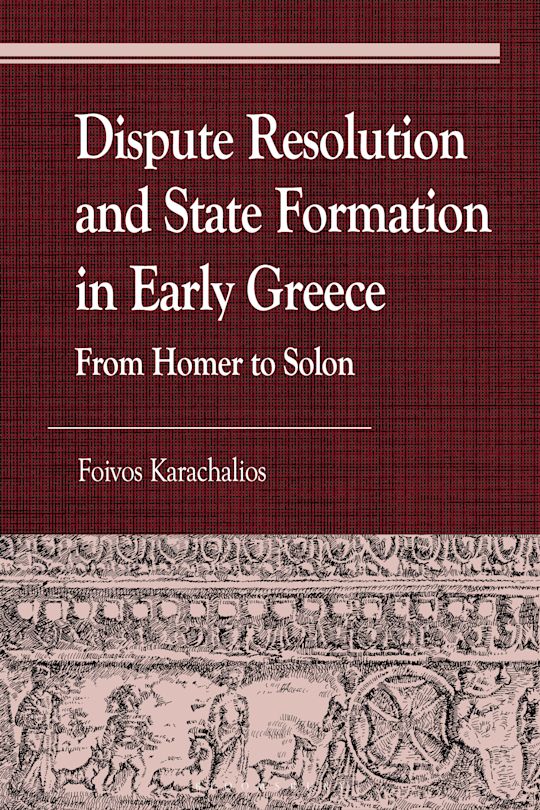

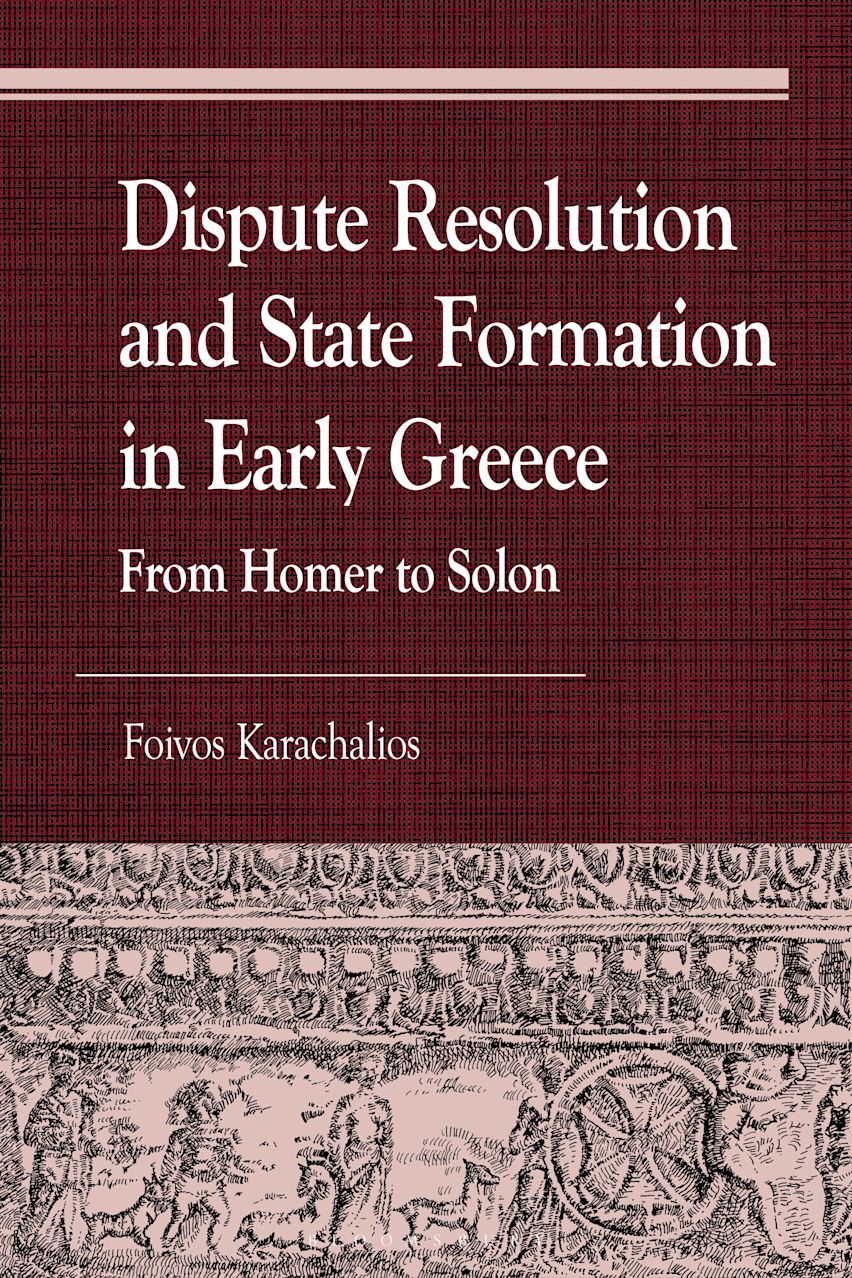
Dispute Resolution and State Formation in Early Greece
From Homer to Solon
Buying pre-order items
Ebooks and Audiobook
You will receive an email with a download link for the ebook or audiobook on the publication date.
Payment
You will not be charged for pre-ordered books until they are available to be shipped. Pre-ordered ebooks will not be charged for until they are available for download.
Amending or cancelling your order
For orders that have not been shipped you can usually make changes to pre-orders up to 72 hours before the publishing date.
Payment for this pre-order will be taken when the item becomes available
- Delivery and returns info
-
Free US delivery on orders $35 or over
Description
Between the eighth and sixth centuries BCE, small and roughly egalitarian Greek settlements gave way to a dense ecology of poleis (city-states) whose legal and political order was, by pre-modern standards, remarkably impersonal. What drove that transformation?
Dispute Resolution and State Formation in Early Greece identifies a neglected mechanism: the payoff of the arbitrator. In a world with almost no institutional apparatus, communities urgently needed effective dispute settlements-and whoever could supply them acquired political power. Public dispute resolution became a resource that elites competed for and, where possible, monopolized.
Drawing on Homer, Hesiod, the Theognidea, Herodotus, the earliest inscriptions, and Solon's poetry and reform, and using new institutional economics and rational choice theory, Foivos Karachalios traces a trajectory from the Homeric meson (public gathering) to the Solonian heliaia (Athenian court). Archaic tyranny is reinterpreted as an unstable equilibrium in the competition for the arbitrator's role. The Athenian case shows how that competition was finally curtailed by institutions that made compliance impersonal and enforcement communal-the beginning of an open-access legal order.
Table of Contents
PART I: Order Without Law in Early Archaic Greece
Chapter 1: The Stakes of the Debate
Chapter 2: Norms and Rules in Homicide Disputes
Chapter 3: Iliad 23: The Strategic Performance of Trust
Chapter 4: Iliad 18 and 1: Limitations of the Self-Enforced Order
PART II: The Payoff of the Arbitrator
Chapter 5: The Story of Deioces and Popular Demand for Order in Herodotus and Homer
Chapter 6: Tyrants, Cartels, and Skeptics: The Question of the Best Order
PART III: Toward a Rule of Law
Chapter 7: Elites Tying Their Own Hands in Theory and Practice
Chapter 8: Solon's Athens: An Original Solution
Epilogue: The Significance of a Fair and Attractive Legal Order
Notes
Bibliography
Index
Product details

| Published | Jun 10 2027 |
|---|---|
| Format | Hardback |
| Edition | 1st |
| Pages | 256 |
| ISBN | 9781666980455 |
| Imprint | Bloomsbury Academic |
| Dimensions | Not specified |
| Series | Greek Studies: Interdisciplinary Approaches |
| Publisher | Bloomsbury Publishing |
Related Titles