The Distorting Lens of Convergent Constitutional Theory
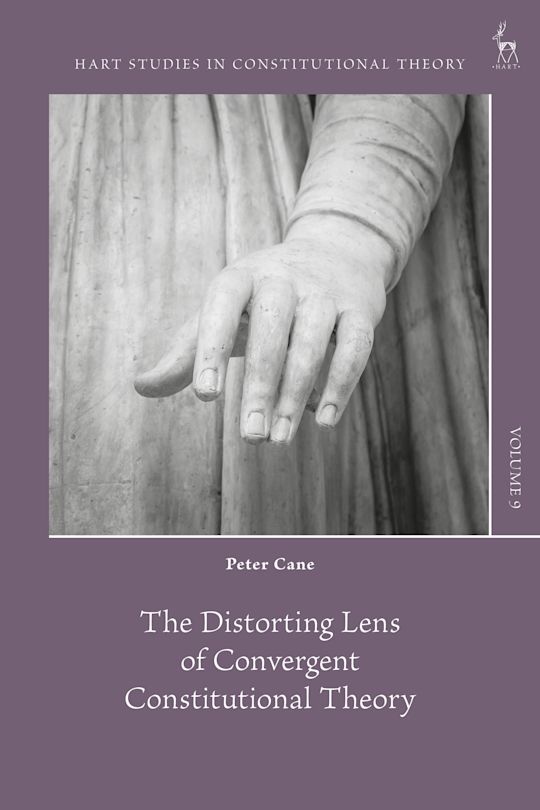


The Distorting Lens of Convergent Constitutional Theory
Description
This book challenges the near-universal acceptance of a US-style, Western constitutional paradigm as the best basis for comparative constitutional studies.
It does so on three main grounds: anachronism, 'othering' and cultural specificity. Main pillars of 'convergent constitutional theory' are rooted in the revolutionary, late-eighteenth century – a lost world; constitutional arrangements that deviate from the paradigm are often branded as 'outliers' or even as not constitutional at all; and the foundations of the paradigm in liberal democracy give no space for other forms of constitutionalism. Whatever the attractions of convergent theory as a normative ideal of good government, for the purposes of understanding, analysing and explaining constitutional systems it is far from ideal.
This book discusses and questions: convergent theory's weddedness to writing as the technology of constitution-making; its image of a constitution as fundamental law; its idea that a constitution expresses the 'sovereignty of the people'; its use of tripartite separation of powers as the basic principle of institutional design; its relative neglect of administrative law; its association of 'rights' with judicially enforceable bills of rights; and its obsession with a vaguely specified concept of 'democracy'.
It makes suggestions for alternative, preferable methods of understanding, analysing and explaining constitutions, and governmental and constitutional systems.
Accessibility Information
Additional accessibility information
- EPUB 3.0
- Conforms with the requirements of EPUB Accessibility Spec v1.1
- WCAG level AA
- WCAG v2.2 compliant
- accessibility@bloomsbury.com
Hazards
The publication contains no hazards
Support for non-visual reading
- No accessibility features offered by the reading system, device or reading software are disabled or otherwise unusable with the product
- Has alternative text descriptions for images
Visual adjustments
Appearance of the text and page layout can be modified according to the capabilities of the reading system (font family and size, spaces, as well as color of background and text)
Navigation
- Page list to go to pages from the print source version
- Elements such as headings, tables, etc for structured navigation
- All or substantially all textual matter is arranged in a single logical reading order
- Content is enhanced with ARIA roles to optimize organization and facilitate navigation
- Purposes of all links are made clear
Rich content
Language tagging provided
Table of Contents
1. Introduction
2. Constitutional Writing
3. Constitutional Fundamentalism
4. Popular Sovereignty
5. Institutional Structure: Separation of Powers
6. Constitutional Law and Administrative Law
7. Rights
8. Democracy
9. Conclusion
Product details
| Published | Jul 24 2025 |
|---|---|
| Format | Ebook (Epub & Mobi) |
| Edition | 1st |
| Pages | 152 |
| ISBN | 9781509988457 |
| Imprint | Hart Publishing |
| Series | Hart Studies in Constitutional Theory |
| Publisher | Bloomsbury Publishing |


ONLINE RESOURCES
Bloomsbury Collections
This book is available on Bloomsbury Collections where your library has access.
Related Titles