Horror in the Early Films of Roger Corman, 1955–1964
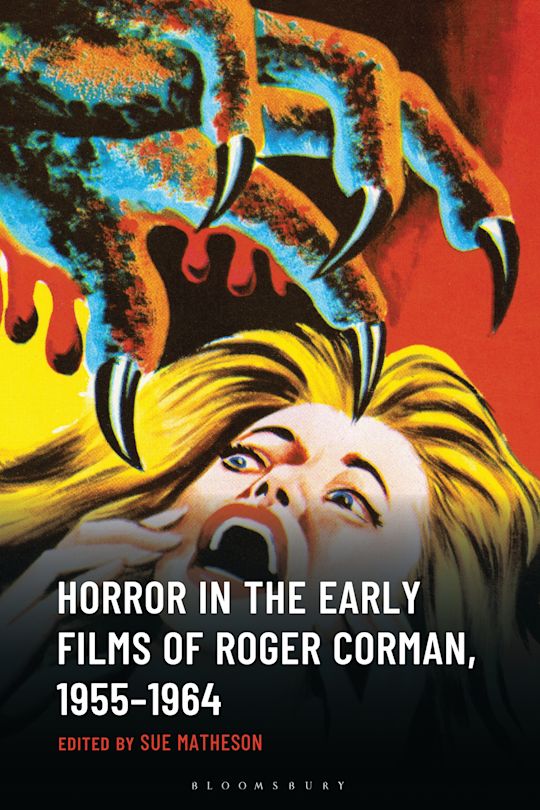

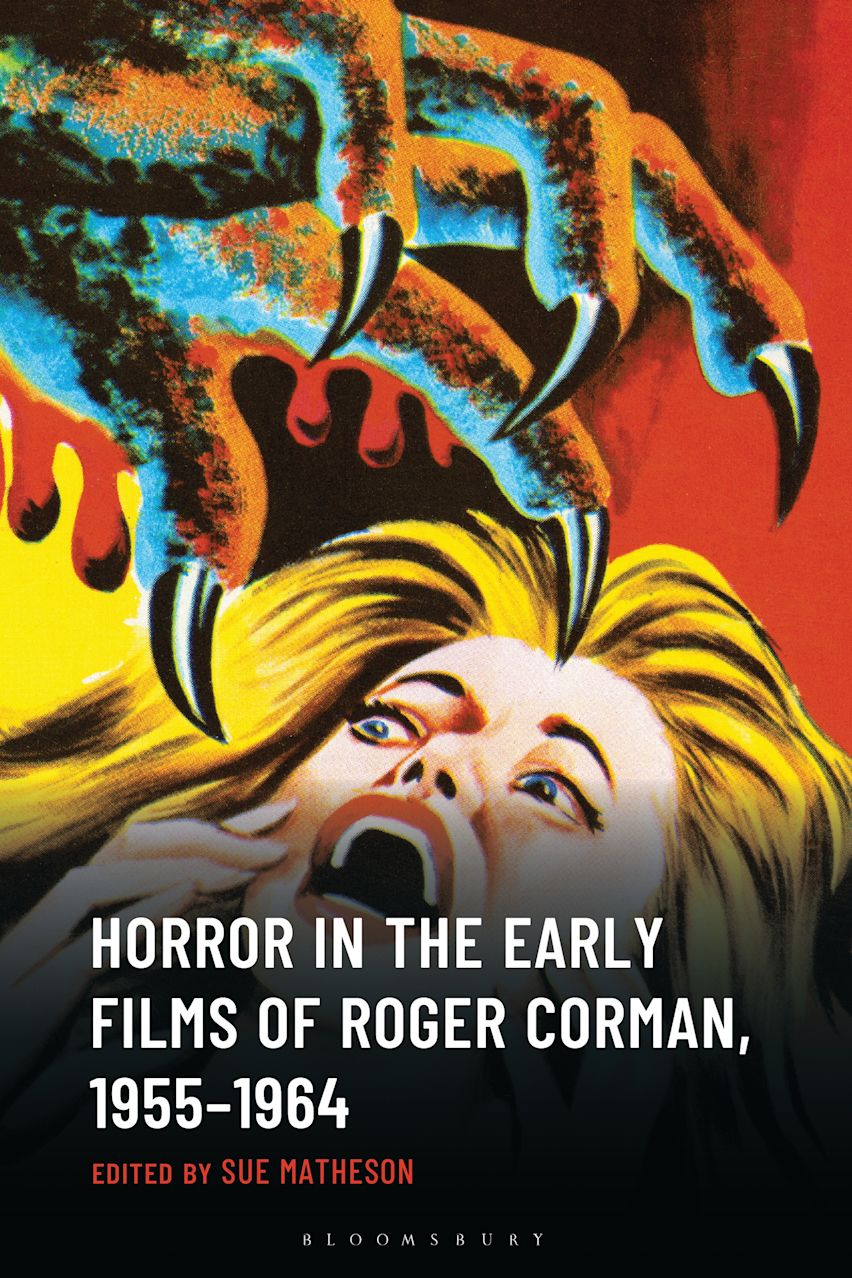
Horror in the Early Films of Roger Corman, 1955–1964
Buying pre-order items
Ebooks and Audiobook
You will receive an email with a download link for the ebook or audiobook on the publication date.
Payment
You will not be charged for pre-ordered books until they are available to be shipped. Pre-ordered ebooks will not be charged for until they are available for download.
Amending or cancelling your order
For orders that have not been shipped you can usually make changes to pre-orders up to 72 hours before the publishing date.
Payment for this pre-order will be taken when the item becomes available
Description
Roger Corman – an influential indie filmmaker with a penchant for producing and directing hundreds of entertaining, literate, and campy B-movies – is now most recognized for his early low-budget, cult-classic horror movies. Adapting assembly-line methods learned during his engineer training to make more films, Corman earned a reputation as a “creative, no-frills producer” with an affinity for leveraging spectacle to appeal to audiences and turn a profit.
An interdisciplinary roster of contributors adopts varied approaches grounded in philosophy, history, literature, film, and gender to analyze a selected body of films and mashups created between 1955 and 1964 as the grindhouse producer-director developed his craft at American International Pictures (AIP). From early “grabbers” – cheap exploitation films such as The Beast with a Million Eyes (1955) and The Little Shop of Horrors (1960) – through his Poe Cycle – Edgar Allan Poe adaptations in collaboration with AIP and Vincent Price including The Premature Burial (1962) and The Tomb of Ligeia (1964) – this volume offers a range of thematic film analyses focusing on form, content, and cultural considerations.
Accessibility Information
Additional accessibility information
- EPUB 3.0
- Conforms with the requirements of EPUB Accessibility Spec v1.1
- WCAG level AA
- WCAG v2.2 compliant
- accessibility@bloomsbury.com
Hazards
The publication contains no hazards
Support for non-visual reading
- No accessibility features offered by the reading system, device or reading software are disabled or otherwise unusable with the product
- Has alternative text descriptions for images
Visual adjustments
Appearance of the text and page layout can be modified according to the capabilities of the reading system (font family and size, spaces, as well as color of background and text)
Navigation
- Page list to go to pages from the print source version
- Elements such as headings, tables, etc for structured navigation
- All or substantially all textual matter is arranged in a single logical reading order
- Content is enhanced with ARIA roles to optimize organization and facilitate navigation
- Purposes of all links are made clear
Rich content
Language tagging provided
Table of Contents
Sue Matheson (University College of the North, Canada)
Part I: Corman's Early “Grabbers”
1. Antagonistic Characters: Gothic Landscapes in the Films of Roger Corman
Stella Hockenhull (University of Wolverhampton, UK)
2. American Fears, Communist Crustaceans: Cold War Anxieties in Roger Corman's Attack of the Crab Monsters (1957)
Amanda Riccitelli (Binghamton University, USA)
3. Time Travel, Terror and Reel Regression in The Undead (1957) and The Beast with a Million Eyes (1955)
Gary Forster (De Montfort University, USA)
4. “We Would Observe the Future with Gay Confusion”: Mind-Games and Queer Temporality in Roger Corman's The Undead (1957)
Adam Hartman-Whitfield (Binghamton University, USA)
5. Rethinking Beauty and Insolence in Roger Corman's Wasp Woman (1959)
Natasha Farrell (Memorial University, USA)
Part II: Other Vein to Mine
6. Roger Corman's Little Shop of Hybridities: Genre Mash-Up and Resonant 'Horror'
Kerry Soper (Brigham Young University, USA)
7. Dark Humor, Carnival and Camp in Roger Corman's Horror Comedies
Sue Matheson (University College of the North, Canada)
8. Progressive Democracy in The Intruder (1962), Day the World Ended (1955), It Conquered the World (1956) and Last Woman on Earth (1960)
Fernando Gabriel Pagnoni Berns (University of Buenos Aires, Argentina), Emiliano Aguilar (Independent Scholar, Argentina) and Jorge Traversa (University of Buenos Aires, Argentina)
Part III: The Moderlode-Corman's Poe Cycle
9. Roger Corman's Adaptations of Edgar Allan Poe: The Poe Cycle and Vincent Price
Fran Pheasant-Kelly (Wolverhampton University, UK)
10. Medicine, Madness and Murder: Corman's Sinister Collaborations with Actor Ray Milland
Gillian Kelly (Independent Scholar, USA)
11. The Pleasure of Terror: The (Pathecolor) Sublime in The Premature Burial (1962) and X: The Man With X-Ray Eyes (1964)
Ethan Lyon (University of Southampton, UK)
12. Déjà Vu All Over Again: The Tomb of Ligeia (1964)
Brian Brems (College of DuPage, USA)
13. Fragmented Authorship and the Creative Process of The Terror (1963)
Felipe M. Guerra (University of Porto, Portugal)
Part IV: Aftermath
14. “Absurd Horror”: Dark Humor, Ambiguity, and the Aesthetics of Dread in Roger Corman's Mashups
Peter Scott Lederer (Rotherham College, UK)
About the Contributors
Index
Product details

| Published | Dec 10 2026 |
|---|---|
| Format | Ebook (Epub & Mobi) |
| Edition | 1st |
| Pages | 304 |
| ISBN | 9781978763890 |
| Imprint | Bloomsbury Academic |
| Illustrations | 14 bw illus |
| Series | Research in Horror Studies |
| Publisher | Bloomsbury Publishing |
Reviews

ONLINE RESOURCES
Bloomsbury Collections
This book is available on Bloomsbury Collections where your library has access.
Related Titles