- Home
- ACADEMIC
- History
- Women's History
- Joan of Arc and Christine de Pizan's Ditié
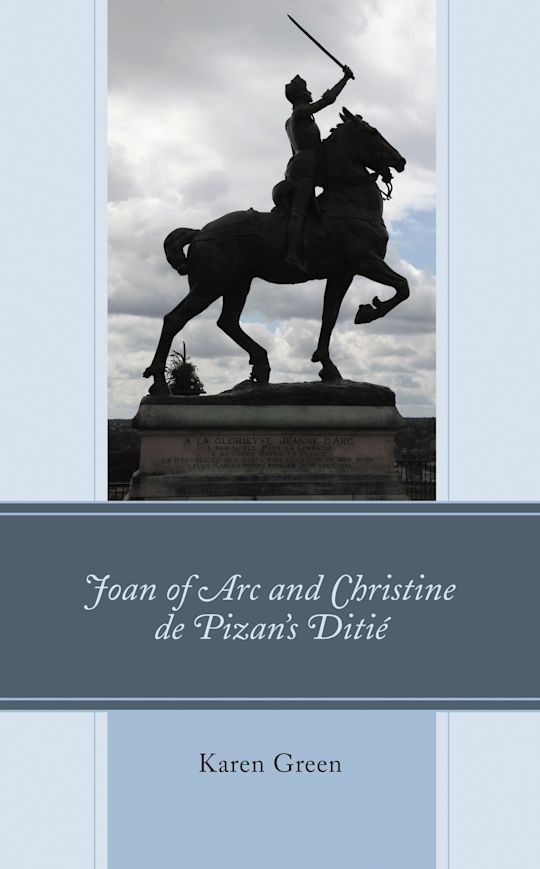
Joan of Arc and Christine de Pizan's Ditié

This product is usually dispatched within 1 week
- Delivery and returns info
-
Free US delivery on orders $35 or over
You must sign in to add this item to your wishlist. Please sign in or create an account
Description
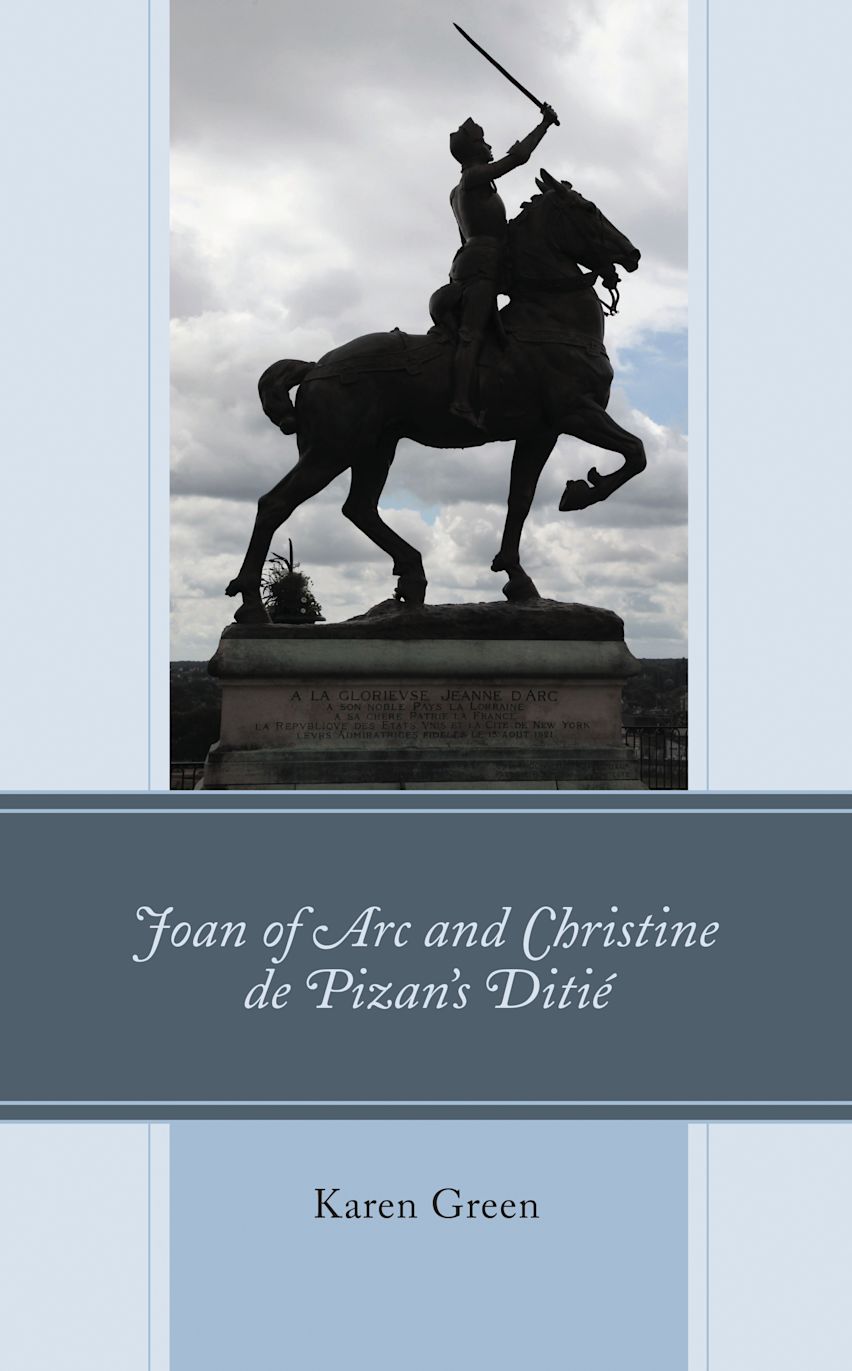
Grounded in a close reading of the records of Joan's trial and rehabilitation, on the early letters announcing her arrival at Chinon, and on three literary works; Christine de Pizan's Ditié, Martin le Franc's Le Champion des dames, and Alain Chartier's, Traité de l’Esperance, this controversial work argues that serious historians should accept that Joan was trained. It proposes that she was identified and taught how to behave in the expectation of the fulfillment of the Charlemagne Prophecy and other prophecies from the Joachite tradition. It explores the possibility that Christine de Pizan, who had been promoting these prophecies from the beginning of the century, had some hand in the process that resulted in Joan's appearance and demonstrates, at the very least, that there are many links connecting Christine de Pizan to the knights who fought with Joan.
Table of Contents
Chapter 2: Christine's 'Ditié'
Chapter 3: Penthesilea's Charity
Chapter 4: Joan's testimony
Chapter 5: The Ladies' Champion
Chapter 6: A very little golden ring
Chapter 7: Merlin and Sibyl and Bede
Chapter 8: The Flying Stag
Chapter 9: Chartier's Hope
Chapter 10: A Sacred Sword
Chapter 11: Franciscans and Bourbons
Chapter 12: Christine's whereabouts
Product details
| Published | Jun 29 2021 |
|---|---|
| Format | Hardback |
| Edition | 1st |
| Pages | 252 |
| ISBN | 9781793613165 |
| Imprint | Lexington Books |
| Illustrations | 11 b/w illustrations; |
| Dimensions | 9 x 6 inches |
| Publisher | Bloomsbury Publishing |
About the contributors
Reviews
-
Karen Green offers hee a fascinating reconstruction of the interaction between two remarkable French women in the early fifteenth century that offers many insights in the interactions between literature, politics, and religion in a turbulent period.
Constant J. Mews, Monash University
-
Could Joan of Arc had been trained by Christine de Pizan? This question is the fundamental and provocative point of departure in this serious and diligent study by Karen Green, herself an established scholar of Christine de Pizan. Green highlights here Christine’s portrayals of female military heroism long before Joan’s birth which uncannily presage the later military feats of the Maid of Orléans. Could Joan of Arc have been trained by Christine de Pizan? Green examines the plausibility of a positive answer to this question in a balanced and well-documented manner which pierces through the centuries-long cult that has grown up around Joan. Green carefully assesses the surviving historical records which often provide at best sometimes scant answers for the questions which we, six centuries later, wish to raise. Whether Christine de Pizan directly and personally influenced Joan must be addressed by medievalists, and Green has skilfully put the case here for them to consider.
Earl Jeffrey Richards, University of Wuppertal
-
In this intriguing book, Karen Green argues that Joan of Arc was trained by Christine de Pizan for her role as savior of France. One of the most perplexing questions that arose in my research concerned how a peasant girl in a distant rural village came to the notice of the dauphin and how she succeeded in a mission when so many others had failed. Green offers intriguing new insights on a connection between Christine and Joan that provides a possible answer.
Larissa Juliet Taylor, Colby College
-
In this ingenious study, Karen Green offers a hypothesis to explain one of the most confounding elements of the Joan of Arc story: What was real the nature of the voices from whom she took her orders? Were they of divine origin? Or was Joan hallucinatory? Neither, Green argues. On the contrary, the voices issued from the genuine human beings who trained Joan in the military arts and prepared her arrival at Chinon. Green’s minutely detailed argument about who lay behind the Maid’s rise is both plausible and fascinating, pulling together a number of figures whose associations become increasingly clear and inevitable as the argument that Joan’s sudden appearance was no accident progresses. Drawing on decades of research, Green proposes an original and exciting narrative positing a close relationship between two of the period’s most beloved heroines.
Tracy Adams, Auckland University
ONLINE RESOURCES
Bloomsbury Collections
This book is available on Bloomsbury Collections where your library has access.